7 Easy Diabetic Salad Recipes for Healthy Meals
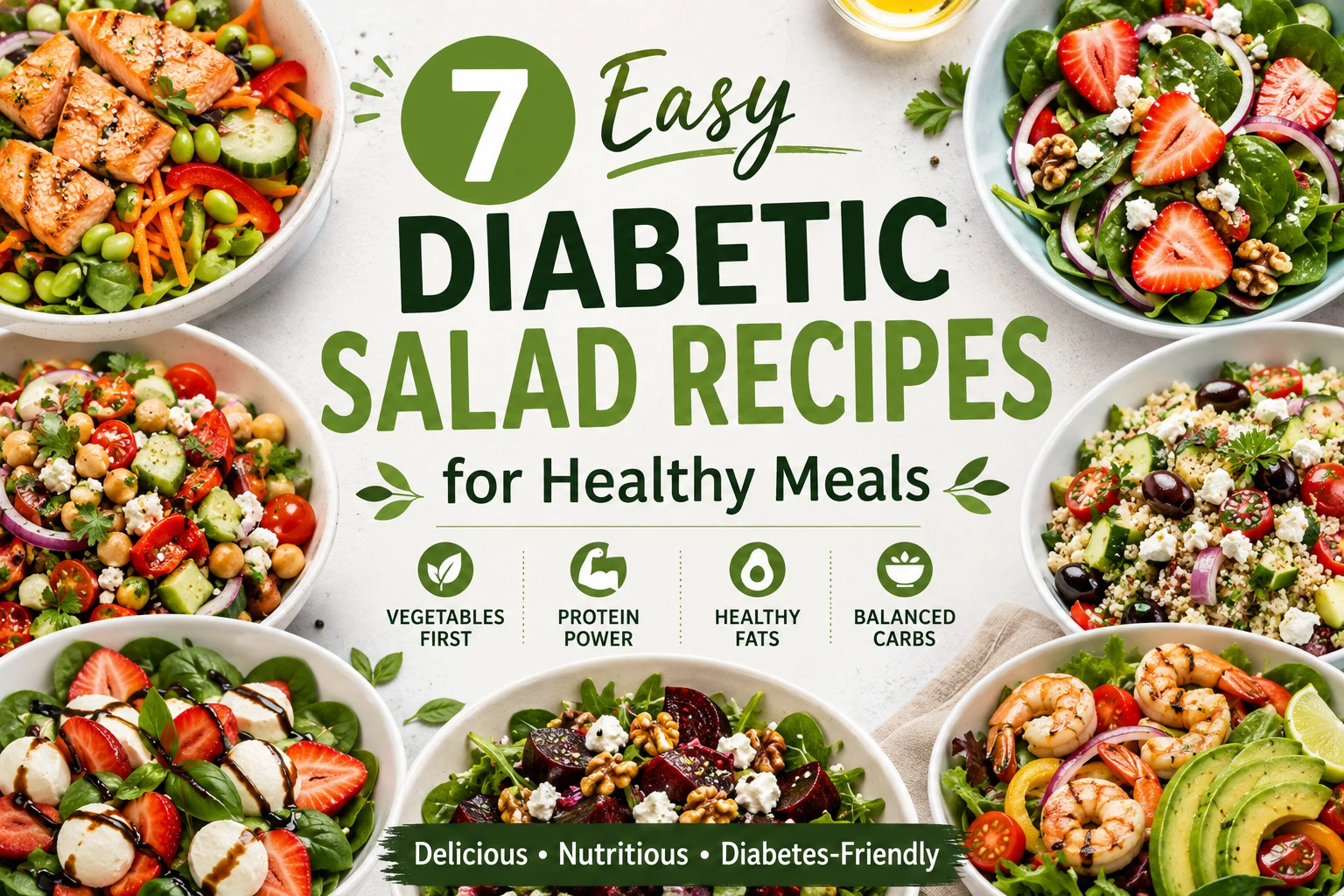
A good salad can be more than a side dish. The best diabetic salad recipes combine non-starchy vegetables with protein, healthy fats, fiber, and sensible portions of carbohydrate-containing foods.
The American Diabetes Association’s Diabetes Plate recommends filling half your plate with non-starchy vegetables, one-quarter with lean protein, and one-quarter with quality carbohydrates.1 You can use the same basic approach to build a satisfying salad.
Key Takeaways
- Build salads around non-starchy vegetables such as leafy greens, cucumbers, peppers, and tomatoes.
- Add protein from salmon, shrimp, chicken, eggs, tofu, beans, or cheese.
- Include healthy fats from avocado, nuts, seeds, or olive oil.
- Watch portions of carbohydrate-rich ingredients such as fruit, chickpeas, quinoa, and sweetened dressings.
- Check bottled dressings for total carbohydrate, added sugars, sodium, and serving size.
What Makes Diabetic Salad Recipes Healthy?
A diabetes-friendly salad doesn’t need to be carbohydrate-free. Instead, focus on the overall balance of vegetables, protein, carbohydrates, healthy fats, and portion size.
Carbohydrates have a direct effect on blood glucose, while eating carbohydrate-containing foods with protein, fat, or fiber can slow how quickly blood sugar rises.2
A simple formula is:
Non-starchy vegetables + protein + healthy fat + a sensible portion of quality carbohydrate
Here are seven easy combinations to try.
1. Asian-Inspired Salmon Salad
Salmon provides protein and pairs well with crunchy vegetables and a simple citrus-soy dressing.
Ingredients
- 4 ounces cooked salmon
- 2 cups mixed greens
- ¼ cup shredded carrots
- ½ cup sliced bell pepper
- ½ cup sliced cucumber
- ¼ cup shelled edamame
- 1 teaspoon sesame seeds
- 1 teaspoon low-sodium soy sauce
- 1 tablespoon rice vinegar
- 1 tablespoon fresh lime juice
Preparation
Place the greens, carrots, bell pepper, cucumber, and edamame in a bowl. Top with the cooked salmon and sesame seeds.
Whisk together the soy sauce, rice vinegar, and lime juice and drizzle over the salad.
Diabetes tip: Edamame contains both protein and carbohydrate, so include it when considering the total carbohydrate content of your meal.
2. Chickpea and Roasted Vegetable Salad
Chickpeas provide plant-based protein and fiber, while roasted vegetables add plenty of flavor.
Ingredients
- ½ cup drained and rinsed chickpeas
- ½ cup roasted bell peppers
- ½ cup cherry tomatoes
- ½ cup chopped cucumber
- 2 tablespoons sliced red onion
- 2 tablespoons crumbled feta
- 1 tablespoon chopped cilantro
- 1 tablespoon fresh lime juice
- 1 teaspoon olive oil
- Black pepper to taste
Preparation
Combine the chickpeas, roasted peppers, tomatoes, cucumber, onion, and feta.
Whisk together the cilantro, lime juice, olive oil, and black pepper and toss with the salad.
Diabetes tip: Chickpeas contain carbohydrates along with fiber and protein, so portion size still matters if you count carbohydrates.
3. Strawberry Caprese Salad
This twist on a traditional Caprese salad combines fresh mozzarella, strawberries, basil, and leafy greens.
Ingredients
- 2 cups mixed greens
- ½ cup sliced strawberries
- 2 ounces fresh mozzarella
- Fresh basil leaves
- 1 teaspoon balsamic glaze
Preparation
Arrange the greens, strawberries, mozzarella, and basil on a plate. Finish with a light drizzle of balsamic glaze.
Diabetes tip: Some balsamic glazes contain added sugar. Check the Nutrition Facts label or use plain balsamic vinegar instead.
4. Strawberry Spinach Salad With Walnuts
Spinach, strawberries, walnuts, and goat cheese create a simple combination of vegetables, fruit, healthy fats, and protein.
Ingredients
- 2 cups fresh spinach
- ½ cup sliced strawberries
- 1 tablespoon crumbled goat cheese
- 1 tablespoon chopped walnuts
- 2 tablespoons thinly sliced red onion
- 1 tablespoon balsamic vinaigrette
Preparation
Combine the spinach, strawberries, goat cheese, walnuts, and onion. Add the vinaigrette and toss gently.
Diabetes tip: Measure the dressing instead of pouring it freely. Bottled vinaigrettes can vary considerably in carbohydrate, added sugar, calories, and sodium.
5. Mediterranean Quinoa Salad
Quinoa adds fiber and carbohydrates, while vegetables, feta, olives, and olive oil create a Mediterranean-inspired salad.
Ingredients
- ½ cup cooked quinoa
- ½ cup cherry tomatoes
- ½ cup chopped cucumber
- 1 tablespoon sliced Kalamata olives
- 2 tablespoons diced red onion
- 2 tablespoons crumbled feta
- Fresh parsley
- 1 tablespoon fresh lemon juice
- 1 teaspoon olive oil
Preparation
Allow the cooked quinoa to cool. Combine it with the tomatoes, cucumber, olives, onion, feta, and parsley.
Whisk together the lemon juice and olive oil and toss with the salad.
Diabetes tip: Quinoa is a nutrient-rich whole grain, but it still contains carbohydrates. Account for the portion when planning your meal.
6. Grilled Shrimp and Avocado Salad
Shrimp provides lean protein, while avocado contributes unsaturated fat and fiber.
Ingredients
- 4 ounces grilled shrimp
- 2 cups mixed greens
- ¼ avocado, sliced
- ½ cup cherry tomatoes
- 2 tablespoons sliced red onion
- ½ cup sliced bell pepper
- 1 tablespoon lemon or lime juice
- 1 teaspoon olive oil
Preparation
Grill the shrimp until fully cooked. Arrange the greens, shrimp, avocado, tomatoes, onion, and bell pepper in a bowl.
Whisk together the citrus juice and olive oil and drizzle over the salad.
Diabetes tip: If this salad is your entire meal, consider whether you need an additional carbohydrate source based on your individual meal plan, medications, and activity level.
7. Roasted Beet and Goat Cheese Salad
Roasted beets pair with creamy goat cheese, walnuts, and leafy greens for a simple but flavorful salad.
Ingredients
- 2 cups mixed greens
- ½ cup roasted beets
- 1 tablespoon crumbled goat cheese
- 1 tablespoon chopped walnuts
- 1 teaspoon olive oil
- 2 teaspoons balsamic vinegar
- ½ teaspoon Dijon mustard
- Black pepper to taste
Preparation
Roast the beets until tender, allow them to cool, and cut them into bite-sized pieces.
Combine the greens, beets, goat cheese, and walnuts. Whisk together the olive oil, balsamic vinegar, Dijon mustard, and black pepper and drizzle over the salad.
Diabetes tip: Beets contain carbohydrates, so consider the portion as part of the total carbohydrate content of your meal.
How to Build Your Own Diabetes-Friendly Salad
You don’t need a recipe every time. Start with plenty of non-starchy vegetables, add a protein source, and include a modest amount of healthy fat.
If you add carbohydrate-rich foods such as beans, quinoa, corn, fruit, croutons, or sweetened dressing, consider their combined carbohydrate content rather than assuming a salad is automatically low in carbs.
The CDC’s plate method similarly emphasizes non-starchy vegetables while balancing them with protein and carbohydrate foods.2
Looking for options with fewer carbohydrates? Try these low-carb salad recipes for diabetics
Salad Ingredients to Watch
A salad can quickly become higher in carbohydrates, sodium, saturated fat, or calories depending on the toppings and dressing.
Pay particular attention to:
- Sweetened salad dressings
- Balsamic glaze
- Candied nuts
- Dried fruit
- Large portions of croutons
- Large portions of grains
- Fried toppings
- Large amounts of cheese
These foods don’t necessarily need to be avoided. Portion size and the overall composition of your meal matter.
Are Salads Good for People With Diabetes?
Yes. Diabetic salad recipes can fit well into a balanced eating plan when they’re built around non-starchy vegetables, protein, healthy fats, and appropriate portions of carbohydrate-containing foods.
The best diabetic salad recipes combine non-starchy vegetables with protein, healthy fats, and appropriate portions of carbohydrate-containing foods.1
Individual glucose responses can vary, so checking your blood sugar after eating can help you understand how different ingredients and portions affect you. You can also use our blood sugar charts to compare your readings with common fasting and post-meal glucose ranges.
Frequently Asked Questions
The Bottom Line
The best diabetic salad recipes combine non-starchy vegetables with protein, healthy fats, and appropriate portions of carbohydrate-containing foods.
Salmon, shrimp, chickpeas, quinoa, avocado, nuts, berries, and fresh vegetables offer plenty of ways to keep your salads varied and satisfying. If you prefer a creamy dressing, see our guide to diabetic-friendly ranch dressing for more options.
References
- American Diabetes Association. Eating Well & Managing Diabetes. https://diabetes.org/food-nutrition/eating-healthy [↩] [↩]
- Centers for Disease Control and Prevention. Diabetes Meal Planning. https://www.cdc.gov/diabetes/healthy-eating/diabetes-meal-planning.html [↩] [↩]