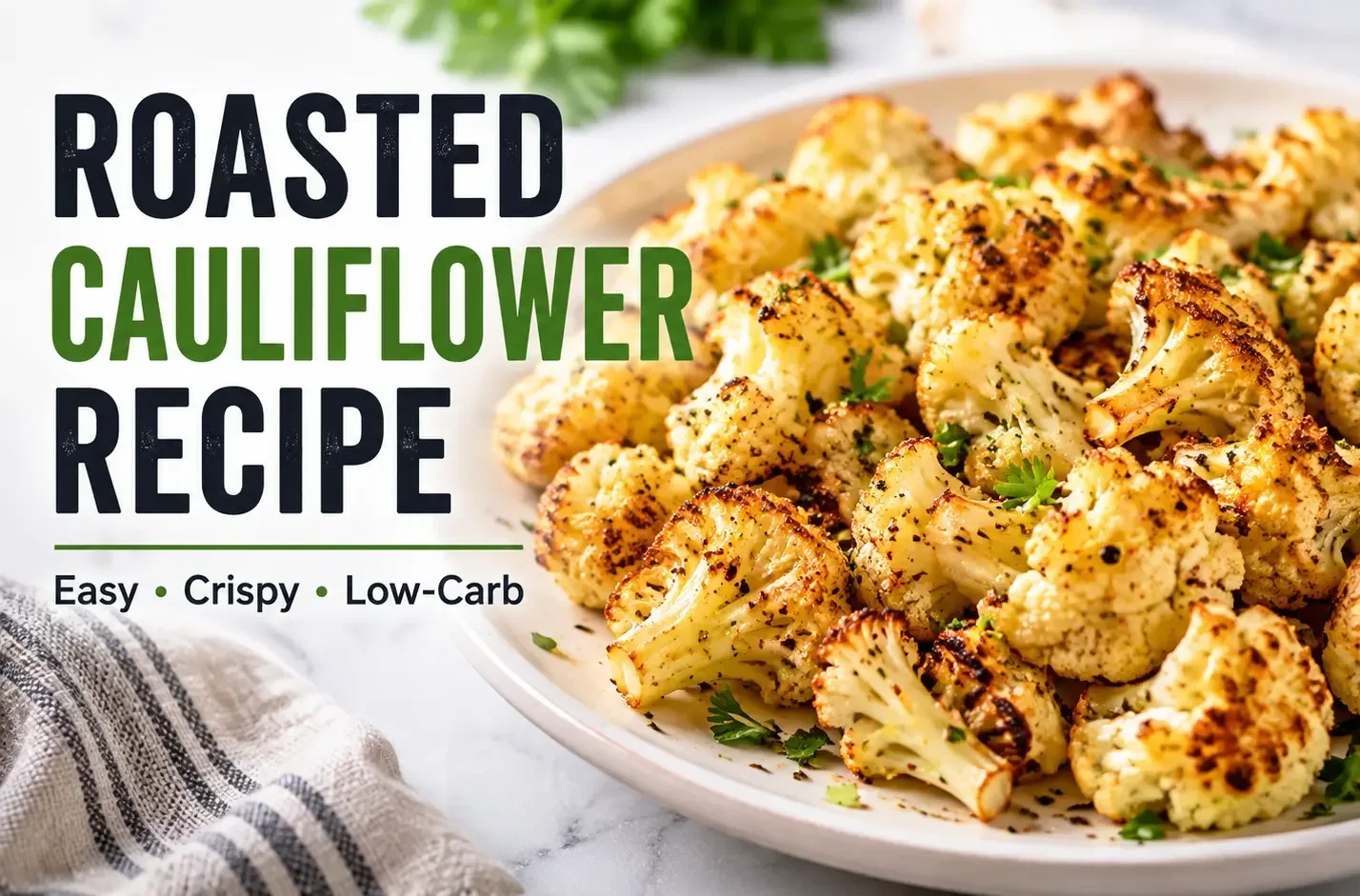
Roasted Cauliflower Recipe for Diabetics
Low in calories and high in nutrients, cauliflower is a great low-carb vegetable to include in diabetes-friendly meals. Cauliflower is a cruciferous vegetable that keeps great company with broccoli, cabbage, Brussels sprouts, and bok choy. This easy roasted cauliflower recipe turns it into a flavorful, low-carb side dish with just a few simple ingredients.
Quick Answer
This easy roasted cauliflower recipe uses cauliflower, olive or avocado oil, salt, pepper, and your favorite seasonings. Roast the cauliflower at 425°F for 25–30 minutes, arranging the florets in a single layer so the edges can brown and caramelize. It makes a simple low-carb vegetable side dish or snack.
Roasted Cauliflower Recipe at a Glance
| Yield | 6 servings |
| Prep Time | 10 minutes |
| Cook Time | 30 minutes |
| Total Time | 40 minutes |
| Oven Temperature | 425°F |
| Main Ingredient | Cauliflower |
| Cooking Method | Oven roasted |
| Diet | Low-carb, vegetarian |
| Best Served As | Side dish or snack |
Benefits of Cauliflower
Cauliflower provides fiber while remaining relatively low in carbohydrates and calories, making it a useful non-starchy vegetable for diabetes-friendly meals. 1
Cauliflower is also a cruciferous vegetable and contains beneficial plant compounds, including sulforaphane.
Another benefit of cauliflower is its mild flavor. It lends itself to almost any seasoning you want to add. Its texture and relatively low carbohydrate content also make it a popular substitute for higher-carbohydrate foods such as rice.
Roasted Cauliflower Recipe
The key to flavorful roasted cauliflower is cutting it into similarly sized pieces, using high heat, and giving the florets enough room on the baking sheet to brown rather than steam.
Ingredients
- 1 large head cauliflower, cut into small florets
- 2 tablespoons olive oil or avocado oil
- 1/4 teaspoon salt, or to taste
- 1/4 teaspoon black pepper
- Optional: garlic powder, paprika, rosemary, red pepper flakes, or your favorite seasoning
Instructions
- Preheat the oven to 425°F.
- Cut the cauliflower into small, similarly sized pieces. Try to create several flat surfaces so the cauliflower makes direct contact with the baking sheet. This helps with caramelization and flavor.
- Place the cauliflower in a large bowl and toss with olive oil or avocado oil.
- Season with salt, black pepper, and any additional spices you prefer.
- Spread the cauliflower on a baking sheet in a single layer. Do not overcrowd the pan.
- Roast at 425°F for 30 minutes, turning the cauliflower about halfway through cooking.
- Remove from the oven when the cauliflower is tender and the edges are golden brown.
Nutrition Information
Per serving (1/6 of recipe): Approximately 78 calories | 8 g carbohydrates | 3 g fiber | 3 g protein
5 g fat | 45 mg sodium*
Nutrition values are estimates and may vary based on the size of the cauliflower, amount of oil and salt used, seasonings, and serving size. Sodium estimate does not include added salt.

Why This Roasted Cauliflower Works for Diabetes
Cauliflower is considered a non-starchy vegetable, making it a useful choice for people managing diabetes. Non-starchy vegetables generally provide vitamins, minerals, fiber, and relatively few carbohydrates and calories. 1
Keeping this roasted cauliflower recipe simple—with cauliflower, olive or avocado oil, and seasonings—also avoids the added carbohydrates that can come from breading, sugary sauces, or glazes.
For a balanced meal, serve roasted cauliflower alongside a source of lean protein and, depending on your individual carbohydrate needs, a portion of a quality carbohydrate such as beans, lentils, or whole grains. 2
Tips for Crispy Roasted Cauliflower
For the best roasted cauliflower, don’t overcrowd the baking sheet. Leaving some space between the pieces allows moisture to escape and helps the cauliflower roast and brown instead of steam.
A few other simple tips can make a difference:
- Dry the cauliflower well. Excess water can interfere with browning.
- Cut evenly sized pieces. Similar-sized florets cook at approximately the same rate.
- Use the flat sides. Place some of the cut surfaces directly against the baking sheet for better caramelization.
- Roast at high heat. A 425°F oven helps produce browned edges while keeping the cauliflower tender.
- Turn halfway through. Flipping or stirring the cauliflower promotes more even browning.
For extra flavor without adding much carbohydrate, experiment with garlic powder, smoked paprika, rosemary, curry powder, cumin, red pepper flakes, or fresh lemon juice.
More Diabetes-Friendly Recipe Ideas
This roasted cauliflower dish makes a great vegetable side or healthy snack for the health-conscious and vegans, and it can even work as an easy Super Bowl recipe.
For another cauliflower option for the big game, try our Buffalo Cauliflower Bites.
You can also serve roasted cauliflower alongside a balanced main dish such as our White Chicken Chili for an easy diabetes-friendly meal.
Whether you roast, sauté, steam, or microwave your vegetables, the important thing is finding simple ways to include more non-starchy vegetables in your meals.
Frequently Asked Questions
References
- American Diabetes Association. Non-Starchy Vegetables for Blood Glucose Control.
https://diabetes.org/food-nutrition/reading-food-labels/non-starchy-vegetables [↩] [↩] [↩] - American Diabetes Association. Eating Well & Managing Diabetes.
https://diabetes.org/food-nutrition/eating-healthy [↩]