
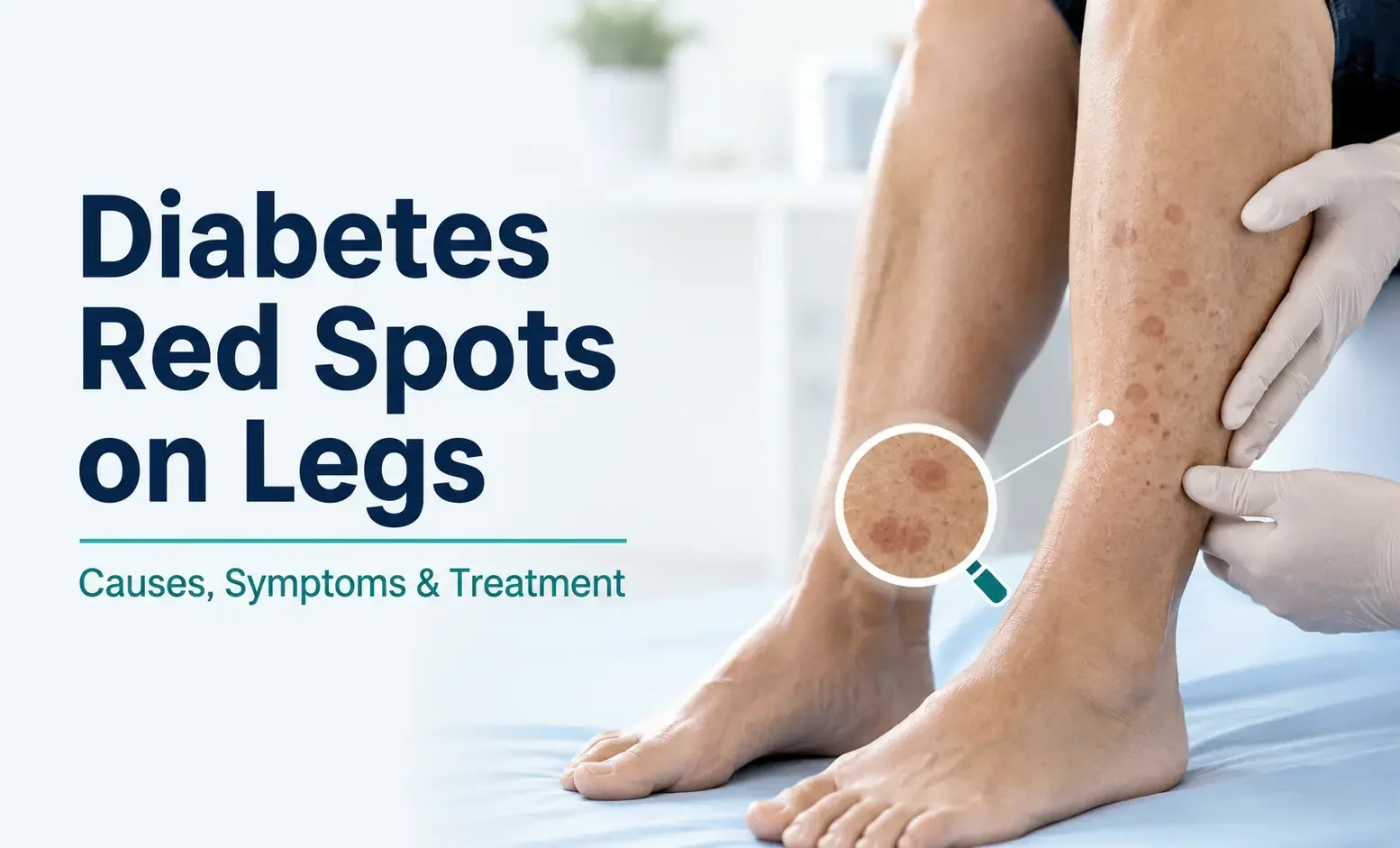
Diabetes Red Spots on Legs: Causes, Symptoms & Treatment
How to Recognize Diabetic Dermopathy and Other Diabetes-Related Skin Conditions
Medically Reviewed by: Dr. Seshadri G. Das, MD , Endocrinology
Red, brown, or pink spots on the legs are common in people with diabetes. While diabetic dermopathy (shin spots) is the most common cause, infections, poor circulation, allergic reactions, and other skin conditions can produce similar symptoms. Recognizing the difference helps determine whether the spots are harmless or require medical treatment.[1,2,3,5]
This guide explains the common causes, symptoms, diagnosis, treatment, and prevention of diabetes red spots on legs, along with warning signs that should never be ignored.
Key Takeaways
- Diabetic dermopathy (shin spots) is the most common cause of diabetes-related red spots on the legs.[1,2,3,5]
- The spots are typically flat, round or oval, painless, and caused by long-term changes in the small blood vessels that supply the skin.[1,3,5]
- Other possible causes include cellulitis, fungal infections, necrobiosis lipoidica, contact dermatitis, venous stasis dermatitis, and vasculitis.[3,4,6,7]
- Keeping your blood sugar in your target range helps reduce the risk of diabetes-related skin complications.[1,2]
- Seek medical care if the spots become painful, warm, swollen, rapidly spread, drain fluid, or are accompanied by fever.[4,7]
Quick Answer
Diabetes red spots on the legs are most commonly caused by diabetic dermopathy (shin spots), a harmless skin condition linked to long-term damage to the small blood vessels in the skin. Similar spots may also result from infections, poor circulation, allergic reactions, or inflammatory skin disorders.[1,2,3,5]
Because several conditions can look alike, new or changing skin lesions should be evaluated if they become painful, rapidly spread, drain fluid, or fail to heal. Good blood sugar management and routine skin checks help reduce the risk of complications.[1,2]
If you’re monitoring your long-term diabetes management, our A1C Calculator can estimate your average blood glucose over the previous two to three months using your A1C result.
Diabetic Dermopathy: The Most Common Cause of Diabetes Red Spots on Legs
If you have diabetes and notice small red or brown spots on the front of your lower legs, the most likely explanation is diabetic dermopathy, commonly known as shin spots. It is the most common diabetes-related skin condition and affects up to half of people living with diabetes, particularly those with long-standing disease or diabetes-related complications involving the small blood vessels.[1,2,3,5]
Diabetic dermopathy develops when chronically elevated blood sugar damages the tiny blood vessels (capillaries) that supply oxygen and nutrients to the skin. Over time, reduced blood flow can cause small areas of the skin to become thin and discolored, producing the characteristic flat spots most often seen on the shins. Although the exact cause is still being studied, diabetic dermopathy is strongly associated with microvascular disease, the same type of blood vessel damage that can contribute to diabetic eye, kidney, and nerve complications.
What Do Diabetic Shin Spots Look Like?
Diabetic dermopathy has several features that help distinguish it from infections or other skin disorders.[1,3,5]
| Feature | Typical Appearance |
|---|---|
| Color | Light brown, dark brown, pink, or reddish |
| Shape | Round or oval |
| Texture | Flat or slightly indented (atrophic) |
| Size | Usually less than 1 inch (2.5 cm) across |
| Location | Front of the lower legs (shins), often on both legs |
| Pain | Usually painless |
| Itching | Uncommon |
| Treatment | Usually none required |
The spots often appear gradually rather than suddenly. Many people develop several lesions at different stages, with older spots slowly fading while new ones form nearby. They are usually symmetrical, meaning they occur on both legs, and they rarely ulcerate or become infected.
Are Diabetic Shin Spots Dangerous?
Diabetic dermopathy is harmless, non-contagious, and usually requires no treatment. Most people experience little more than a cosmetic change in the skin.
However, diabetic dermopathy should not be ignored entirely. Although the spots themselves are harmless, they may indicate that diabetes has affected the body’s small blood vessels. Research has found that diabetic dermopathy is more common in people who also have diabetic retinopathy, kidney disease, or peripheral neuropathy. For this reason, the appearance of new shin spots is a good opportunity to review your overall diabetes management with your healthcare provider.[1,2,5]
Who Is Most Likely to Develop Diabetic Dermopathy?
Several factors increase the likelihood of developing diabetic dermopathy, including:
- Living with diabetes for many years
- Persistently elevated blood sugar levels
- Diabetes-related eye, kidney, or nerve disease
- Older age
- Minor trauma or repeated bumps to the shins
- Reduced circulation caused by diabetes-related blood vessel damage
Although diabetic dermopathy is most often associated with diabetes, similar skin changes can occasionally occur in older adults without diabetes because of age-related changes in the skin and circulation.[1,2]
Can Diabetic Dermopathy Be Treated?
There is no specific treatment that makes diabetic shin spots disappear more quickly. In most cases, the lesions gradually fade over several months to a few years, although new spots may continue to develop.[1,2,3]
The most effective approach is to address the underlying cause by supporting healthy blood vessels and skin. Healthcare providers commonly recommend:
- Keeping blood glucose within your individualized target range.
- Managing blood pressure and cholesterol.
- Moisturizing the skin daily to reduce dryness and cracking.
- Protecting the lower legs from bumps, scrapes, and other minor injuries.
- Inspecting your legs and feet every day for new skin changes.
If you’re working to improve your long-term glucose control, estimating your average blood sugar with an A1C Calculator can be a helpful way to monitor your progress alongside your healthcare provider’s recommendations.
Important: Diabetic dermopathy should not cause significant pain, warmth, swelling, pus, or rapidly spreading redness. If any of these symptoms develop, the skin changes are more likely to be caused by an infection or another medical condition that requires prompt evaluation.
Diabetic Dermopathy vs. Skin Infection
Because many people mistake diabetic shin spots for an infection, the table below highlights the key differences.
| Feature | Diabetic Dermopathy | Skin Infection |
| Pain | Rare | Common |
| Warmth | No | Usually present |
| Swelling | Minimal or none | Often significant |
| Drainage | None | May drain pus or fluid |
| Fever | No | Possible |
| Antibiotics Needed | No | Often yes |
| Medical Evaluation | Routine | Prompt if worsening |
Understanding these differences can help you recognize when a skin change is likely to be a harmless diabetes-related finding and when it may require immediate medical attention.
Other Causes of Diabetes Red Spots on Legs
Although diabetic dermopathy is the most common cause of diabetes red spots on the legs, several other conditions can produce similar symptoms. Several skin conditions can cause similar symptoms, from mild irritation to infections requiring prompt treatment. Recognizing the differences can help you determine when medical evaluation is needed.
Symptoms at a Glance
The table below compares some of the most common conditions that can cause red spots or patches on the legs in people with diabetes.
| Condition | Appearance | Common Location | Pain or Itching | Treatment Needed |
|---|---|---|---|---|
| Diabetic Dermopathy | Flat brown, pink, or reddish spots | Front of the shins | Usually painless | Usually no treatment |
| Cellulitis | Bright red, swollen, warm skin that spreads quickly | Lower legs or feet | Painful | Urgent medical treatment |
| Fungal Infection | Red, itchy, scaly rash with defined edges | Feet, toes, ankles, skin folds | Usually itchy | Antifungal medication |
| Necrobiosis Lipoidica | Shiny yellow-brown patch with a red border | Shins | May be tender | Dermatology evaluation |
| Contact Dermatitis | Red, itchy rash after exposure to an irritant or allergen | Anywhere on the legs | Often itchy | Remove irritant; topical treatment |
| Venous Stasis Dermatitis | Red-brown discoloration with swelling and dry skin | Lower legs and ankles | Itchy or aching | Improve circulation and treat underlying vein disease |
| Vasculitis | Red or purple raised spots that may ulcerate | Lower legs | Often painful | Prompt medical evaluation |
No single symptom confirms the diagnosis. If you’re unsure what’s causing new skin changes, see your healthcare provider or a dermatologist.
Cellulitis
Cellulitis is a bacterial skin infection requiring prompt treatment. Diabetes increases the risk of cellulitis by slowing wound healing and impairing immune defenses.[4,7]
Unlike diabetic dermopathy, cellulitis typically causes:
- Rapidly spreading redness
- Warmth over the affected skin
- Swelling
- Tenderness or pain
- Fever or chills in more severe cases
Never ignore cellulitis as a simple rash. Early evaluation and antibiotic therapy are important to prevent the infection from spreading deeper into the tissues or bloodstream.
Fungal Skin Infections
People with diabetes are also more likely to develop fungal infections because elevated blood sugar can encourage yeast and fungi to grow. These infections often appear as itchy, red, scaly patches and commonly affect the feet, ankles, between the toes, or moist skin folds.[3,6]
Common fungal infections include:
- Athlete’s foot
- Ringworm
- Candida (yeast) infections
Although usually mild, untreated fungal infections can lead to discomfort and secondary bacterial infections.
Necrobiosis Lipoidica
Necrobiosis lipoidica is a less common but well-recognized skin condition associated with diabetes. It often begins as small, firm red bumps that gradually enlarge into smooth, shiny plaques with a yellow or brown center surrounded by a reddish border.[3,6]
Unlike diabetic dermopathy, these lesions may:
- Become larger over time
- Develop visible blood vessels
- Ulcerate after minor trauma
- Cause tenderness or discomfort
Because necrobiosis lipoidica can lead to chronic wounds, a dermatology evaluation is recommended.
Contact Dermatitis
Not all red spots are caused by diabetes. Contact dermatitis occurs when the skin reacts to an irritant or allergen,[3] such as:
- New soaps or detergents
- Skin creams or lotions
- Adhesives from continuous glucose monitors or insulin pump infusion sets
- Certain fabrics or topical medications
The rash is often itchy and improves once the offending product is identified and avoided.
Venous Stasis Dermatitis
People with diabetes may also have chronic venous insufficiency, a condition in which blood pools in the veins of the lower legs.[6] This can lead to:
- Red-brown skin discoloration
- Swelling around the ankles
- Dry, flaky skin
- Itching
- Thickened skin over time
Treating poor circulation helps prevent skin damage and leg ulcers.
Vasculitis
Although much less common, vasculitis—inflammation of the blood vessels—can also produce red or purple spots on the legs. These lesions are often raised, painful, and may blister or ulcerate.[6]
Because vasculitis can be associated with autoimmune diseases, infections, or certain medications, it should always be evaluated by a healthcare professional.
Why an Accurate Diagnosis Matters
Many skin conditions look similar in their early stages. While diabetic dermopathy generally requires no treatment, bacterial infections, venous disease, vasculitis, and necrobiosis lipoidica often require specific medical care.
For this reason, it’s important not to assume every red spot on the legs is simply a diabetes rash. If the spots are painful, rapidly changing, warm to the touch, draining fluid, or accompanied by fever or swelling, seek medical evaluation as soon as possible.
Early diagnosis helps prevent complications and ensures appropriate treatment.
How Are Diabetes Red Spots on Legs Diagnosed?
Diagnosis begins with a medical history and skin examination. Diabetic dermopathy can often be identified by its characteristic appearance on the shins, but additional testing may be needed if another skin condition is suspected.[1,3]
Your healthcare provider may ask:
- When did the spots first appear?
- Have they changed in size, color, or number?
- Are they painful, itchy, warm, or draining fluid?
- Have you recently injured your leg or had an insect bite?
- How well-controlled has your blood sugar been?
- Do you have numbness, poor circulation, or other diabetes-related complications?
The examination typically evaluates:
- The color, shape, and texture of the spots
- Signs of infection, including warmth, swelling, or drainage
- Skin integrity and wound healing
- Blood flow to the legs and feet
- Signs of diabetic neuropathy
If you’re experiencing other unexplained symptoms in addition to skin changes, read our complete guide to Diabetes Symptoms.
Additional Tests
Most cases of diabetic dermopathy require no laboratory tests or skin biopsy. If another condition is suspected, your healthcare provider may recommend:
| Test | Purpose |
|---|---|
| Skin examination | Differentiate diabetic dermopathy from other skin disorders |
| Skin biopsy | Confirm an unusual or persistent lesion |
| Wound culture | Identify bacterial or fungal infections |
| Blood glucose or A1C test | Assess long-term diabetes management |
| Circulation testing | Evaluate reduced blood flow or peripheral artery disease |
If infection is suspected, additional evaluation may be needed to determine whether it has spread beyond the skin.
Treatment Options for Diabetes Red Spots on Legs
Treatment depends on the underlying cause. Some skin conditions require medication, while others improve with good diabetes management and proper skin care.[1,2,3]
Skin changes are just one of many diabetes-related complications. Learn about other warning signs in our guide to Common Diabetes Side Effects.
Diabetic Dermopathy
Diabetic dermopathy usually requires no specific treatment because the spots are harmless.[1,2,5]
Healthcare providers generally recommend:
- Keeping blood sugar within your target range
- Moisturizing the skin daily
- Protecting the lower legs from bumps and scrapes
- Monitoring for new or changing skin lesions
Shin spots often fade gradually over several months, although new spots may develop over time.
Bacterial Skin Infections
If redness is caused by cellulitis or another bacterial infection, treatment may include:
- Prescription antibiotics
- Proper wound care
- Elevating the affected leg to reduce swelling
- Follow-up evaluation to ensure the infection is improving
Delayed treatment increases the risk of deeper infection and hospitalization.
Fungal Infections
Fungal infections are commonly treated with:
- Prescription or over-the-counter antifungal medications
- Keeping the skin clean and dry
- Wearing breathable socks and footwear
- Maintaining healthy blood sugar levels
Although usually mild, untreated fungal infections can lead to secondary bacterial infections.[3,6]
Other Skin Conditions
Treatment varies depending on the diagnosis.
| Condition | Common Treatment |
| Contact dermatitis | Avoid the trigger and use topical corticosteroids if needed |
| Necrobiosis lipoidica | Dermatology-directed treatment and careful wound protection |
| Venous stasis dermatitis | Compression therapy (when appropriate), skin care, and improved circulation |
| Vasculitis | Treatment of the underlying inflammatory condition |
Because treatments differ, self-diagnosis is not recommended.
How to Prevent Diabetes-Related Skin Problems
Although not all skin conditions are preventable, good diabetes management and daily skin care can significantly reduce your risk of complications.Diagnosis begins with a medical history and skin examination. Diabetic dermopathy can often be identified by its characteristic appearance on the shins, but additional testing may be needed if another skin condition is suspected.[1,2]
Protect Your Skin Every Day
Healthy habits help protect your skin and lower the risk of infection.[1,2]
- Wash your skin daily with a gentle cleanser.
- Apply a fragrance-free moisturizer after bathing.
- Avoid very hot showers or baths.
- Treat cuts, blisters, and insect bites promptly.
- Avoid scratching dry or itchy skin.
- Wear properly fitting shoes and protective clothing.
- Stay well hydrated.
- Keep skin folds clean and dry.
Manage Your Blood Sugar
Long-term high blood sugar damages small blood vessels, slows healing, and increases the risk of diabetes-related skin problems.[1,2]
Keeping your blood sugar in your target range helps reduce the risk of diabetic skin complications. After estimating your average glucose, compare your readings with our Blood Sugar Charts to better understand how your daily numbers align with recommended target ranges.
Helpful Tip: Our A1C Calculator estimates your average blood glucose over the previous two to three months using your A1C result, making it easier to monitor long-term diabetes management between healthcare visits.
Check Your Legs and Feet Daily
Even minor injuries can become serious in people with diabetes.
Take a few moments each day to:
- Inspect your legs and feet for new spots, cuts, blisters, swelling, or color changes.
- Wear supportive shoes that fit properly.
- Avoid walking barefoot outdoors.
- Trim toenails carefully, or have them trimmed professionally if you have neuropathy.
- Schedule regular foot examinations with your healthcare provider.
Consistent skin care helps prevent ulcers, infections, and other diabetes-related complications.[1,2]
When Should You See a Doctor?
Diabetic dermopathy is usually harmless and rarely requires urgent treatment. However, other skin conditions can resemble diabetic shin spots, making it important to recognize warning signs.[4,5]
Schedule a Medical Evaluation If You Notice:
- New red spots that appear without an obvious cause
- Spots that continue increasing in size
- Persistent itching that does not improve
- Skin changes that last several weeks
- Recurrent skin infections
- New numbness or changes in skin sensation
Seek Prompt Medical Care If You Develop:
- Rapidly spreading redness
- Severe pain or tenderness
- Warm skin around the affected area
- Pus or other drainage
- Open sores or ulcers
- Fever or chills
- Black, purple, or rapidly darkening skin
- Significant swelling of the leg
These symptoms may indicate cellulitis, reduced blood flow, or another serious condition requiring prompt treatment.[4,5,7]
Don’t Ignore New Skin Changes
Skin changes can be an early sign of diabetes-related complications. Even if a rash appears mild, discuss new or persistent skin changes during your routine diabetes visits.
Early diagnosis and treatment help prevent complications and protect your long-term skin health.
Frequently Asked Questions About Diabetes Red Spots on Legs
Conclusion
Most cases of diabetes red spots on legs are caused by diabetic dermopathy, a harmless condition that reflects long-term changes in the skin’s small blood vessels. However, not every red spot is related to diabetic dermopathy. Bacterial infections, fungal infections, poor circulation, inflammatory skin disorders, and allergic reactions can produce similar symptoms and may require different treatments.[1,2,3,5]
Routine skin checks, good blood sugar management, and prompt evaluation of new or changing skin lesions can help reduce the risk of complications. If you notice redness that spreads quickly, becomes painful, drains fluid, or fails to heal, contact your healthcare provider as soon as possible.[1,2]
Understanding the difference between harmless diabetic skin changes and conditions requiring medical treatment can help protect both your skin and your overall health.[1,2,3,4,5]
Medical Review: This article was reviewed for medical accuracy by Dr. Seshadri G. Das, MD, an endocrinologist.
Sources
- American Diabetes Association Professional Practice Committee. Standards of Care in Diabetes—2026. Diabetes Care. 2026;49(Suppl. 1). Available at: https://diabetesjournals.org/care/issue/49/Supplement_1
- National Institute of Diabetes and Digestive and Kidney Diseases (NIDDK). Diabetes, Heart Disease, & Stroke. Includes information on diabetes-related complications affecting the skin and circulation. Available at: https://www.niddk.nih.gov/health-information/diabetes/overview/preventing-problems/heart-disease-stroke
- American Academy of Dermatology Association. Skin Conditions Caused by Diabetes. Available at: https://www.aad.org/public/diseases/a-z/diabetes-warning-signs
- Mayo Clinic. Cellulitis: Symptoms and Causes. Available at: https://www.mayoclinic.org/diseases-conditions/cellulitis/symptoms-causes/syc-20370762
- Cleveland Clinic. Diabetic Dermopathy (Shin Spots). Available at: https://my.clevelandclinic.org/health/diseases/22661-diabetic-dermopathy
- DermNet NZ. Diabetes Mellitus and the Skin. Available at: https://dermnetnz.org/topics/skin-problems-associated-with-diabetes-mellitus
- Merck Manual Professional Edition. Skin Manifestations of Diabetes Mellitus. Available at: https://www.merckmanuals.com/professional/endocrine-and-metabolic-disorders/diabetes-mellitus-and-disorders-of-carbohydrate-metabolism/diabetes-mellitus-dm