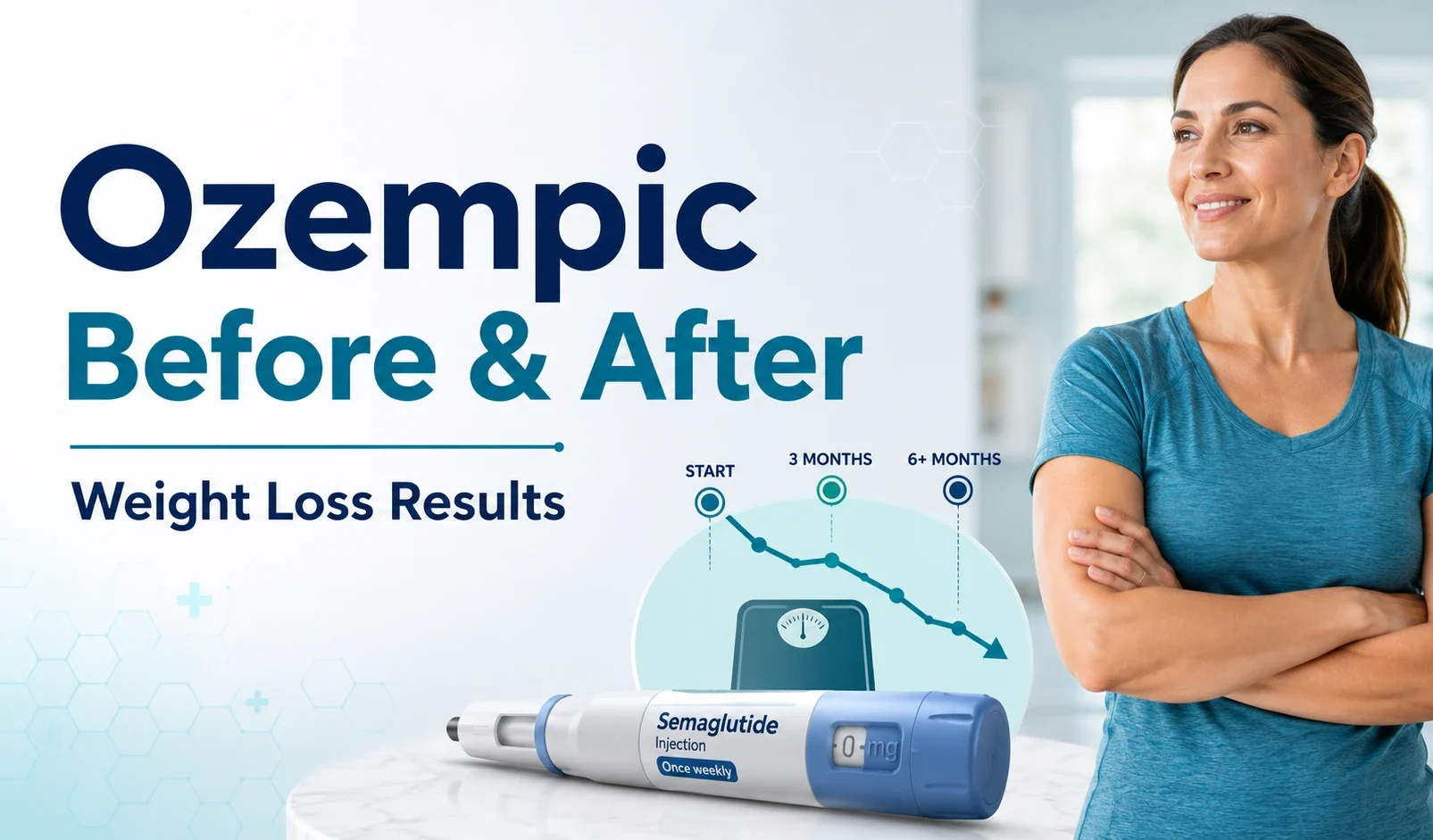
Ozempic Before and After Pictures: Weight Loss Results
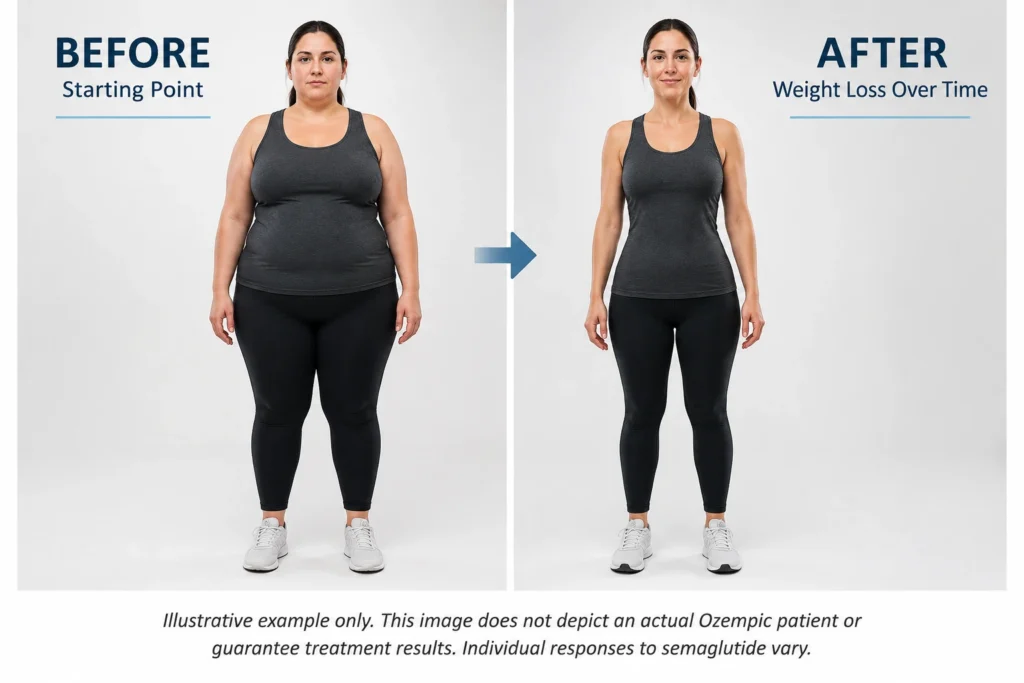
Ozempic before and after pictures can show noticeable changes in body weight, waist size, and overall appearance, but photos cannot predict how much weight an individual will lose. Results vary based on starting weight, dose, treatment duration, diet, physical activity, health conditions, and individual response to semaglutide.
Ozempic (semaglutide) is a once-weekly GLP-1 receptor agonist prescribed for adults with type 2 diabetes for specific blood sugar, cardiovascular, and kidney-related indications. Weight loss commonly occurs during treatment, although Ozempic itself is not FDA-approved specifically for chronic weight management.
Clinical studies provide a more reliable benchmark for expected results than individual transformation photos.
Quick Answer: What Do Ozempic Before and After Results Look Like?
Ozempic before and after results vary, but clinical trials show that people with type 2 diabetes can lose meaningful amounts of weight over several months. Visible changes may include a smaller waist and reduced overall body size. Results depend on dose, starting weight, diet, activity, treatment duration, and individual response.
Key Takeaways
- Ozempic can cause meaningful weight loss, although it is not FDA-approved specifically for chronic weight management.
- Ozempic and Wegovy both contain semaglutide but have different approved indications and dosing.
- In one 40-week Ozempic trial, average weight loss was approximately 12.3 lb with 1 mg and 14.1 lb with 2 mg.
- Visible changes generally develop over months rather than weeks.
- Results depend on starting weight, dose, diet, physical activity, treatment duration, and individual response.
- Before-and-after pictures illustrate individual experiences and cannot predict your results.
Ozempic Before and After Pictures: What Results Can Look Like
People searching for Ozempic before and after pictures often want to know whether the transformations they see online are realistic.
Significant changes are possible, but photographs need context. Weight loss may become visible in the abdomen, waist, face, arms, or overall body size, depending on how much weight is lost and where an individual tends to store body fat.
How Much Weight Can You Lose on Ozempic?
There is no single amount of weight everyone should expect to lose with Ozempic. Clinical trials involving adults with type 2 diabetes provide useful benchmarks.
Ozempic Weight Loss Results in Clinical Trials
| Ozempic dose | Study duration | Average weight change |
|---|---|---|
| 0.5 mg weekly | 30 weeks | -3.8 kg (-8.4 lb) |
| 1 mg weekly | 30 weeks | -4.7 kg (-10.4 lb) |
| 1 mg weekly | 40 weeks | -5.6 kg (-12.3 lb) |
| 2 mg weekly | 40 weeks | -6.4 kg (-14.1 lb) |
These numbers are averages, not guaranteed results. The trials involved different groups of participants, so results from separate studies should not be used as direct dose-to-dose comparisons.
In the 40-week trial directly comparing Ozempic 1 mg with 2 mg, average body weight decreased by 5.6 kg and 6.4 kg, respectively.
Ozempic vs. Wegovy Weight Loss
Understanding the difference between Ozempic and Wegovy is important because higher weight-loss figures from semaglutide obesity trials are sometimes described online simply as “Ozempic results.”
Both medications contain semaglutide, but they have different FDA-approved indications and dosing.
| Feature | Ozempic | Wegovy |
| Active ingredient | Semaglutide | Semaglutide |
| Drug class | GLP-1 receptor agonist | GLP-1 receptor agonist |
| Primary role | Type 2 diabetes and specified cardiovascular/kidney risk reduction | Chronic weight management and other approved indications |
| Can weight loss occur? | Yes | Yes |
| Weight-management indication | No | Yes |
| Injectable maintenance dosing | Up to 2 mg weekly | Different weight-management dosing regimen |
In the STEP 1 clinical trial, adults with overweight or obesity without diabetes receiving semaglutide 2.4 mg plus lifestyle intervention lost an average of approximately 14.9% of their starting body weight over 68 weeks, compared with 2.4% among participants receiving placebo plus lifestyle intervention.
That 14.9% figure is important evidence for semaglutide, but it should not be presented as the amount of weight someone should expect to lose while taking Ozempic.
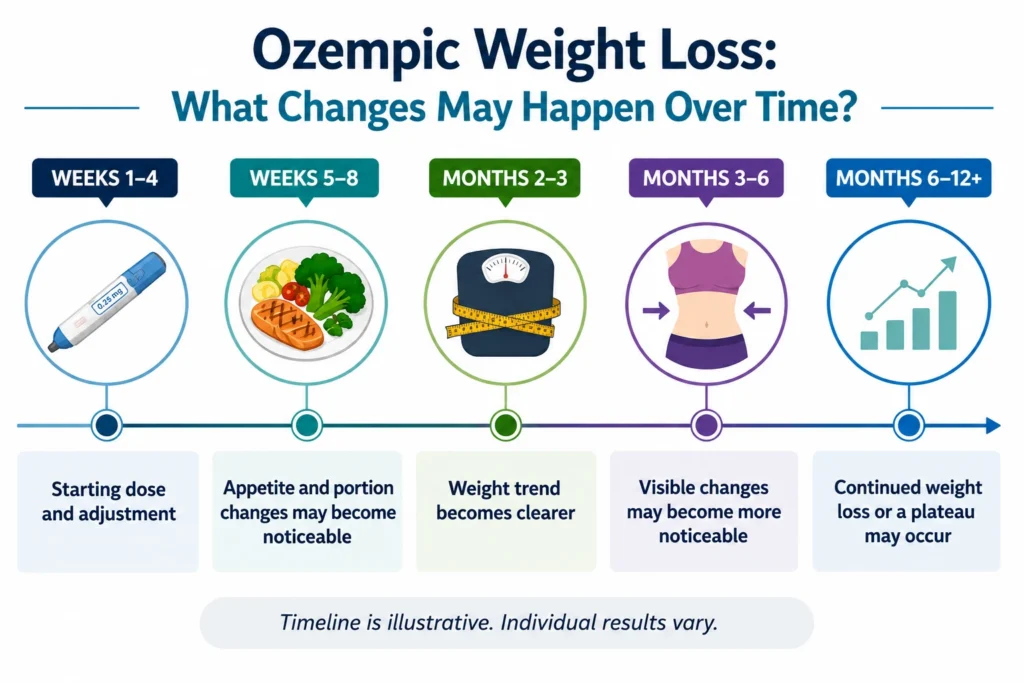
Ozempic Weight Loss Timeline
Ozempic before and after pictures often show the most noticeable differences after several months of treatment. Semaglutide is gradually increased in dose, and weight loss generally develops over months rather than happening immediately.
| Time | What may be happening |
| Weeks 1–4 | Treatment begins at a low dose; appetite or fullness may begin changing |
| Weeks 5–8 | Dose escalation may continue; early weight changes may appear |
| Months 2–3 | The overall weight trend may become clearer |
| Months 3–6 | Changes in weight and waist size may become more noticeable |
| Months 6–12+ | Additional weight loss or a plateau may occur |
This timeline is illustrative. Some people respond earlier, some more slowly, and others may experience relatively little weight loss.
Ozempic Before and After 6 Weeks
Six weeks is usually too early to judge long-term Ozempic weight loss. Treatment typically begins at 0.25 mg once weekly for four weeks before increasing to 0.5 mg.
Some people notice reduced appetite, smaller portions, or early changes on the scale during this period, but dramatic Ozempic before and after 6 weeks transformations should not be considered typical.
Ozempic Before and After 3 Months
Three months can provide a better indication of how someone is responding to treatment. By this point, some people may notice more obvious changes in body weight or waist circumference.
Instead of relying only on appearance, track objective measures such as body weight, percentage of starting weight lost, waist circumference, A1C, blood glucose, side effects, and physical function.
Ozempic Before and After 6 Months
Six months provides considerably more time for semaglutide’s effects on appetite and calorie intake to influence body weight. This is why Ozempic before and after 6 months pictures may show more noticeable changes than six-week comparisons.
Results still vary widely according to starting weight, dose, treatment adherence, food intake, physical activity, health conditions, and individual response.
How Does Ozempic Help With Weight Loss?
Semaglutide is a glucagon-like peptide-1 (GLP-1) receptor agonist. GLP-1 is involved in both glucose regulation and appetite.
Semaglutide can decrease calorie intake by influencing appetite. People taking it may feel satisfied with smaller portions, experience less hunger, or remain full longer.
For people with type 2 diabetes, semaglutide also helps lower blood glucose by stimulating insulin secretion and reducing glucagon secretion when glucose levels are elevated.
Over time, consuming fewer calories can contribute to weight loss.
Does Ozempic Reduce Belly Fat?
Ozempic does not selectively target belly fat.
As overall body weight and fat mass decrease, however, waist circumference and abdominal fat may also decline. Where visible fat loss occurs first varies according to genetics, sex, starting body composition, and other factors.
Abdominal exercises such as planks can strengthen the core muscles, but they cannot specifically force the body to burn fat from the abdomen.
Therefore, Ozempic before and after belly fat pictures should be viewed as examples of overall weight loss rather than evidence that the medication specifically targets the stomach.
Does Ozempic Cause Muscle Loss?
Weight loss can include reductions in both fat mass and lean mass. This makes preserving muscle an important consideration during substantial weight loss.
Strategies that may help support lean mass include adequate dietary protein, resistance exercise, regular physical activity, and appropriate overall nutrition.
People experiencing rapid or substantial weight loss should discuss nutrition, exercise, and body-composition concerns with a healthcare professional.
Diet and Exercise While Taking Ozempic
There is no single required “Ozempic diet.” A sustainable eating pattern should provide adequate nutrition while supporting blood glucose management and an appropriate calorie intake.
For many people, this means emphasizing:
- lean and nutrient-dense protein sources
- vegetables, berries, legumes, and other high-fiber foods
- appropriate portions of whole grains
- nuts, seeds, avocado, and other sources of unsaturated fats
- adequate fluids
Large or high-fat meals may worsen gastrointestinal symptoms for some people. Smaller meals and stopping when comfortably full may be easier to tolerate.
Physical activity remains important during weight loss. Aerobic exercise such as walking, cycling, or swimming supports cardiovascular health, while resistance training can help preserve muscle.
For people with diabetes, regular physical activity can also improve insulin sensitivity and support blood glucose management.
Common Ozempic Side Effects
Gastrointestinal symptoms are among the most common adverse reactions associated with Ozempic.
Common side effects include:
- nausea
- vomiting
- diarrhea
- abdominal pain
- constipation
Symptoms can be particularly noticeable during dose escalation.
Here’s the full list of Ozempic side effects.
Ozempic also carries important warnings and precautions involving pancreatitis, diabetic retinopathy complications, hypoglycemia when combined with insulin or certain insulin-secretagogue medications, acute kidney injury due to volume depletion, severe gastrointestinal adverse reactions, gallbladder disease, and serious hypersensitivity reactions.
Ozempic carries a boxed warning concerning thyroid C-cell tumors observed in rodents. It is contraindicated in people with a personal or family history of medullary thyroid carcinoma (MTC) or Multiple Endocrine Neoplasia syndrome type 2 (MEN 2).
For a closer look at contraindications, warnings, and potential risks, read our guide to Ozempic safety for people with and without diabetes.
Patients should review the current prescribing information and discuss individual risks with their healthcare professional.
Ozempic, Blood Sugar, and A1C
For adults with type 2 diabetes, Ozempic’s potential benefits go beyond changes in body weight.
Ozempic is FDA-approved as an adjunct to diet and exercise to improve glycemic control in adults with type 2 diabetes and also has approved cardiovascular and kidney-related indications for certain adults with type 2 diabetes.
Weight loss may therefore occur alongside improvements in blood glucose and A1C.
If you are tracking changes in diabetes control during treatment, our A1C Calculator can help estimate how average blood glucose relates to an A1C result.
A1C and estimated average glucose provide useful long-term context that cannot be seen in a before-and-after photograph.
Why Ozempic Before-and-After Results Vary
Two people taking the same medication can experience very different weight-loss results.
Factors that may influence results include:
- starting body weight
- Ozempic dose
- treatment duration
- calorie intake
- physical activity
- diabetes status
- other medications
- underlying health conditions
- treatment adherence
- individual response to semaglutide
Photographs can also exaggerate differences. Lighting, posture, clothing, camera angle, hydration, and editing can make a transformation appear more dramatic.
For this reason, Ozempic weight loss before and after pictures should be viewed as individual examples—not predictions of your results.
How to Track Your Own Ozempic Results
If you want to create your own Ozempic before and after pictures, use consistent measurements and photo conditions to document progress rather than relying on body weight alone.
| Measurement | Suggested approach |
| Body weight | Measure at consistent intervals |
| Waist circumference | Consider measuring monthly |
| Progress photos | Use consistent conditions |
| A1C | Test as recommended by your healthcare professional |
| Blood glucose | Follow your diabetes management plan |
| Side effects | Record significant changes |
| Activity | Monitor regularly |
| Ozempic dose | Record whenever it changes |
For progress photographs, use approximately the same lighting, distance, posture, clothing, and camera position. This creates a more meaningful comparison between your starting point and later results.
If you have diabetes, you can also compare your glucose readings with our Blood Sugar Charts to see how they align with commonly recommended glucose ranges.
What Happens If You Stop Semaglutide?
Weight regain can occur after semaglutide is discontinued.
In an extension of the STEP 1 obesity trial, participants who stopped semaglutide 2.4 mg regained approximately two-thirds of their previous weight loss during the following year.
These results involved the 2.4 mg semaglutide obesity-treatment regimen rather than standard Ozempic dosing, but they demonstrate that maintaining weight loss after stopping GLP-1 treatment can be challenging.
Obesity is a chronic condition, and decisions about continuing, changing, or stopping medication should be made with a healthcare professional.
Frequently Asked Questions
Bottom Line
Ozempic before and after pictures can show how someone’s appearance may change during treatment, but clinical evidence provides a more reliable measure of what to expect.
Adults with type 2 diabetes taking Ozempic have experienced meaningful average weight reductions in clinical trials, while studies using higher-dose semaglutide for obesity have demonstrated greater average percentage weight loss over longer treatment periods.
The most useful before-and-after comparison is your own. Track body weight, waist circumference, blood glucose, A1C, physical function, and overall health consistently rather than comparing your progress with someone else’s photograph.
If you are considering Ozempic or have concerns about your response to treatment, discuss your goals, dosage, side effects, and progress with your healthcare professional.
References
- U.S. Food and Drug Administration — Ozempic (semaglutide) Prescribing Information, 2026
FDA Ozempic Prescribing Information (PDF)
This should be the primary source for Ozempic indications, dosing, contraindications, adverse reactions, warnings, and the Ozempic-specific clinical-trial weight changes. - American Diabetes Association — Obesity and Weight Management for the Prevention and Treatment of Diabetes: Standards of Care in Diabetes—2026
ADA Standards of Care 2026 — Section 8
DOI:10.2337/dc26-S008 - American Diabetes Association — Pharmacologic Approaches to Glycemic Treatment: Standards of Care in Diabetes—2026
ADA Standards of Care 2026 — Section 9 - Wilding JPH, Batterham RL, Calanna S, et al. — Once-Weekly Semaglutide in Adults with Overweight or Obesity (STEP 1)
New England Journal of Medicine — STEP 1
DOI:10.1056/NEJMoa2032183. This is the trial supporting the 14.9% mean weight-loss figure for semaglutide 2.4 mg—not standard Ozempic dosing. - Davies M, Færch L, Jeppesen OK, et al. — Semaglutide 2.4 mg Once a Week in Adults with Overweight or Obesity, and Type 2 Diabetes (STEP 2)
PubMed — STEP 2 Trial
DOI:10.1016/S0140-6736(21)00213-0. - Rubino D, Abrahamsson N, Davies M, et al. — Effect of Continued Weekly Subcutaneous Semaglutide vs Placebo on Weight Loss Maintenance (STEP 4)
JAMA — STEP 4 Trial
DOI:10.1001/jama.2021.3224. - Wilding JPH, Batterham RL, Davies M, et al. — Weight Regain and Cardiometabolic Effects After Withdrawal of Semaglutide: STEP 1 Trial Extension
Wiley — STEP 1 Trial Extension
DOI:10.1111/dom.14725.