Ketones and Diabetes: What Your Ketone Levels Mean
Ketones are chemicals your body makes when it burns fat for energy instead of glucose. Small amounts can occur during fasting, prolonged exercise, or a low-carbohydrate diet. For people with diabetes, however, rising ketone levels can also signal that the body does not have enough insulin.
This is especially important for people with type 1 diabetes because high ketone levels can progress to diabetic ketoacidosis (DKA), a serious medical emergency. DKA can also occur in people with type 2 diabetes, particularly during illness or in certain situations involving diabetes medications.
Quick Answer: What do ketones mean if you have diabetes? Ketones mean your body is using fat for energy. Small amounts are not always dangerous, but elevated or rising ketones in someone with diabetes can indicate insufficient insulin and an increased risk of diabetic ketoacidosis (DKA). Check ketones when you are sick, have persistent high blood sugar, or develop symptoms of DKA such as nausea, vomiting, abdominal pain, rapid breathing, or unusual fatigue.
Key Takeaways
- Ketones are produced when the body breaks down fat for energy.
- People with diabetes can develop high ketones when there is not enough effective insulin available.
- Illness, missed insulin, insulin-pump problems, dehydration, fasting, and certain medications can increase ketone production.
- Ketones can be measured with a blood ketone meter or urine ketone strips.
- Blood beta-hydroxybutyrate testing provides a more current assessment than urine testing.
- High ketones combined with metabolic acidosis can indicate diabetic ketoacidosis (DKA).
- DKA can sometimes occur without extremely high blood sugar, particularly with SGLT2 inhibitor use.
What Are Ketones?
Ketones, also called ketone bodies, are chemicals produced mainly by the liver when the body breaks down fat for energy.
Normally, insulin helps glucose move from the bloodstream into cells where it can be used for energy. When carbohydrate availability is low or there is not enough effective insulin, the body increases the breakdown of fat and produces ketones.
The main ketone bodies are beta-hydroxybutyrate, acetoacetate, and acetone. Blood ketone meters generally measure beta-hydroxybutyrate, while urine ketone strips primarily detect acetoacetate. 1 2
Having ketones does not automatically mean something is wrong. The amount of ketones, why they are being produced, and whether diabetes or insulin deficiency is involved determine their significance.
What Causes Ketones in Diabetes?
For people with diabetes, ketones can develop when the body does not have enough effective insulin to use glucose normally.
Common causes include:
- Missing or delaying insulin
- An insulin pump or infusion-set problem
- Illness or infection
- Dehydration
- Vomiting or diarrhea
- Prolonged fasting or reduced food intake
- Eating very few carbohydrates
- Increased insulin needs during illness or stress
- Pregnancy
- Certain diabetes medications, particularly SGLT2 inhibitors 3
People who use insulin pumps should pay particular attention to unexpected high glucose accompanied by rising ketones. Because pumps typically use rapid-acting insulin, an interruption in insulin delivery can lead to insulin deficiency relatively quickly. 4
Ketone Levels: What Is Normal, High, or Dangerous?
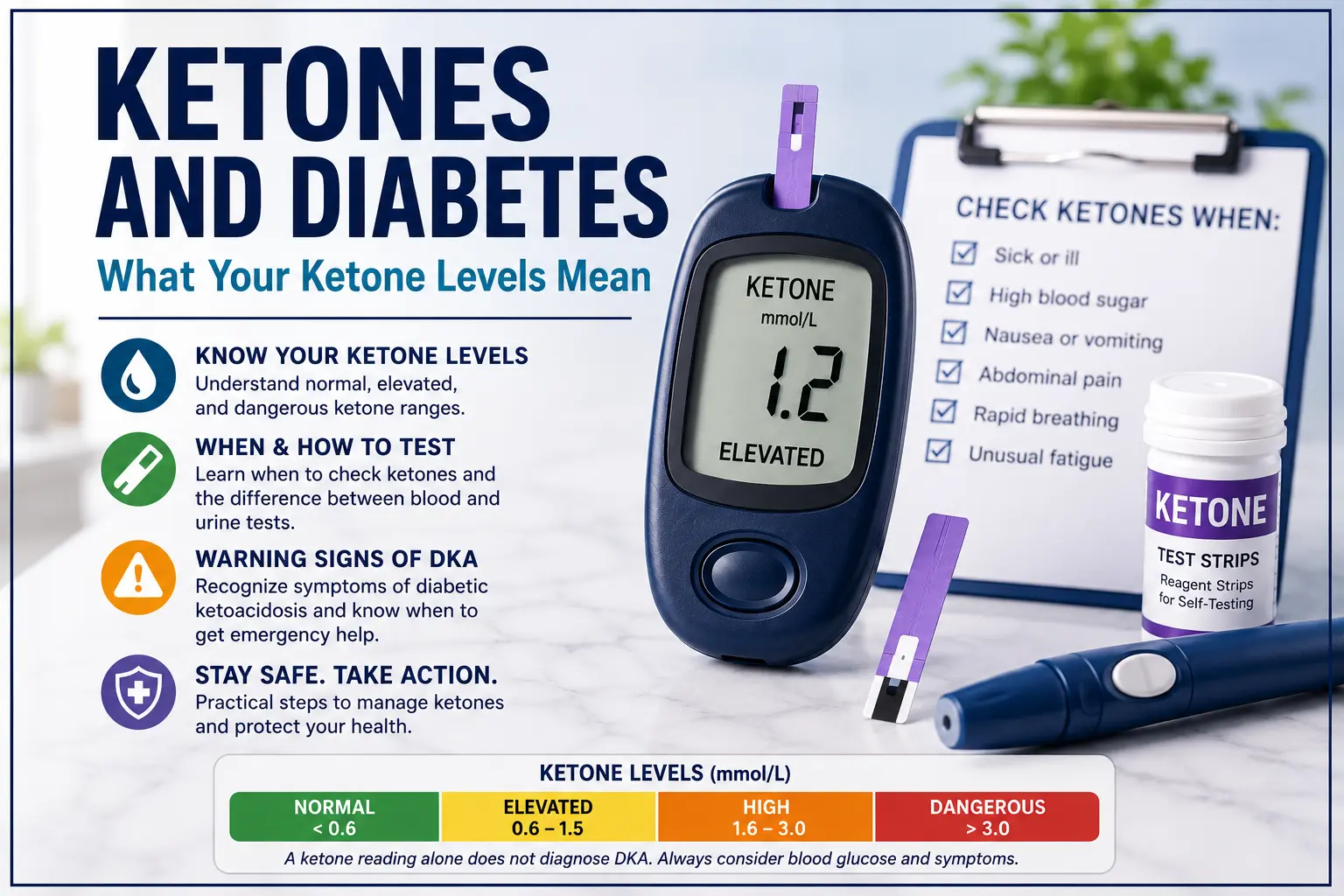
Blood ketone meters typically measure beta-hydroxybutyrate in millimoles per liter (mmol/L).
| Blood Ketone Level | General Interpretation | What to Know |
|---|---|---|
| Below 0.6 mmol/L | Normal | Significant ketosis is generally not present |
| 0.6–1.5 mmol/L | Elevated | Ketones are present; follow your personal ketone plan and monitor closely |
| 1.6–2.9 mmol/L | High | Increased concern for developing DKA; follow your urgent ketone plan and contact your diabetes care team |
| 3.0 mmol/L or higher | Very high | Significant ketonemia and possible DKA; urgent medical assessment is needed |
These ranges provide general guidance. Your healthcare team may recommend different action thresholds based on your diabetes history, age, pregnancy status, medications, or previous episodes of DKA.
A ketone reading alone does not diagnose diabetic ketoacidosis. DKA is diagnosed using ketone levels together with diabetes or hyperglycemia and evidence of metabolic acidosis. 5
When Should You Check Ketones?
People at risk for DKA should have a personalized plan explaining when to check ketones.
Consider testing when:
- Your blood sugar remains unusually high despite correction insulin
- You are sick or have an infection
- You have nausea or vomiting
- You have abdominal pain
- You feel unusually weak or fatigued
- You are dehydrated
- You suspect your insulin pump or infusion site is not working correctly
- You develop symptoms of DKA
- Your healthcare provider has instructed you to check them 3
If you’re unsure how your glucose reading compares with recommended ranges, see our Blood Sugar Charts for fasting, before-meal, and after-meal glucose targets.
The American Diabetes Association recommends checking ketones when you are sick or have symptoms of DKA and when blood glucose remains elevated. Follow the glucose threshold and testing schedule recommended by your diabetes care team. 3
Do not rely only on your glucose level if you feel sick. DKA can sometimes develop without extremely high blood sugar.
Blood Ketones vs. Urine Ketones
Ketones can be checked at home using a blood ketone meter or urine test strips.
Blood Ketone Testing
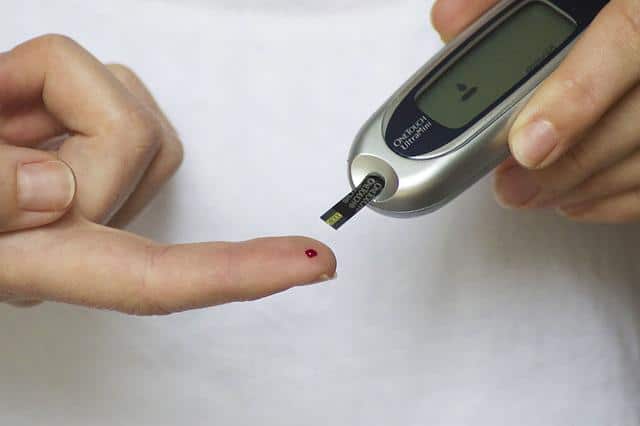
A blood ketone meter works similarly to a blood glucose meter. A small blood sample is placed on a test strip to measure beta-hydroxybutyrate.
Blood testing:
- Provides a numerical ketone result
- Reflects ketone levels more closely in real time
- Can identify rising ketones sooner
- Is generally preferred when assessing possible DKA 5 3
Urine Ketone Testing
Urine ketone strips change color based on the amount of acetoacetate in the urine. Results are typically reported as negative, trace, small, moderate, or large.
Urine strips can be useful when blood ketone testing is unavailable, but urine results reflect ketones that accumulated since the bladder was last emptied. They may therefore lag behind what is currently happening in the blood. 5 2
What Do Ketones in Urine Mean?
Ketones in urine, known as ketonuria, indicate that the body has been using more fat for energy. 2
Trace or small amounts can occur with:
- Overnight fasting
- Low-carbohydrate eating
- Prolonged exercise
- Pregnancy
- Reduced food intake 2
For someone with diabetes, moderate or large urine ketones require more attention, particularly when accompanied by high blood glucose, illness, or symptoms of DKA.
Follow your diabetes care team’s ketone plan and seek medical advice promptly if urine ketones are moderate or large.
Ketosis vs. Diabetic Ketoacidosis
Nutritional ketosis and diabetic ketoacidosis are not the same condition.
| Nutritional Ketosis | Diabetic Ketoacidosis (DKA) |
| Often caused by fasting or very low carbohydrate intake | Usually associated with severe insulin deficiency |
| Ketone production remains controlled | Ketones accumulate to dangerous levels |
| Blood acid-base balance remains regulated | Blood becomes abnormally acidic |
| Usually does not cause severe illness | Can become life-threatening |
| Does not require emergency DKA treatment | Requires urgent medical treatment |
This distinction is particularly important for people with diabetes who follow a ketogenic or very-low-carbohydrate diet.
Nutritional ketosis does not protect against DKA. People with diabetes should not dismiss elevated ketones or symptoms of illness simply because they intentionally restrict carbohydrates.
What Is Diabetic Ketoacidosis (DKA)?
Diabetic ketoacidosis is a serious diabetes complication caused by insufficient effective insulin.
Without enough insulin, glucose cannot be used normally by cells and the body rapidly breaks down fat. Large amounts of ketones accumulate in the bloodstream and can make the blood dangerously acidic. 6 4
DKA occurs most often in people with type 1 diabetes, but people with type 2 diabetes can develop it as well.
Current diagnostic criteria evaluate three components:
- Diabetes or hyperglycemia
- Significant ketone elevation
- Metabolic acidosis
A blood beta-hydroxybutyrate level of 3.0 mmol/L or higher indicates significant ketonemia, but laboratory evaluation is needed to determine whether acidosis is present and confirm DKA. 7 5
Signs and Symptoms of DKA
DKA can develop quickly. Possible symptoms include:
- Excessive thirst
- Frequent urination
- Dry mouth or dehydration
- Nausea or vomiting
- Abdominal pain
- Unusual tiredness or weakness
- Rapid or deep breathing
- Shortness of breath
- Fruity-smelling breath
- Difficulty concentrating
- Confusion 6 4
Repeated vomiting, difficulty breathing, confusion, inability to keep fluids down, or high and worsening ketones require urgent medical attention.
DKA is a medical emergency and should not be managed solely with information found online.
Can You Have DKA Without High Blood Sugar?
Yes. Euglycemic DKA is diabetic ketoacidosis that occurs when blood glucose is not as high as normally expected with DKA.
This is important because a person may assume DKA is impossible simply because their glucose meter or continuous glucose monitor is not showing an extremely high number.
Euglycemic DKA can occur in situations involving:
- SGLT2 inhibitor use
- Reduced food intake or prolonged fasting
- Pregnancy
- Alcohol use
- Other conditions where insulin is insufficient despite lower glucose levels
If you have symptoms suggestive of DKA, ketone testing may be necessary even when your glucose level does not appear extremely high.
Ketones and SGLT2 Inhibitors
SGLT2 inhibitors are medications used for many people with type 2 diabetes and for certain cardiovascular and kidney conditions.
These medications can increase the risk of DKA in some situations, and the resulting DKA may occur with lower-than-expected blood glucose.
Risk can increase during:
- Illness
- Dehydration
- Prolonged fasting
- Very-low-carbohydrate diets
- Reduced insulin doses
- Surgery
- Excessive alcohol intake
People taking an SGLT2 inhibitor should understand the symptoms of DKA and follow their healthcare provider’s instructions during illness, fasting, or before surgery.
SGLT2 inhibitors are not approved for treating type 1 diabetes in the United States.
What Should You Do If Your Ketones Are High?
Follow your individual diabetes sick-day or ketone-management plan because insulin requirements and treatment instructions differ from person to person.
In general:
- Check your blood glucose and ketones.
- Continue insulin according to your diabetes care plan. Do not stop insulin simply because you are sick or unable to eat.
- Drink fluids if you can safely keep them down.
- Check your insulin pump and infusion site if you use pump therapy.
- Use correction insulin only according to your prescribed plan.
- Recheck glucose and ketones as directed by your healthcare team.
Avoid strenuous exercise when blood glucose is high and ketones are elevated. Exercise is not a treatment for ketones caused by insulin deficiency and may make the situation worse.
Contact your healthcare provider if ketones remain elevated or continue to rise. Seek urgent medical care for very high ketones, repeated vomiting, inability to keep fluids down, difficulty breathing, severe weakness, confusion, or other symptoms of DKA.
Can People With Diabetes Follow a Keto Diet?
Some people with type 2 diabetes may experience improvements in blood glucose or weight with lower-carbohydrate eating patterns. Learn more about the potential benefits and risks in our guide to the keto diet for diabetes. A ketogenic diet, however, is not appropriate for everyone with diabetes.
People using insulin or medications that can cause hypoglycemia may need medication adjustments when carbohydrate intake changes substantially.
People with type 1 diabetes should discuss significant carbohydrate restriction with their diabetes care team because nutritional ketosis can make ketone interpretation more complicated while severe insulin deficiency can still cause DKA.
Those people taking SGLT2 inhibitors should also discuss very-low-carbohydrate diets with their healthcare provider because carbohydrate restriction can be a risk factor for SGLT2 inhibitor-associated DKA.
Frequently Asked Questions About Ketones
Bottom Line
Ketones are a normal part of the body’s ability to use fat for energy, but elevated or rising ketones can signal insufficient insulin in people with diabetes. Knowing when to test, what your ketone level means, and when to seek medical carecan help identify developing DKA before it becomes a medical emergency.
Medically reviewed by Dr. Seshadri G. Das, MD
Board Certified in Endocrinology, Diabetes & Metabolism
Last updated: August 2026
References
- MedlinePlus. Ketones in Blood. MedlinePlus — Ketones in Blood [↩]
- MedlinePlus. Ketones in Urine. MedlinePlus — Ketones in Urine [↩] [↩] [↩] [↩] [↩]
- American Diabetes Association. Managing Ketones with Diabetes. ADA — Managing Ketones with Diabetes [↩] [↩] [↩] [↩] [↩] [↩]
- Centers for Disease Control and Prevention. Diabetic Ketoacidosis. CDC — Diabetic Ketoacidosis [↩] [↩] [↩]
- Umpierrez GE, Davis GM, ElSayed NA, et al. Hyperglycemic Crises in Adults With Diabetes: A Consensus Report. Diabetes Care. 2024;47(8):1257–1275. Hyperglycemic Crises in Adults With Diabetes: A Consensus Report [↩] [↩] [↩] [↩] [↩]
- American Diabetes Association. Diabetes-Related Ketoacidosis (DKA). ADA — Diabetes-Related Ketoacidosis (DKA) [↩] [↩]
- American Diabetes Association Professional Practice Committee for Diabetes. Standards of Care in Diabetes—2026, Section 16: Diabetes Care in the Hospital. ADA Standards of Care in Diabetes—2026, Section 16 [↩]