Normal Blood Sugar After Eating: What’s a Healthy Range?
Blood sugar naturally rises after you eat, especially after a meal containing carbohydrates. But how high should it go?
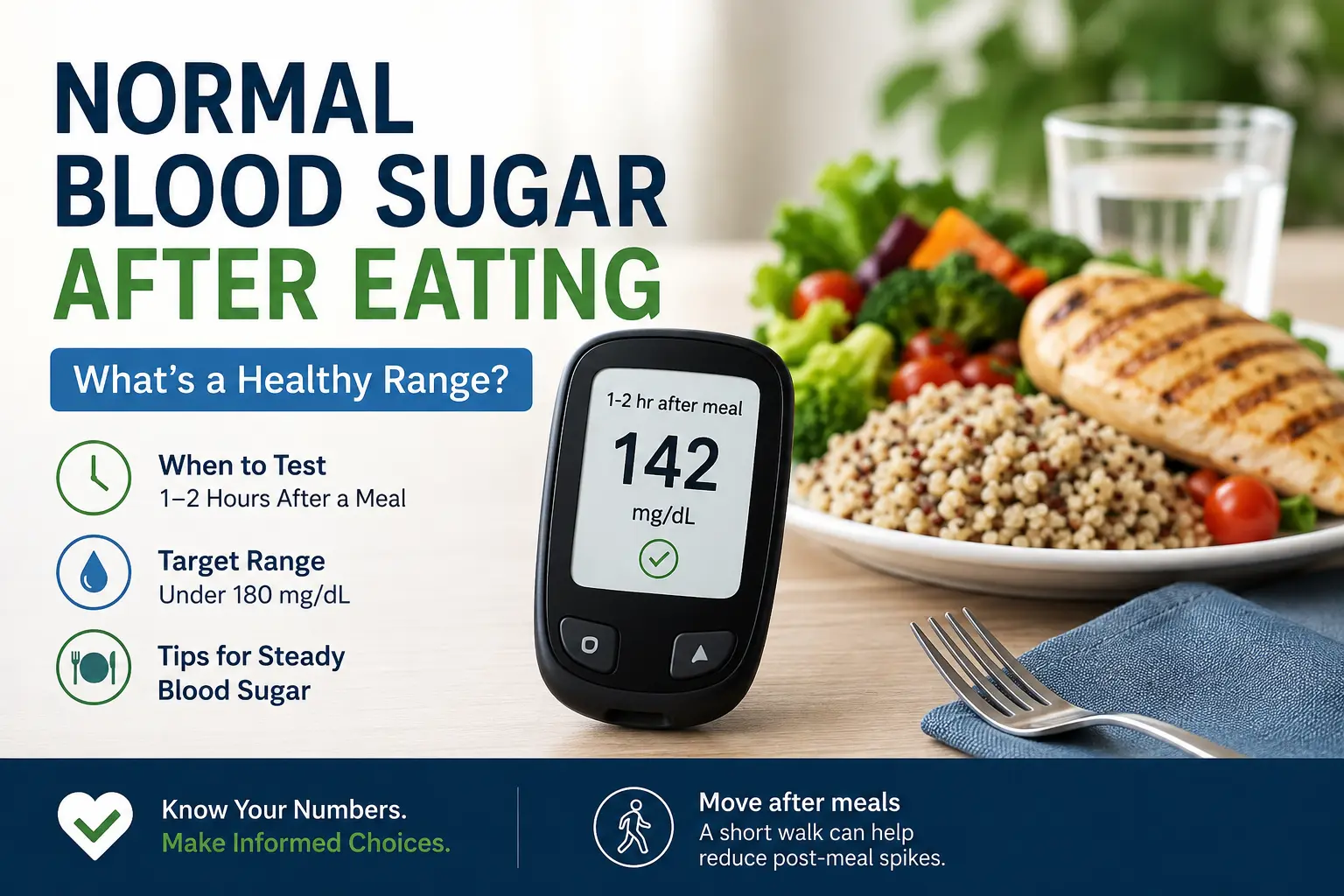
For many nonpregnant adults with diabetes, the American Diabetes Association (ADA) recommends a peak blood sugar below 180 mg/dL (10.0 mmol/L), measured 1–2 hours after the beginning of a meal.1 Your individual target may be different depending on your treatment and health needs.
Quick Answer: What Is Normal Blood Sugar After Eating?
Here are general blood sugar targets for many nonpregnant adults with diabetes:
| When You Test | General Target |
|---|---|
| Before a meal | 80–130 mg/dL |
| 1–2 hours after starting a meal | Less than 180 mg/dL |
For people without diabetes, there isn’t one universal home-testing target after every meal. However, during a standardized oral glucose tolerance test (OGTT), a 2-hour glucose below 140 mg/dL is below the prediabetes range.2
These numbers are useful reference points, but your healthcare provider may recommend different targets.
Key Points
- For many nonpregnant adults with diabetes, the ADA recommends a peak post-meal glucose below 180 mg/dL.1
- Check post-meal glucose 1–2 hours after the beginning of a meal.
- There is no single universal home post-meal target for people without diabetes.
- Carbohydrate amount, meal composition, activity, medications, and starting glucose can all affect your reading.
- Look for glucose patterns over time rather than judging your control from one reading.
When Should You Check Blood Sugar After Eating?
Timing matters. The ADA recommends measuring post-meal glucose 1–2 hours after the beginning of the meal, which generally corresponds with peak glucose levels in people with diabetes.1
For example, if you start lunch at noon, check between 1:00 and 2:00 p.m.
Testing at consistent times also makes it easier to see how different foods and meals affect your glucose.
Why Blood Sugar Rises After Eating
Carbohydrates are broken down into glucose, causing blood sugar to rise. Insulin then helps move glucose from your bloodstream into your cells.
How high your blood sugar rises can depend on:
- The amount and type of carbohydrate you eat
- Meal size and fiber content
- Protein and fat in the meal
- Physical activity
- Insulin or diabetes medications
- Your blood sugar before eating
- Stress, illness, and sleep
People with diabetes may experience larger or longer-lasting increases because their bodies don’t produce enough insulin, don’t use insulin effectively, or both.
Is 140, 180, or 200 Blood Sugar After Eating High?
The meaning of a post-meal reading depends on when you tested, whether you have diabetes, and your individual glucose targets.
140 mg/dL: For many adults with diabetes, 140 mg/dL at 1–2 hours after starting a meal is within the ADA’s general post-meal target.
180 mg/dL: The ADA recommends a peak post-meal glucose below 180 mg/dL for many nonpregnant adults with diabetes.1
200 mg/dL or higher: One reading after an ordinary meal does not diagnose diabetes. However, repeated high readings should be discussed with your healthcare provider.
For diagnosis, a 2-hour plasma glucose of 200 mg/dL or higher during a 75-g OGTT meets an ADA criterion for diabetes.2 This laboratory test is different from checking your blood sugar after an ordinary meal.
How to Keep Blood Sugar Steady After Eating
A few practical habits can help reduce large post-meal glucose swings.
Build Balanced Meals
Combine carbohydrates with protein, healthy fats, vegetables, and fiber. Also pay attention to carbohydrate portions, since even nutritious carbohydrate-rich foods can raise blood sugar. Eating vegetables and protein before carbohydrate-rich foods may also help reduce the post-meal glucose rise.3
Use our diabetes food chart for additional diabetes-friendly food choices.
Move After Meals
Light activity after eating can help your muscles use glucose. Even a short walk after a meal may help reduce the post-meal glucose rise. Household chores or other light movement can also help.
Track Your Patterns
A blood glucose meter or continuous glucose monitor (CGM) can help you see how different meals affect you.
Consider recording the meal, your glucose before eating, and your reading 1–2 hours afterward. Patterns over several days are generally more useful than focusing on one isolated reading. You can also compare your numbers with our blood sugar levels chart or use the A1C Calculator to understand how average glucose relates to A1C.
When to Talk With Your Healthcare Provider
Talk with your healthcare provider if your blood sugar is frequently above your recommended post-meal target, you experience repeated unexplained highs or lows, or you’re unsure how food, insulin, or medications are affecting your glucose.
One high reading is less informative than a repeated pattern. Don’t change insulin or diabetes medications based solely on general blood sugar targets without guidance from your healthcare team.
Frequently Asked Questions
Medically reviewed by Dr. Seshadri G. Das, MD
Board Certified in Endocrinology, Diabetes & Metabolism
Last updated: August 2026
References
- American Diabetes Association Professional Practice Committee for Diabetes. Glycemic Goals, Hypoglycemia, and Hyperglycemic Crises: Standards of Care in Diabetes—2026. Diabetes Care. 2026;49(Suppl. 1):S132–S149. https://doi.org/10.2337/dc26-S006 [↩] [↩] [↩] [↩] [↩] [↩]
- American Diabetes Association Professional Practice Committee for Diabetes. Diagnosis and Classification of Diabetes: Standards of Care in Diabetes—2026. Diabetes Care. 2026;49(Suppl. 1):S27–S49. https://doi.org/10.2337/dc26-S002 [↩] [↩]
- McKenzie R, Sterling C, O’Hara H, Woodside J. The Impact of Macronutrient Ordering on Postprandial Glycaemic Control in Diabetes: A Systematic Review. Endocrinology, Diabetes & Metabolism. 2026;9(3):e70228. PubMed – McKenzie et al., 2026 [↩]