
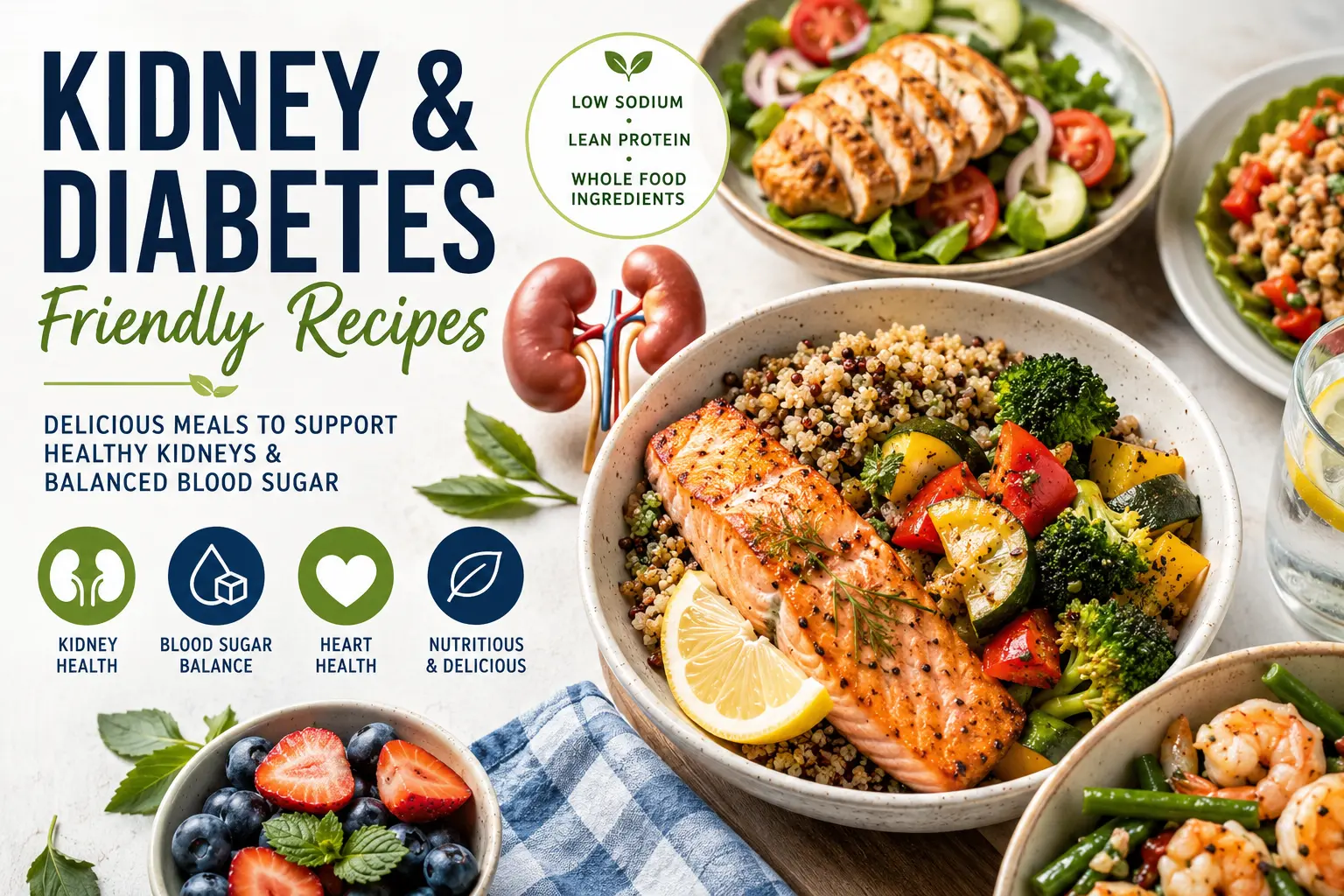
7 Kidney and Diabetes Friendly Recipes for Better Kidney Health
Kidney and diabetes friendly recipes are an important part of managing blood sugar while helping support healthy kidney function. Because diabetes is the leading cause of chronic kidney disease (CKD), choosing meals made with lean protein, fresh vegetables, healthy fats, and lower sodium ingredients can help reduce stress on the kidneys while supporting long-term health.[1], [2]
The recipes below use evidence-based nutrition principles that support both diabetes management and kidney health. Because potassium, phosphorus, protein, and sodium needs vary by stage of kidney disease, always follow the guidance of your healthcare provider or registered renal dietitian.
Quick Answer: Kidney and diabetes friendly recipes are meals made with lean protein, non-starchy vegetables, healthy fats, moderate carbohydrate portions, and lower sodium ingredients. They may help support healthy kidneys while promoting better blood sugar management as part of an overall healthy lifestyle.[1], [2]
What Makes a Recipe Kidney and Diabetes Friendly?
Meals should generally include:
| Choose More Often | Limit |
|---|---|
| Fresh vegetables | Highly processed foods |
| Skinless chicken | Processed meats |
| Fish | Fast food |
| Olive oil | Fried foods |
| Herbs and spices | Excess salt |
| Whole grains (appropriate portions) | Refined carbohydrates |
| Fresh fruit (as appropriate) | Sugary drinks |
Many people with CKD may also need individualized limits for potassium, phosphorus, or protein depending on disease stage.[1], [2], [4]
Recipe 1: Lemon Herb Baked Salmon
Ingredients
- 2 salmon fillets
- 1 tbsp olive oil
- 1 tbsp lemon juice
- Garlic powder
- Black pepper
- Fresh parsley
Instructions
- Heat oven to 400°F.
- Brush salmon with olive oil and lemon juice.
- Season lightly.
- Bake 12–15 minutes.
Estimated Nutrition
| Calories | Protein | Carbs | Fiber | Sodium |
|---|---|---|---|---|
| 295 | 27g | 2g | 0g | 90mg |
Why It Works
Salmon provides high-quality protein and heart-healthy omega-3 fats while remaining naturally low in carbohydrates.[2], [3]
Recipe 2: Grilled Chicken and Cucumber Salad
Ingredients
- Grilled chicken breast
- Mixed greens
- Cucumbers
- Cherry tomatoes
- Olive oil
- Lemon juice
Instructions
- Grill or bake the chicken until fully cooked.
- Slice the chicken into strips.
- Add mixed greens, cucumbers, and tomatoes to a bowl.
- Top with chicken.
- Drizzle with olive oil and lemon juice before serving.
Estimated Nutrition
| Calories | Protein | Carbs | Fiber |
|---|---|---|---|
| 290 | 32g | 10g | 4g |
Why It Works
This meal combines lean protein with non-starchy vegetables, helping keep carbohydrates moderate while supporting fullness. Using olive oil and lemon juice instead of bottled dressing also helps reduce added sodium and sugar.[2], [4]
Recipe 3: Turkey Lettuce Wraps
Ingredients
- Lean ground turkey
- Romaine lettuce leaves
- Bell peppers
- Mushrooms
- Garlic
- Onion
- Low-sodium seasoning
Instructions
- Cook lean ground turkey in a skillet over medium heat.
- Add diced bell peppers, mushrooms, garlic, and onion.
- Season lightly with low-sodium seasoning.
- Cook until vegetables soften and turkey is fully cooked.
- Spoon mixture into romaine lettuce leaves and serve.
Estimated Nutrition
| Calories | Protein | Carbs |
|---|---|---|
| 265 | 28g | 9g |
Why It Works
Lettuce wraps keep the meal lower in carbohydrates while lean turkey provides protein without relying on processed meats. Bell peppers and mushrooms add flavor, fiber, and nutrients without needing high-sodium sauces.[2]
Recipe 4: Garlic Shrimp with Roasted Cauliflower
Ingredients
- Shrimp
- Cauliflower florets
- Olive oil
- Garlic
- Paprika
Instructions
- Heat oven to 400°F.
- Toss cauliflower with olive oil, garlic, and paprika.
- Roast cauliflower for 20–25 minutes.
- Sauté shrimp in a skillet for 3–4 minutes per side until fully cooked.
- Serve shrimp over roasted cauliflower.
Estimated Nutrition
| Calories | Protein | Carbs |
|---|---|---|
| 270 | 29g | 11g |
Why It Works
Shrimp provides lean protein, while cauliflower is a lower-carb, kidney-conscious vegetable choice for many people. Roasting with olive oil, garlic, and paprika adds flavor without excess sodium.[2], [3]
Recipe 5: Mediterranean Stuffed Bell Peppers
Ingredients
- Bell peppers
- Lean ground chicken
- Brown rice
- Onion
- Garlic
- Parsley
Instructions
- Heat oven to 375°F.
- Slice bell peppers in half and remove seeds.
- Cook ground chicken with onion, garlic, parsley, and cooked brown rice.
- Spoon mixture into pepper halves.
- Bake for 25–30 minutes, until peppers are tender.
Estimated Nutrition
| Calories | Protein | Carbs |
|---|---|---|
| 315 | 26g | 24g |
Why It Works
Bell peppers provide a nutrient-rich base, while lean ground chicken adds protein and brown rice gives a controlled portion of carbohydrates. Herbs, garlic, and parsley add flavor without relying on salty seasonings.[2], [4]
Recipe 6: Herb-Roasted Cod with Green Beans
Ingredients
- Cod fillets
- Green beans
- Olive oil
- Dill
- Lemon
Instructions
- Heat oven to 400°F.
- Place cod and green beans on a lined baking sheet.
- Drizzle with olive oil and lemon juice.
- Season with dill and black pepper.
- Bake for 12–15 minutes, until cod flakes easily.
Estimated Nutrition
| Calories | Protein | Carbs |
|---|---|---|
| 255 | 31g | 9g |
Why It Works
Cod is a lean protein that pairs well with non-starchy vegetables like green beans. Lemon, dill, and olive oil keep the dish flavorful while limiting added sodium.[2], [3]
Recipe 7: Vegetable Egg White Scramble
Ingredients
- Egg whites
- Spinach
- Mushrooms
- Onion
- Olive oil
Instructions
- Heat olive oil in a nonstick skillet.
- Add spinach, mushrooms, and onion.
- Cook until vegetables soften.
- Pour in egg whites.
- Stir gently until fully cooked, then serve warm.
Estimated Nutrition
| Calories | Protein | Carbs |
|---|---|---|
| 210 | 23g | 8g |
Why It Works
Egg whites provide protein with less saturated fat than whole-egg-heavy meals, while spinach, mushrooms, and onion add volume and nutrients with minimal carbohydrates. It works well as a light breakfast or lunch option for blood sugar-conscious eating.[2]
Nutrition Tips for Kidney and Diabetes Health
Research consistently recommends:
- Keep sodium below approximately 2,300 mg daily unless your healthcare provider recommends a lower target.
- Focus on minimally processed foods.
- Choose lean proteins in appropriate portions.
- Eat plenty of non-starchy vegetables.
- Replace saturated fats with olive oil and other unsaturated fats.
- Control carbohydrate portions to support healthy glucose levels.[1], [2], [3], [4], [6]
Why Blood Sugar Control Helps Protect Your Kidneys
Long-term elevated blood glucose can damage the small blood vessels inside the kidneys. Maintaining your target A1C is one of the most important steps for preserving kidney function over time.[2], [3], [6]
If you’re tracking your diabetes progress, DiabetesKnow’s free A1C Calculator can help estimate your average blood glucose from your A1C result—or estimate your A1C from your average glucose—making it easier to understand your long-term blood sugar trends alongside healthy eating habits.
Final Thoughts
Healthy eating for diabetes and kidney health doesn’t have to be restrictive. Meals built around lean protein, fresh vegetables, healthy fats, lower sodium ingredients, and balanced carbohydrate portions can support healthy kidneys while helping maintain stable blood sugar. Because kidney nutrition varies by CKD stage, always work with your physician or registered dietitian before making significant dietary changes.[2], [4], [6]
Frequently Asked Questions About Kidney and Diabetes Friendly Recipes
References
- Centers for Disease Control and Prevention (CDC). Diabetes and Kidney Disease: What to Eat.
- American Diabetes Association. Standards of Care in Diabetes—2025: Chronic Kidney Disease and Risk Management.
- American Diabetes Association. Food & Nutrition.
- National Kidney Foundation. Nutrition and Kidney Disease.
- National Kidney Foundation. Kidney-Friendly Recipes.
- National Institute of Diabetes and Digestive and Kidney Diseases (NIDDK). Diabetes and Kidney Disease.





Leave a Reply