Natural Alternatives to Metformin: What Actually Works?
Many people search for natural alternatives to metformin because of side effects, personal preferences, or a desire to improve blood sugar with fewer medications.
Quick Answer
There is no proven natural replacement for metformin. Berberine has some of the strongest evidence among supplements for supporting blood sugar control, but research is still not strong enough to consider it equivalent to metformin. 1
Lifestyle changes such as regular exercise, a healthy eating pattern, and weight management have much stronger evidence for improving blood glucose and insulin sensitivity.2
Do not stop metformin or replace it with a supplement without talking with your healthcare provider.
Key Takeaways
- No supplement has been proven to replace metformin.
- Berberine has promising evidence but is not equivalent to metformin.
- Cinnamon and other supplements have weaker or inconsistent evidence.
- Exercise, nutrition, and weight management remain the strongest natural approaches.
- If you cannot tolerate metformin, other prescription diabetes medications may be more appropriate.
Why Do People Look for Metformin Alternatives?
Metformin is widely used to treat type 2 diabetes because it is effective, inexpensive, and generally well tolerated.
However, some people experience diarrhea, nausea, bloating, or other gastrointestinal side effects. Others may need a different treatment because of their overall health or personal treatment goals.
That often leads people to search for natural alternatives to metformin.
The key point is that natural does not automatically mean safer or more effective.
Are There Natural Alternatives to Metformin?
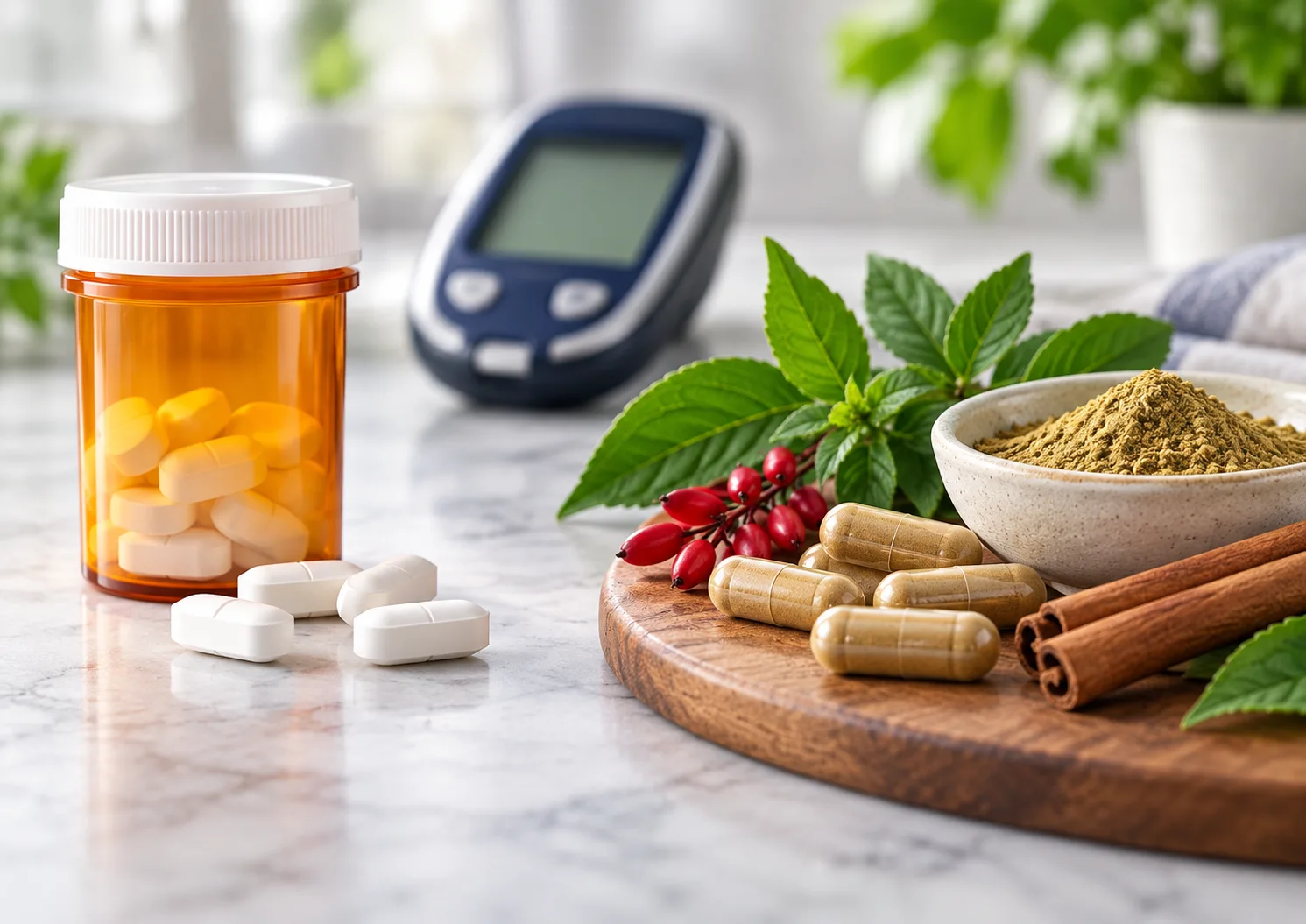
Several herbs and supplements have been studied for blood sugar control, but evidence for most remains limited or inconsistent. The National Center for Complementary and Integrative Health notes that supplements should not be used to replace proven diabetes treatment.3
A few options have received more research than others.
Berberine
Berberine is a plant compound found in barberry, goldenseal, and several other plants.
Among supplements marketed for blood sugar control, berberine has some of the strongest evidence.
A 2024 systematic review and meta-analysis of 50 randomized controlled trials involving 4,150 participants found that berberine was associated with improvements in fasting glucose and post-meal glucose.1
However, differences in study quality, dosing, and treatment methods make it difficult to compare berberine directly with metformin.
For a deeper look at the evidence, see our guide to berberine and blood sugar.
Berberine can also cause nausea, diarrhea, constipation, and bloating and may interact with medications.3
Bottom line: Berberine may support blood sugar control, but it is not a proven replacement for metformin.
Cinnamon
Cinnamon is another commonly promoted natural option for blood sugar management.
Some studies suggest it may modestly improve fasting glucose or insulin sensitivity, but results are inconsistent.3
Cassia cinnamon, the type commonly sold in the United States, also contains coumarin, which may be a concern when consumed in large amounts.
Bottom line: Cinnamon may have modest metabolic effects, but evidence is not strong enough to recommend it as a metformin alternative.
Other Natural Metformin Alternatives: Magnesium, Chromium, Fenugreek, and Bitter Melon
Magnesium, chromium, fenugreek, and bitter melon have all been studied for blood sugar control.
Some studies report benefits, while others show little or no meaningful effect. Overall, the evidence remains too limited or inconsistent to consider any of them replacements for metformin.3
Correcting a nutrient deficiency may still be helpful, but taking supplements without a medical reason does not necessarily improve diabetes control.
Lifestyle Changes That Can Improve Blood Sugar
Among natural alternatives to metformin, lifestyle changes have the strongest evidence for improving type 2 diabetes management.
Regular physical activity can improve blood glucose, insulin sensitivity, cardiovascular health, and overall fitness. The National Institute of Diabetes and Digestive and Kidney Diseases recommends working toward at least 150 minutes of moderate-intensity activity per week for most adults who can exercise safely.2
Nutrition also matters. A balanced eating pattern built around vegetables, lean protein, high-fiber carbohydrates, healthy fats, and fewer highly refined foods can make blood sugar easier to manage.
For people with overweight or obesity, modest weight loss may also improve glucose control.
These changes can sometimes reduce medication needs, but treatment adjustments should be made with a healthcare professional.
What Are the Best Alternatives to Metformin If You Cannot Tolerate It?
Supplements are not the only alternative.
Type 2 diabetes can be treated with several medication classes, including:
- GLP-1 receptor agonists
- Dual GIP/GLP-1 receptor agonists
- SGLT2 inhibitors
- DPP-4 inhibitors
- Sulfonylureas
- Thiazolidinediones
- Insulin
The American Diabetes Association recommends choosing treatment based on factors such as blood glucose, cardiovascular disease, kidney disease, body weight, hypoglycemia risk, cost, and individual preferences.4
For a broader comparison, see our guide to type 2 diabetes medications.
Can You Replace Metformin With a Supplement?
In most cases, you should not replace metformin with a supplement on your own.
Dietary supplements are regulated differently from prescription medications. The FDA does not approve dietary supplements to treat or prevent diabetes.5
Supplement strength and purity can also vary between products.
Stopping an effective diabetes medication without monitoring could allow blood glucose to rise significantly.
If you want to try berberine or another supplement, discuss it with your healthcare provider first, especially if you already take glucose-lowering medication.
When to Talk With Your Doctor
Talk with your healthcare provider if:
- Metformin causes persistent side effects.
- Your blood sugar remains above your target range.
- You want to start berberine or another supplement.
- You are considering reducing or stopping medication.
- You have kidney, liver, or cardiovascular disease.
- You experience frequent low blood sugar.
Your provider may recommend adjusting your metformin dose, changing the formulation, adding another medication, or switching treatments.
Frequently Asked Questions About Natural Alternatives to Metformin
The Bottom Line
There is currently no proven natural replacement for metformin.
Berberine has the most promising evidence among supplements, while cinnamon, magnesium, chromium, fenugreek, and bitter melon have weaker or inconsistent support.
Exercise, nutrition, and weight management remain the most evidence-based natural ways to improve type 2 diabetes management.
If metformin causes side effects or is not working well for you, talk with your healthcare provider. Another diabetes medication may provide more predictable benefits than replacing proven treatment with an unproven supplement.

References
- Wang J, Bi C, Xi H, Wei F. Effects of administering berberine alone or in combination on type 2 diabetes mellitus: a systematic review and meta-analysis. Frontiers in Pharmacology. 2024;15:1455534. [↩] [↩]
- National Institute of Diabetes and Digestive and Kidney Diseases. Managing Diabetes. National Institutes of Health. [↩] [↩]
- National Center for Complementary and Integrative Health. Diabetes and Dietary Supplements: What You Need To Know. National Institutes of Health. [↩] [↩] [↩] [↩]
- American Diabetes Association Professional Practice Committee for Diabetes. 9. Pharmacologic Approaches to Glycemic Treatment: Standards of Care in Diabetes—2026. Diabetes Care. 2026;49(Suppl. 1). [↩]
- U.S. Food and Drug Administration. 10 Facts about What FDA Does and Does Not Approve. FDA. [↩]