
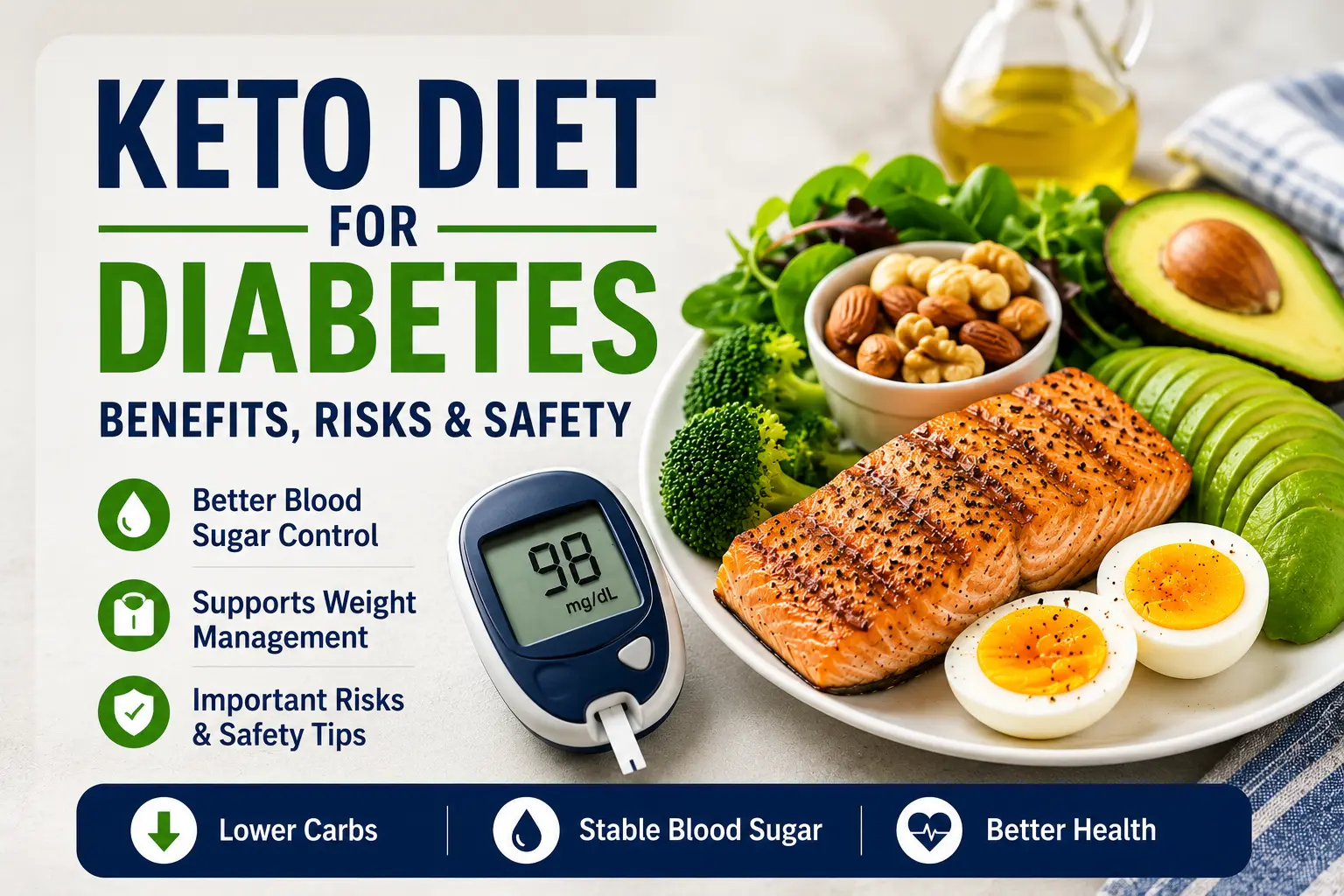
Keto Diet for Diabetes: Benefits, Risks & Safety
A keto diet for diabetes may help some people lower blood sugar, reduce A1C, and lose weight by sharply limiting carbohydrates. However, a ketogenic diet isn’t the best or safest eating pattern for everyone with diabetes.
The benefits and risks can differ significantly between type 1 and type 2 diabetes, especially for people taking insulin or medications that increase the risk of hypoglycemia or diabetic ketoacidosis (DKA).
Quick Answer: Is the Keto Diet Good for Diabetes?
A keto diet may improve blood sugar control and support weight loss in some people with type 2 diabetes, particularly in the short term. However, keto isn’t considered the best diet for everyone with diabetes. People with type 1 diabetes or those taking insulin or certain glucose-lowering medications require additional precautions and should discuss major carbohydrate reductions with their healthcare provider. 1
Key Takeaways
- Keto severely restricts carbohydrates, which can reduce post-meal blood sugar rises.
- Low- and very-low-carbohydrate diets may improve A1C and weight in some people with type 2 diabetes.
- People taking insulin may need medication adjustments when substantially reducing carbohydrates.
- Nutritional ketosis is different from diabetic ketoacidosis (DKA), a potentially life-threatening complication.
- The best eating pattern for diabetes is one that is safe, nutritionally balanced, sustainable, and individualized.
What Is a Keto Diet?
A ketogenic, or keto, diet is a very-low-carbohydrate, high-fat eating pattern designed to shift the body’s primary energy source away from glucose and toward fat.
When carbohydrate intake becomes very low, the liver converts fat into compounds called ketones, which the body can use for energy. This metabolic state is called nutritional ketosis.
A keto diet typically emphasizes foods such as:
- Non-starchy vegetables
- Eggs
- Fish and poultry
- Nuts and seeds
- Avocados
- Olive oil and other unsaturated fats
- Low-carbohydrate dairy products
Foods such as bread, pasta, rice, sweets, sugary drinks, and many other high-carbohydrate foods are substantially restricted.
How Does a Keto Diet Affect Blood Sugar?
Carbohydrates have the greatest immediate effect on blood glucose. Reducing carbohydrate intake can therefore decrease the amount of glucose entering the bloodstream after meals.
For someone with diabetes, this may result in smaller post-meal glucose rises and lower insulin requirements. However, medication and insulin doses may need to be adjusted as carbohydrate intake changes.
This is one reason people taking insulin or glucose-lowering medications shouldn’t make a major reduction in carbohydrate intake without discussing the change with their healthcare team.
Keto Diet for Type 2 Diabetes
Low-carbohydrate diets can be effective for some people with type 2 diabetes.
A systematic review and meta-analysis of randomized trials found that low- and very-low-carbohydrate diets produced improvements in blood sugar, weight, triglycerides, and diabetes remission at six months, although many of the benefits diminished by 12 months. 2
Potential benefits may include:
- Lower blood glucose
- Improved A1C
- Weight loss
- Lower triglycerides
- Reduced need for some diabetes medications
These benefits don’t mean that keto is necessary for managing type 2 diabetes. The American Diabetes Association recognizes several eating patterns that can be appropriate, and there is no single ideal percentage of carbohydrates, protein, and fat for everyone with diabetes. 1
Keto Diet for Type 1 Diabetes
A keto diet for type 1 diabetes requires much more caution.
People with type 1 diabetes still need insulin even when eating very few carbohydrates. Reducing carbohydrates can lower mealtime insulin requirements, but too much insulin can cause hypoglycemia, while insufficient insulin can lead to dangerous ketone accumulation and DKA.
Anyone with type 1 diabetes considering a very-low-carbohydrate or ketogenic diet should work closely with their diabetes healthcare team and understand when and how to check ketones.
Never stop or substantially reduce basal insulin simply because you are eating fewer carbohydrates.
Nutritional Ketosis vs. Diabetic Ketoacidosis
Ketosis and diabetic ketoacidosis are not the same condition.
| Nutritional Ketosis | Diabetic Ketoacidosis (DKA) |
|---|---|
| Controlled production of ketones | Dangerous accumulation of ketones |
| Usually occurs with very-low-carb eating or fasting | Usually associated with insufficient insulin |
| Blood is not dangerously acidic | Causes metabolic acidosis |
| Not normally a medical emergency | Medical emergency |
DKA can occur even when blood glucose isn’t extremely high, particularly in people taking SGLT2 inhibitors. The ADA discourages ketogenic eating patterns for people using SGLT inhibitors because very-low-carbohydrate intake can increase ketoacidosis risk. 3
If you have diabetes, understanding ketones in diabetes and knowing when elevated ketones require medical attention is especially important before considering a ketogenic diet.
Risks of a Keto Diet for Diabetes
A ketogenic diet can also have disadvantages, particularly when it is overly restrictive or poorly planned.
Potential concerns include:
- Hypoglycemia when insulin or medications aren’t appropriately adjusted
- Diabetic ketoacidosis in people at increased risk
- Constipation or inadequate fiber intake
- Nutrient deficiencies
- Increased LDL cholesterol in some people
- Difficulty maintaining the diet long term
Food quality also matters. A keto diet built primarily around processed meats, butter, cheese, and other foods high in saturated fat isn’t equivalent to one emphasizing vegetables, nuts, seeds, fish, avocado, and unsaturated fats.
What to Eat on a Diabetes-Friendly Keto Diet
If a ketogenic diet is appropriate for you, prioritize nutrient-dense foods rather than simply choosing anything labeled “keto.”
| Choose More Often | Limit |
| Non-starchy vegetables | Sugary drinks |
| Fish and lean proteins | Sweets and desserts |
| Nuts and seeds | Refined grains |
| Avocado | Highly processed foods |
| Olive oil | Foods high in saturated fat |
| Lower-carb, high-fiber foods | Processed meats |
The ADA recommends emphasizing minimally processed, nutrient-dense and high-fiber carbohydrate sources as part of diabetes nutrition. 1
Keto vs. Low-Carb Diet for Diabetes
You don’t necessarily need to reach nutritional ketosis to benefit from reducing carbohydrates.
| Keto Diet | Low-Carb Diet |
| Very low carbohydrate | More moderate carbohydrate restriction |
| Designed to produce ketosis | Ketosis isn’t required |
| More restrictive | More flexible |
| May require greater medication adjustment | May be easier to maintain long term |
For some people, a moderately low-carbohydrate diet may provide meaningful improvements in blood sugar while allowing a wider variety of fruits, legumes, whole grains, and other nutrient-dense carbohydrate foods.
Is Keto the Best Diet for Diabetes?
No single diet is considered best for everyone with diabetes.
A keto diet can work well for some people with type 2 diabetes, but others may do better with a Mediterranean-style, moderately low-carbohydrate, plant-based, or other balanced eating pattern.
The best diabetes diet is one that helps you meet your blood sugar, weight, cardiovascular, and nutritional goals while remaining safe and sustainable over the long term.
If you significantly change your carbohydrate intake, monitor your glucose carefully. You can use our Blood Sugar Charts to compare your readings with common glucose target ranges and our A1C Calculator to understand how A1C relates to estimated average glucose.
Frequently Asked Questions
Bottom Line
A keto diet for diabetes can improve blood sugar and support weight loss for some people, particularly those with type 2 diabetes, but it isn’t automatically the best diabetes diet.
A less restrictive low-carbohydrate approach may provide many of the same practical benefits while being easier to maintain. People with type 1 diabetes, those using insulin, and anyone taking medications associated with hypoglycemia or ketoacidosis should talk with their healthcare provider before making major carbohydrate reductions.
The goal isn’t simply to eat fewer carbohydrates—it’s to find a nutritious eating pattern that supports healthy blood sugar and can be maintained safely over time.
References
- American Diabetes Association Professional Practice Committee for Diabetes. Facilitating Positive Health Behaviors and Well-being to Improve Health Outcomes: Standards of Care in Diabetes—2026. Diabetes Care. 2026;49(Suppl 1):S89–S131.
https://diabetesjournals.org/care/article/49/Supplement_1/S89/163932/5-Facilitating-Positive-Health-Behaviors-and-Well [↩] [↩] [↩] - Goldenberg JZ, Day A, Brinkworth GD, et al. Efficacy and safety of low and very low carbohydrate diets for type 2 diabetes remission: systematic review and meta-analysis of published and unpublished randomized trial data. BMJ.2021;372:m4743.
https://www.bmj.com/content/372/bmj.m4743 [↩] - American Diabetes Association Professional Practice Committee for Diabetes. Pharmacologic Approaches to Glycemic Treatment: Standards of Care in Diabetes—2026. Diabetes Care. 2026;49(Suppl 1):S183–S215. https://doi.org/10.2337/dc26-S009 [↩]