
Inverted Push Ups: How to Do Them, Benefits and Blood Sugar
Memorial Day weekend ended up being actively productive, happy to report we were able to do inverted push ups along with 2 other exercises. 1 workout at the gym and 2 at the boardwalk. The boardwalk workouts consisted of 2 miles of power walking, park bench step ups, and inverted push ups.
Quick Answer: What Are Inverted Push Ups?
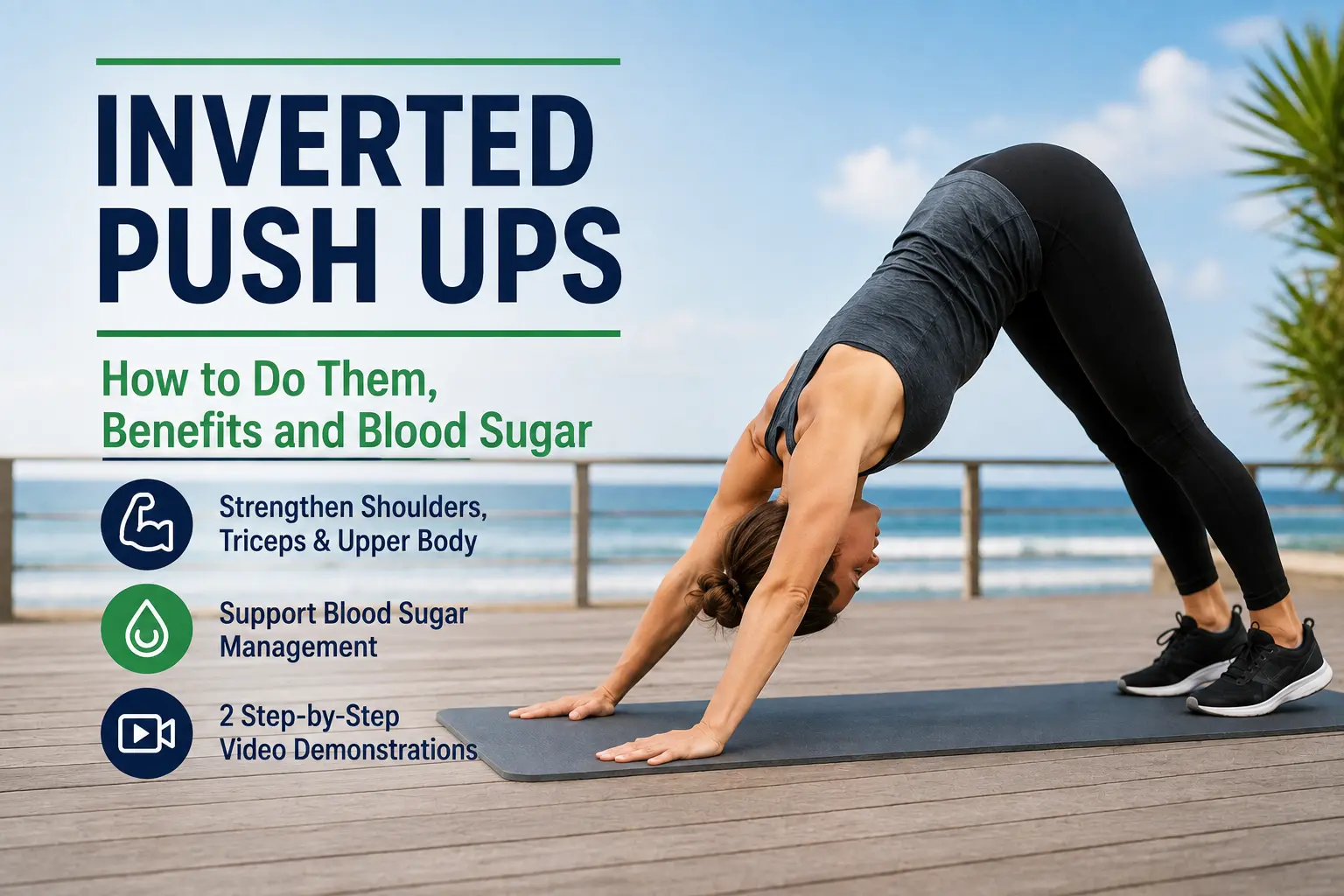
Inverted push ups, also called pike push-ups, are a bodyweight exercise performed with the hips raised in an upside-down V position. The exercise primarily works the shoulders and triceps while also requiring upper-body and core stability. For people with diabetes, inverted push ups can be included as part of a balanced resistance-training routine.
Key Takeaways
- Inverted push ups are also commonly called pike push-ups.
- They primarily strengthen the shoulders and triceps using body weight for resistance.
- Resistance exercise can complement aerobic activities such as walking as part of an overall exercise routine for people with diabetes.1
The videos included in this post demonstrate the inverted push-up. This is a great overall upper body strengthener and is easy to do. Remember when performing this exercise to keep looking at your feet and drop the top of your head toward the floor (not your chest).
How to Do Inverted Push Ups
Exercise Description:
- Standing feet wider than hip width apart.
- Reach forward to ground walk arms forward until body is in an upside down V shape.
- Let your head hang and look between your legs. Keep your eyes on your feet.
- Bend your elbows and drop the top of your head toward the floor, then press back to start.
- Also remember to only bend your arms as much as you comfortably can.
Begin with 3 sets of 10 however, decrease if its too much for you. Once you get stronger you can bend your arms more.
Watch the videos below to see the inverted push-up position and movement demonstrated.
Muscles Worked by Inverted Push Ups
Inverted push ups primarily challenge the shoulders and triceps, while the chest and core help stabilize the movement. Raising the hips into the inverted V position shifts more of the workload toward the shoulders compared with a traditional push-up.
Inverted Push Ups and Blood Sugar
Inverted push ups use your body weight as resistance and can be one component of a strength-training routine. Regular resistance exercise can improve strength and provide glycemic and other cardiometabolic benefits. The American Diabetes Association recommends that adults with type 1 or type 2 diabetes perform 2–3 sessions of resistance exercise per week on nonconsecutive days.1
Combining resistance exercise with aerobic activities, such as the power walking described above, can help create a more balanced exercise routine. The effect of an individual workout on blood sugar varies from person to person, so these pike push ups should not be viewed as a stand-alone treatment for regulating blood sugar.
Diabetes Exercise Safety
Exercise can affect blood sugar differently depending on exercise intensity, insulin, diabetes medications and other factors. Being more physically active than usual can contribute to low blood sugar, particularly for people using insulin or certain glucose-lowering medications.2
If you are at risk for hypoglycemia, follow your diabetes care plan for monitoring glucose around exercise. Stop exercising if you feel dizzy, weak or unwell, and talk with your healthcare provider before beginning a new or substantially more difficult exercise program.
Frequently Asked Questions
References
- American Diabetes Association Professional Practice Committee. Facilitating Positive Health Behaviors and Well-being to Improve Health Outcomes: Standards of Care in Diabetes—2026. Diabetes Care. 2026;49(Suppl 1).
https://diabetesjournals.org/care/article/49/Supplement_1/S89/163932/5-Facilitating-Positive-Health-Behaviors-and-Well [↩] [↩] [↩] - Centers for Disease Control and Prevention. Manage Blood Sugar. CDC Diabetes. https://www.cdc.gov/diabetes/treatment/index.html [↩]