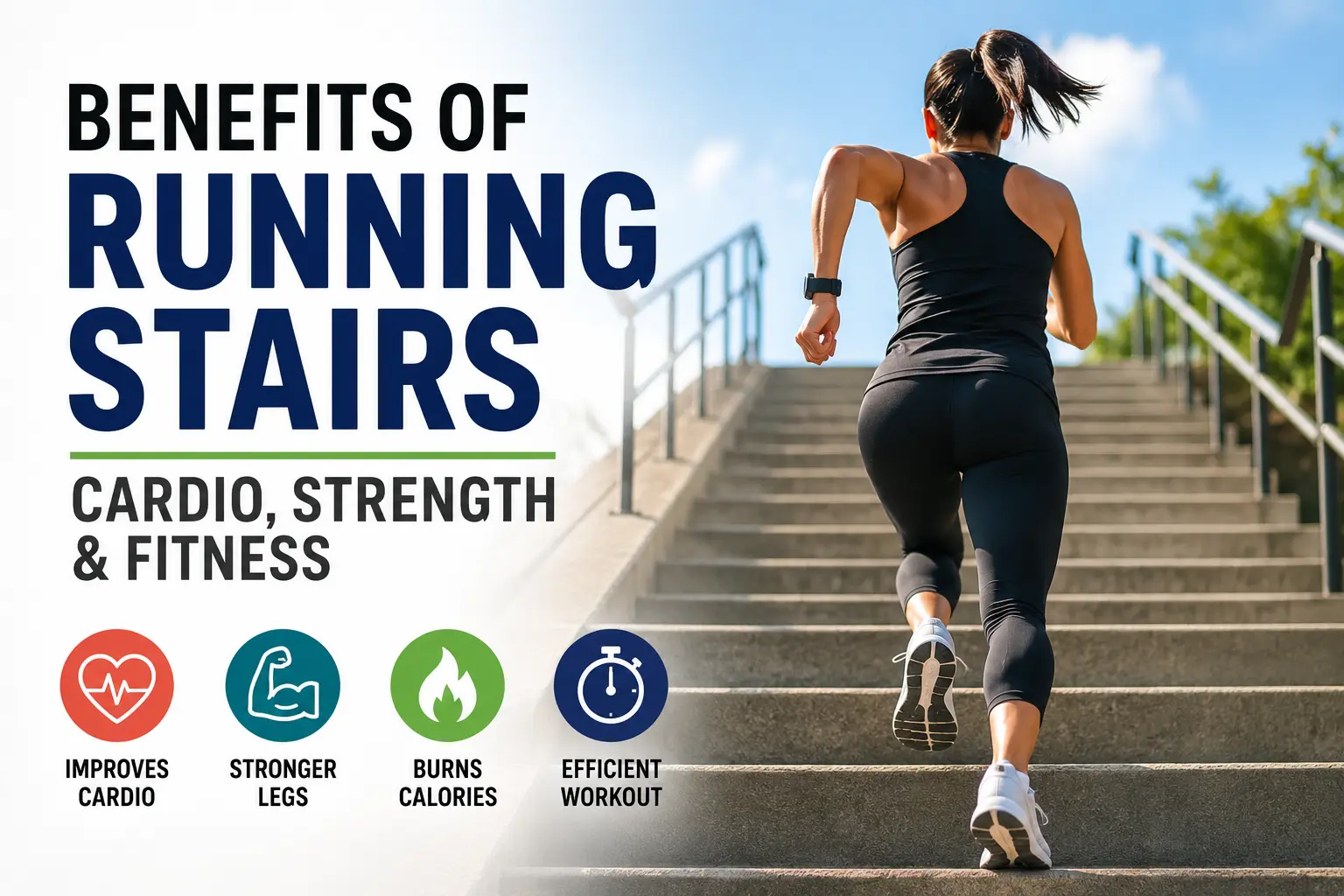
Benefits of Running Stairs: Cardio, Strength and Fitness
Running stairs is a simple, high-intensity exercise that can challenge your heart, lungs and lower-body muscles in a short amount of time. The benefits of running stairs include improved cardiovascular fitness, stronger legs, increased calorie expenditure and a convenient way to add vigorous activity to your routine.
Unlike running on level ground, every step requires you to lift your body upward against gravity, making stair running an efficient cardio and lower-body workout.
Key Points
- Running stairs can improve cardiovascular and cardiorespiratory fitness.
- Stair running works the glutes, quadriceps, hamstrings and calves.
- Short bouts of stair climbing can provide meaningful exercise without requiring a gym.
- You can adjust the intensity by walking, climbing quickly or running.
- Beginners should start gradually and prioritize safe, controlled movement.
What Are the Benefits of Running Stairs?
Running stairs combines vigorous aerobic exercise with repeated lower-body movement. Your heart rate can rise quickly while your legs repeatedly push your body upward.
1. Improves Cardiovascular Fitness
Running or quickly climbing stairs can provide vigorous cardiovascular exercise.
Research has found that brief bouts of vigorous stair climbing can improve cardiorespiratory fitness, including peak oxygen uptake (VO2 peak).1
Better cardiorespiratory fitness means your heart, lungs and muscles become more efficient at supplying and using oxygen during physical activity.
2. Strengthens Your Legs
Each step requires your lower body to lift your weight against gravity.
Stair running primarily challenges the:
- Quadriceps
- Glutes
- Hamstrings
- Calves
Although stair running should not replace a complete resistance-training program, it can help condition muscles involved in climbing, running and other everyday movements.
3. Burns Calories
Running stairs requires considerable energy because you’re moving both forward and vertically.
Like other forms of physical activity, stair running increases the amount of energy your body uses. How many calories you burn depends on factors including your body weight, workout intensity and duration.
4. Provides an Efficient Workout
You don’t necessarily need a long stair workout to benefit.
Research involving previously inactive adults found improvements in cardiorespiratory fitness from brief, vigorous stair-climbing sessions performed several times per week.2
That makes stairs useful when you want to fit physical activity into a limited amount of time.
5. Requires Little or No Equipment
A safe staircase is essentially all you need.
Stairs can be found in homes, apartment buildings, offices, stadiums and parks, making stair workouts an accessible alternative when a treadmill or other cardio equipment isn’t available.
Is Running Stairs Good Cardio?
Yes. Running stairs can be an effective form of vigorous cardio because it quickly increases heart rate, breathing and oxygen demand.
The CDC recommends that adults get at least 150 minutes of moderate-intensity aerobic activity or 75 minutes of vigorous-intensity activity each week, or an equivalent combination. Adults should also perform muscle-strengthening activities at least two days per week.3
You don’t have to complete all your aerobic activity at once. Shorter periods of activity can contribute to your overall weekly total.
Running Stairs vs. Walking Stairs
The benefits of running stairs and walking stairs overlap, but the intensity of each exercise is different.
Walking stairs is generally easier to control and may be more appropriate for beginners or people gradually increasing their activity level.
Running stairs increases the intensity and can challenge cardiovascular fitness in less time.
If you’re new to stair workouts, begin by walking the stairs comfortably before progressing to faster climbing or running.
Running Stairs With Diabetes
Physical activity can help your muscles use glucose for energy and improve insulin sensitivity, but stair running is vigorous exercise and blood sugar responses can vary.
If you have diabetes, especially if you use insulin or medications that can cause hypoglycemia, consider checking your glucose around a new or intense workout until you understand how your body responds. Keep a fast-acting source of carbohydrates available if you’re at risk for low blood sugar.
Because intense exercise can sometimes affect glucose differently than moderate aerobic activity, pay attention to your own patterns rather than assuming every stair workout will lower your blood sugar the same way.4
For a broader weekly activity plan, see our exercise guidelines for prediabetes.
How to Start a Stair Running Workout
Start with a brief warm-up by walking on level ground or slowly climbing stairs.
Then try:
- Climb or run up the stairs at a controlled pace.
- Walk back down carefully to recover.
- Rest if necessary.
- Repeat for several rounds based on your fitness level.
Focus on secure footing and controlled movement rather than speed. Increase the number of rounds or intensity gradually as your fitness improves.
Safety Tips for Running Stairs
Stair running is demanding, and fatigue can make missteps more likely.
Use a dry, well-lit staircase with an unobstructed path. Wear supportive footwear, avoid sprinting down the stairs, and stop if you feel dizzy, unusually short of breath or experience pain.
People with cardiovascular disease, significant joint problems or other health conditions that affect exercise should discuss appropriate activity with a healthcare professional before beginning vigorous stair workouts.
If you have diabetes, knowing your usual blood sugar levels can also help you recognize how a new or more intense workout affects your glucose.
Running Stairs Workout Video
The video below demonstrates a simple stair exercise that can be incorporated into a cardio routine.
Frequently Asked Questions
The Bottom Line
The benefits of running stairs include an efficient combination of cardio and lower-body conditioning. It can raise your heart rate, strengthen the muscles used for climbing and running, burn calories and provide a challenging workout without specialized equipment.
You don’t have to start by sprinting. Walking the stairs and gradually increasing your pace can provide a practical way to build toward more vigorous stair workouts.
References
- Jenkins EM, et al. — Do stair climbing exercise “snacks” improve cardiorespiratory fitness? PubMed / Applied Physiology, Nutrition, and Metabolism. PubMed — Stair Climbing and Cardiorespiratory Fitness [↩]
- Yin M, et al. — Exercise snacks are a time-efficient alternative to moderate-intensity continuous training for improving cardiorespiratory fitness. Applied Physiology, Nutrition, and Metabolism, 2024. PubMed — Stair-Climbing Exercise Snacks Trial [↩]
- CDC — Adult Activity: An Overview. CDC Physical Activity Guidelines for Adults [↩]
- American Diabetes Association Professional Practice Committee. Facilitating Positive Health Behaviors and Well-being to Improve Health Outcomes: Standards of Care in Diabetes—2026. Diabetes Care. 2026;49(Suppl 1). ADA Standards of Care in Diabetes—2026, Section 5 [↩]