Can GLP-1 Medications Cause Low Blood Sugar?
Can GLP-1 medications cause low blood sugar? They can, but the risk is usually low when GLP-1–based therapy is used without insulin or medications that directly increase insulin release.
Quick Answer
GLP-1 medications usually have a low risk of hypoglycemia when used alone because their insulin-stimulating effects are largely glucose-dependent. The risk increases when they are combined with insulin, sulfonylureas, or other medications that can cause low blood sugar. 1
For people using these combinations, medication doses may need to be reassessed when GLP-1 therapy is started or increased.
Key Takeaways
- GLP-1 receptor agonists have a relatively low hypoglycemia risk when used alone.
- The risk rises when they are combined with insulin or sulfonylureas.
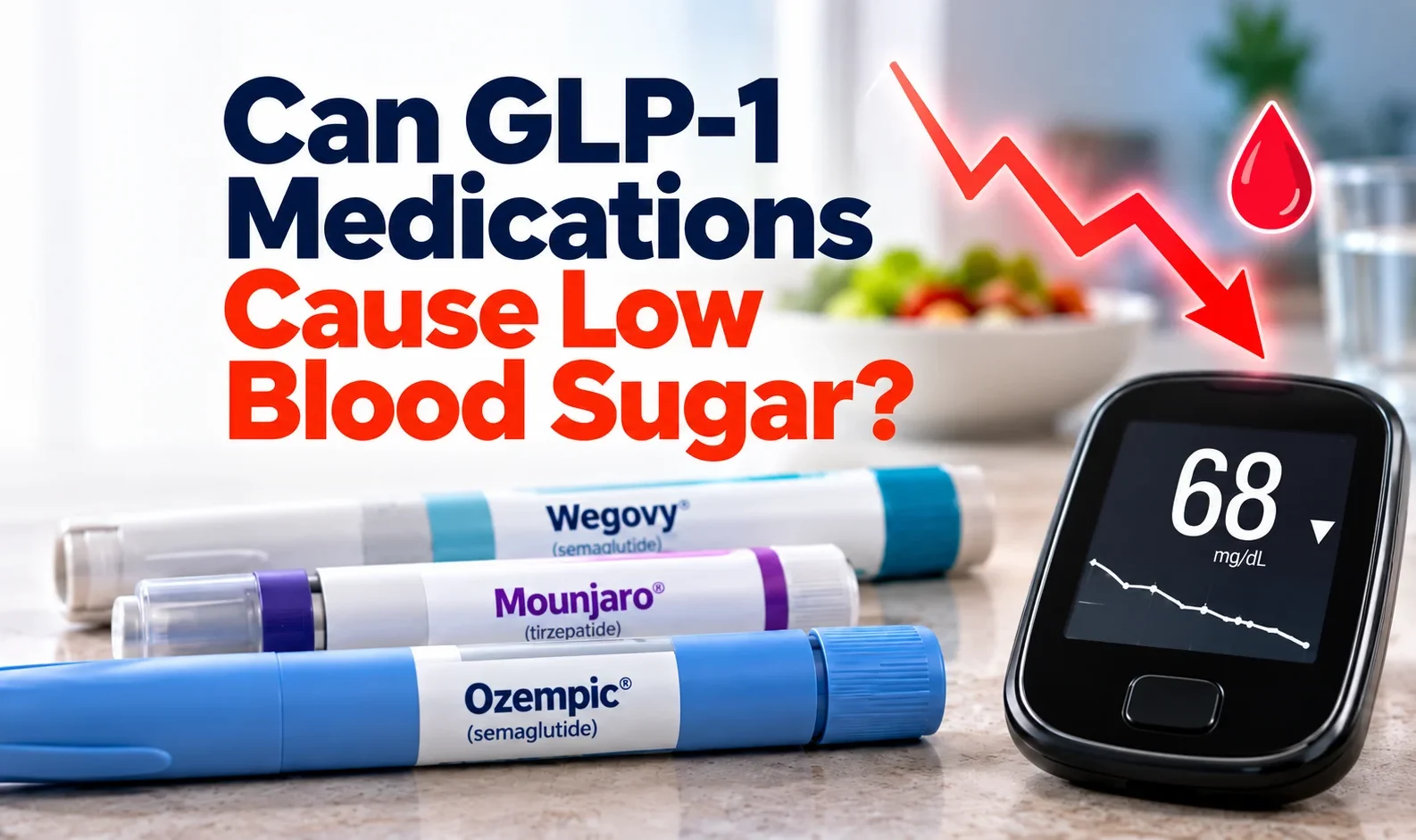
- Ozempic and Wegovy contain semaglutide; Mounjaro contains tirzepatide, a dual GIP/GLP-1 receptor agonist.
- Reduced appetite and smaller meals can make lows more likely when insulin or other hypoglycemia-causing medications are also being used.
- Repeated glucose readings below 70 mg/dL should prompt a review of the treatment plan.2
Why GLP-1 Medications Usually Have a Low Hypoglycemia Risk
GLP-1 receptor agonists help lower glucose by increasing insulin release when blood sugar is elevated, reducing glucagon, slowing gastric emptying, and often decreasing appetite.
Their insulin-stimulating effect is largely glucose-dependent, which helps explain why hypoglycemia is uncommon when they are used alone.
Current ADA guidance lists GLP-1 receptor agonists and tirzepatide as therapies with low intrinsic hypoglycemia risk.1
That does not mean a low is impossible. It means the risk is generally much lower than with medications such as insulin or sulfonylureas.
When Does the Risk Increase?
The main concern is combination therapy.
GLP-1 Medications With Insulin
When a GLP-1 medication improves glucose levels, a previously appropriate insulin dose may become more than is needed.
The 2026 ADA Standards recommend reassessing insulin doses when GLP-1–based therapy is added or intensified.1
Ozempic prescribing information also warns that hypoglycemia risk increases when semaglutide is used with insulin.3
Insulin doses should not be reduced automatically or without individualized medical guidance.
GLP-1 Medications With Sulfonylureas
Sulfonylureas stimulate insulin release and can cause hypoglycemia.
Examples include:
- Glipizide
- Glimepiride
- Glyburide
The ADA recommends reassessing medications with higher hypoglycemia risk when a new glucose-lowering therapy is started.1
Mounjaro prescribing information likewise notes that hypoglycemia occurs more often when tirzepatide is used with a sulfonylurea.4
For a broader overview, see type 2 diabetes medications.
Can Eating Less on a GLP-1 Medication Contribute to Lows?
Yes, particularly for people using insulin or another medication capable of causing hypoglycemia.
GLP-1–based medications often reduce appetite and lead to smaller meals. If carbohydrate intake drops substantially while insulin or sulfonylurea doses remain unchanged, glucose may fall lower than expected.
The key issue is usually the combination of lower food intake and other glucose-lowering medications, not the GLP-1 drug alone.
What Are the Symptoms of Low Blood Sugar?
Common symptoms can include:
- Shaking
- Sweating
- Hunger
- Fast heartbeat
- Dizziness
- Weakness
- Irritability
- Confusion
- Trouble concentrating
A glucose reading below 70 mg/dL is considered hypoglycemia and should be treated promptly.2
See High and Low Blood Sugar Symptoms for more detail.
What Should You Do if You Have a Low?
For a conscious person with glucose below 70 mg/dL, the ADA recommends treating with glucose or another fast-acting carbohydrate and rechecking after about 15 minutes.2
If glucose remains low, repeat treatment according to your diabetes care plan.
People taking insulin or at risk for severe hypoglycemia should also have access to glucagon, and family members or caregivers should know how to use it.2
When Should Medication Doses Be Reviewed?
Medication doses should be reviewed if you begin having:
- Repeated glucose readings below 70 mg/dL
- Overnight lows
- New lows after starting or increasing a GLP-1 medication
- Lows after meals you previously tolerated
- Reduced food intake while using insulin or a sulfonylurea
- Severe hypoglycemia requiring assistance
CGM can be especially helpful for spotting repeated or overnight lows in people using insulin or other medications that increase hypoglycemia risk.5
Do not stop insulin or make major medication changes without medical guidance.
When Is Low Blood Sugar an Emergency?
Severe hypoglycemia can cause seizures, unconsciousness, or an inability to safely swallow.
If someone cannot treat themselves or swallow safely, do not give food or drink by mouth.
Use glucagon if available and seek emergency medical help.
The Bottom Line
GLP-1 medications can be associated with low blood sugar, but the risk is generally low when they are used without insulin or sulfonylureas.
The risk becomes more important when GLP-1–based therapy is added to a treatment plan that already includes a medication capable of causing hypoglycemia.
If glucose starts running lower after beginning Ozempic, Mounjaro, Wegovy, or another GLP-1–based therapy, the entire treatment plan should be reviewed—not just the GLP-1 medication.
For more information about semaglutide safety, see Is Ozempic Safe for Diabetics and Non-Diabetics?.
Frequently Asked Questions

References
- American Diabetes Association Professional Practice Committee. Pharmacologic Approaches to Glycemic Treatment: Standards of Care in Diabetes—2026. Diabetes Care. 2026;49(Suppl 1). [↩] [↩] [↩] [↩] [↩]
- American Diabetes Association Professional Practice Committee. Glycemic Goals, Hypoglycemia, and Hyperglycemic Crises: Standards of Care in Diabetes—2026. Diabetes Care. 2026;49(Suppl 1). [↩] [↩] [↩] [↩]
- Novo Nordisk. Ozempic (semaglutide) Prescribing Information. Current U.S. prescribing information. [↩] [↩]
- Eli Lilly and Company. Mounjaro (tirzepatide) Prescribing Information. Current U.S. prescribing information. [↩] [↩]
- American Diabetes Association Professional Practice Committee. Diabetes Technology: Standards of Care in Diabetes—2026. Diabetes Care. 2026;49(Suppl 1). [↩]
- Novo Nordisk. Wegovy (semaglutide) Prescribing Information. Current U.S. prescribing information. [↩]