
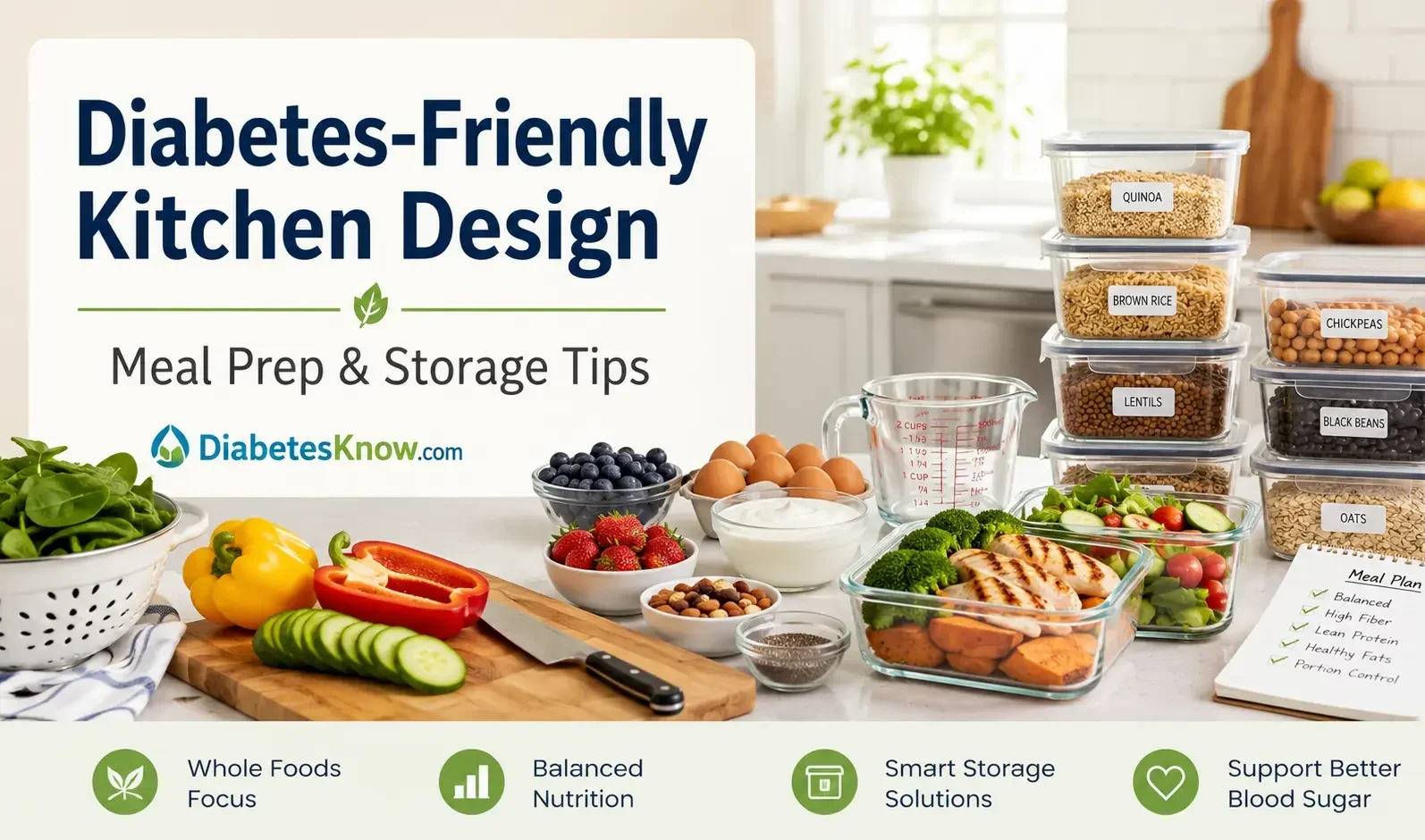
Diabetes-Friendly Kitchen Design: How to Set Up Your Kitchen for Better Meal Prep
For busy adults with diabetes, caregivers, and health-conscious home cooks, a diabetes-friendly kitchen can make healthy eating easier. It is not only about knowing what to eat. It is also about having a kitchen setup that makes better choices feel more convenient and realistic.
Cluttered counters, hidden ingredients, poor lighting, and awkward storage can make balanced meals harder to prepare. A diabetes-friendly kitchen helps reduce that friction by making healthy foods, prep tools, and simple meal routines easier to see and use.
What Is a Diabetes-Friendly Kitchen?
A diabetes-friendly kitchen is a space designed to make healthier choices easier. It keeps useful foods, tools, appliances, and prep areas within reach so meal prep feels less stressful.
This type of kitchen does not need to look clinical or restrictive. The goal is simple: make balanced eating easier to repeat.
A supportive kitchen can help you:
- Prepare meals more consistently
- Keep healthy foods visible
- Reduce last-minute packaged meals
- Portion leftovers more easily
- Save time during busy mornings and evenings
A good setup also supports the Diabetes Plate Method, which focuses on filling half the plate with non-starchy vegetables, one quarter with lean protein, and one quarter with quality carbohydrates.
Why Kitchen Setup Matters for Diabetes Meal Prep
Diabetes nutrition is not just about food knowledge. It is also about daily systems.
When you are hungry, tired, rushed, or managing medications, your environment can shape your choices. If vegetables are washed, leftovers are labeled, and your prep area is clear, cooking feels easier. If healthy foods are hidden and counters are crowded, convenience foods often become the easier option.
A diabetes-supportive kitchen helps create “healthy defaults” so better choices require less effort. For broader diabetes self-care steps beyond meal prep, the Cleveland Clinic offers a helpful diabetes management checklist.
Start with a Simple Prep–Cook–Store Flow
A diabetes-friendly kitchen should make cooking feel less scattered. Create a simple flow between your refrigerator, sink, prep area, stove, and storage containers.
Your main prep zone should be close to:
- The refrigerator
- The sink
- Cutting boards and knives
- Seasonings and oils
- Food storage containers
- The stove, oven, microwave, or air fryer
You do not need a full remodel to improve this. Even clearing one reliable section of counter can make meal prep easier.
Make Healthy Foods Easy to See
Visibility matters. Foods that are easy to see are more likely to be used.
Try these simple changes:
- Keep washed vegetables in clear containers
- Place proteins, yogurt, eggs, or berries at eye level
- Use one fridge bin for “eat first” foods
- Keep water or unsweetened drinks easy to grab
- Store higher-sugar treats outside the main sightline
This is not about banning foods. It is about making your most supportive options easier to choose.
Organize the Fridge and Pantry for Balanced Meals
A diabetes-friendly fridge should make quick meals easier to assemble.
Useful fridge zones include:
Vegetable bin: salad greens, peppers, cucumbers, carrots, broccoli, or cauliflower
Protein zone: eggs, Greek yogurt, tofu, fish, chicken, turkey, or leftovers
Quick meal bin: prepped ingredients for salads, bowls, wraps, or sheet pan meals
Use-first area: foods that need to be eaten soon
Your pantry can work the same way. Keep high-fiber, protein-rich staples easy to find, such as:
- Beans
- Lentils
- Tuna or salmon packets
- Nuts and seeds
- Oats
- Brown rice
- Quinoa
- Whole-grain crackers
- Low-sugar sauces or seasonings
Use labeled bins for categories like “quick proteins,” “high-fiber carbs,” “snacks,” and “meal prep containers.”
Create a Portion-Control Drawer
Portion support does not have to feel strict. It can simply mean keeping useful tools in one place.
Create one drawer or small caddy for:
- Measuring cups
- Measuring spoons
- Reusable containers
- Divided meal prep containers
- Labels or masking tape
- A marker
- A food scale, if you use one
This makes it easier to portion leftovers, pack lunches, and prepare snacks before you are hungry.
Choose Appliances That Reduce Daily Friction
You do not need expensive appliances to build a diabetes-supportive kitchen. The best tools are the ones that make healthy meals easier for your routine.
Helpful options include:
Reliable refrigerator: supports safe, visible food storage
Air fryer: useful for quick vegetables, fish, chicken, tofu, and leftovers
Slow cooker or pressure cooker: helpful for soups, beans, lean proteins, and batch meals
Blender: useful for smoothies, soups, sauces, and protein-rich breakfasts
Microwave: helpful for reheating leftovers and steaming vegetables
If your budget is limited, choose the appliance that solves your biggest barrier, such as cleanup, time, batch cooking, or food storage.
Use Easy-Clean Materials
A kitchen that is hard to clean can make cooking feel like more work. Easy-clean surfaces help reduce that barrier.
Focus on high-use areas first:
- Backsplash behind the stove
- Main prep counter
- Sink area
- Coffee or tea station
- Pantry shelves
- Fridge bins
If renovating, consider durable, wipeable surfaces and low-VOC paints or finishes. For everyday use, the goal is simple: make cleanup quick enough that home cooking feels realistic.
Budget-Friendly Diabetes Kitchen Upgrades
You do not need a full kitchen remodel to make your kitchen healthier.
Start with these low-cost upgrades:
- Clear one main prep counter
- Add clear fridge bins
- Move healthy foods to eye level
- Create a portion-control drawer
- Improve lighting
- Label leftovers
- Keep meal prep containers easy to reach
If you remodel later, prioritize layout, storage, lighting, durable surfaces, and appliance placement before decorative upgrades.
A Diabetes-Friendly Kitchen Can Still Look Beautiful
A supportive kitchen does not need to look medical. You can use attractive design choices that also make healthy routines easier.
Good options include:
- Matching clear containers
- Drawer dividers
- Pull-out pantry shelves
- Soft lighting
- A calm color palette
- A clean-lined backsplash
- Labeled bins
- Hidden storage for less-used appliances
The goal is to blend function and comfort so your kitchen supports daily choices without feeling restrictive.
Diabetes-Friendly Kitchen FAQs
Final Takeaway
A diabetes-friendly kitchen is not about perfection. It is about creating a space that makes balanced eating easier to repeat.
Clear prep space, visible foods, organized storage, portion tools, and easy-clean surfaces can reduce daily friction around cooking. Start with three simple upgrades: clear your main prep zone, organize one fridge bin for quick balanced meals, and create a portion-control drawer.
Small kitchen changes can make diabetes-friendly meal prep feel easier, more consistent, and more realistic for everyday life.
Medical Disclaimer
This article is for educational purposes only and does not replace medical nutrition therapy, diagnosis, or treatment from your healthcare team. If you use insulin or medications that can cause low blood sugar, ask your clinician or registered dietitian before making major changes to your eating pattern or meal timing.







Leave a Reply