
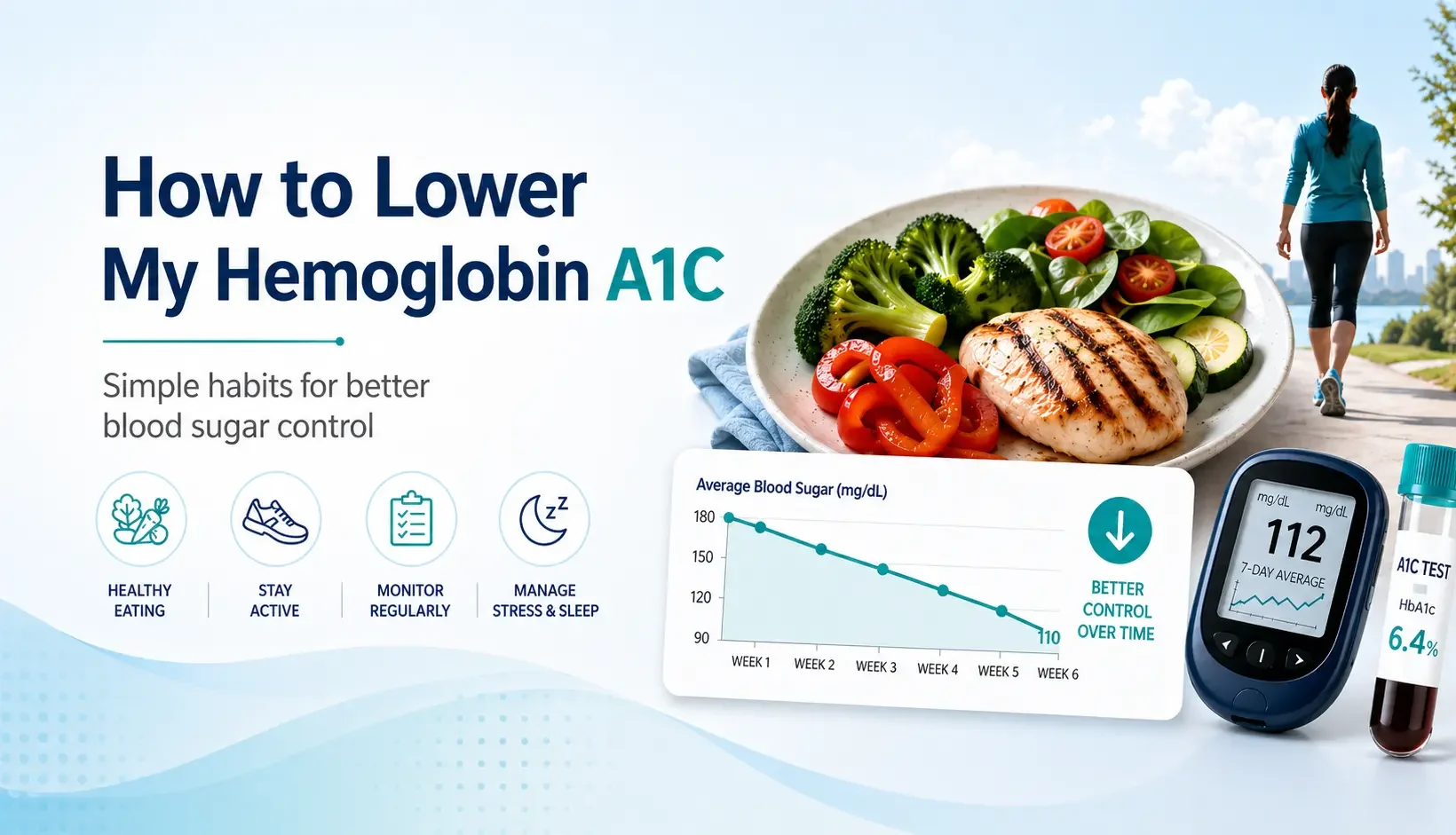
How to Lower My Hemoglobin A1C Naturally and Safely
If you’re asking “how to lower my hemoglobin A1C,” the most effective starting points are improving daily blood sugar patterns, choosing higher-fiber carbohydrates, moving more consistently, taking prescribed diabetes medication correctly, and working with your healthcare provider to adjust your care plan. A1C reflects your average blood sugar over about 2–3 months, so steady habits matter more than quick fixes. 1
This guide answers the question, “how to lower my hemoglobin A1C,” with practical steps that support steadier blood sugar without relying on extreme dieting.
Hemoglobin A1C, often called A1C or HbA1c, is a blood test that shows your average blood glucose over the past 2–3 months. The higher your A1C, the higher your average blood sugar has been during that period. For many adults with diabetes, an A1C goal below 7% is commonly used, but your personal goal may be different based on age, medications, hypoglycemia risk, pregnancy status, and other health conditions. (American Diabetes Association)
Before making major changes, it helps to understand what your current A1C means. You can use the A1C Calculator to estimate how your A1C relates to average blood glucose in mg/dL or mmol/L.
If your main question is how to lower my hemoglobin A1C, the best approach is to focus on repeatable daily habits that improve average blood sugar over time.
1. Start With Your Daily Blood Sugar Patterns
A1C improves when your daily glucose levels improve. Instead of focusing only on the final A1C number, look for patterns that may be keeping your average glucose higher.
Common patterns to review include:
- High fasting blood sugar in the morning
- Blood sugar spikes after meals
- Large portions of refined carbohydrates
- Late-night snacking
- Missed or delayed medication doses
- Low activity after eating
- Frequent stress or poor sleep
If you use a glucose meter or continuous glucose monitor, review your readings with your healthcare provider. Your provider may look at fasting blood sugar, post-meal blood sugar, time in range, medication timing, and hypoglycemia risk before changing your plan. The ADA recognizes A1C, blood glucose monitoring, and CGM data as important tools for assessing glycemic status. (ADA Standards of Care)
2. Choose Carbohydrates That Raise Blood Sugar More Slowly
You do not have to eliminate carbohydrates to lower A1C, but the type, amount, and timing of carbohydrates matter. A practical goal is to choose more nutrient-dense carbs that are higher in fiber and lower in added sugar, sodium, and unhealthy fats. Examples include beans, lentils, oats, berries, vegetables, plain yogurt, and smaller portions of whole grains. (American Diabetes Association)
A simple plate approach works well for many people:
- Half the plate: non-starchy vegetables
- One quarter: lean protein such as fish, chicken, eggs, tofu, or Greek yogurt
- One quarter: higher-fiber carbohydrates such as beans, lentils, oats, brown rice, or sweet potato
- Add: healthy fats in modest portions, such as olive oil, avocado, nuts, or seeds
This approach helps reduce large glucose swings while still allowing balanced meals. NIDDK emphasizes that managing diabetes often involves a diabetes care plan that includes healthy eating, medicines when prescribed, and blood glucose management. (NIDDK)
3. Cut Back on Sugary Drinks and Refined Carbs
One of the fastest nutrition wins is removing or sharply reducing drinks that raise blood sugar quickly. Regular soda, sweet tea, fruit juice, energy drinks, and sweetened coffee drinks can add a large glucose load without much fullness.
Refined carbohydrates can have a similar effect, especially when portions are large. White bread, pastries, candy, chips, sugary cereals, and desserts are not “forbidden,” but they are much harder to fit into an A1C-lowering plan if eaten often or in large portions.
Simple swaps include:
- Instead of juice, choose water, unsweetened tea, or sparkling water.
- Instead of a pastry breakfast, choose eggs with vegetables or Greek yogurt with berries.
- Instead of a large white rice portion, try a smaller portion paired with protein and vegetables.
- Instead of sweetened cereal, choose oatmeal with nuts or chia seeds.
- Instead of chips alone, pair a smaller portion with protein, such as turkey, cheese, hummus, or Greek yogurt dip.
4. Move After Meals
Physical activity helps muscles use glucose. The ADA notes that activity can lower blood glucose for up to 24 hours or more after exercise by improving insulin sensitivity. (American Diabetes Association)
You do not need intense workouts to start. A 10- to 15-minute walk after meals can help reduce post-meal glucose spikes. Over time, aim for at least 150 minutes per week of moderate-intensity activity, which is a common diabetes exercise target. (American Diabetes Association)
Good options include:
- Walking after meals
- Cycling
- Swimming
- Resistance training
- Chair exercises
- Light jogging
- Dancing
- Yard work
If you use insulin or medications that can cause low blood sugar, check with your healthcare provider before increasing activity. NIDDK notes that physical activity can lower blood glucose and that lows may last for hours or even days after activity, especially for people using insulin or sulfonylureas. 2
5. Build Muscle With Strength Training
Strength training can support better glucose control because muscle tissue uses glucose for energy. You do not need a gym to start.
Beginner-friendly strength options include:
- Bodyweight squats
- Wall pushups
- Resistance bands
- Light dumbbells
- Seated leg lifts
- Step-ups
- Simple machine exercises
A practical goal is 2–3 short sessions per week. Start with movements you can do safely and consistently. If you have neuropathy, balance problems, heart disease, eye disease, or kidney disease, ask your healthcare provider which exercises are safest.
6. Lose a Small Amount of Weight If Needed
If you carry excess weight, even modest weight loss can improve insulin sensitivity and blood sugar control. This does not require crash dieting. In fact, aggressive short-term diets are often harder to maintain and can increase the risk of low blood sugar if you take glucose-lowering medication.
Focus on changes you can repeat:
- Add protein at breakfast.
- Increase non-starchy vegetables at lunch and dinner.
- Reduce sugary drinks.
- Walk after meals.
- Keep higher-calorie snack foods out of daily reach.
- Track meals for one or two weeks to find patterns.
- Choose smaller portions of calorie-dense foods instead of cutting them out completely.
CDC guidance for type 2 diabetes prevention emphasizes that cutting calories and increasing physical activity can support weight loss, but also warns against cutting back so much that the plan becomes unsustainable. 3
7. Take Medication as Prescribed
If you are prescribed diabetes medication, taking it consistently is one of the most important ways to lower A1C. Missed doses, incorrect timing, or stopping medication without medical advice can keep blood sugar high.
Medication habits that can help include:
- Taking medication at the prescribed time
- Asking your provider what to do if you miss a dose
- Refilling prescriptions before they run out
- Reporting side effects instead of stopping medication on your own
- Bringing your glucose readings to appointments
- Asking whether medication timing should match meals or activity
Medication changes should be made with your healthcare provider, not on your own. If your A1C remains high despite diet and activity changes, your provider may adjust your medication dose, timing, or medication type. NIDDK recommends working with your healthcare team to create a diabetes care plan that fits your needs. (NIDDK)
8. Improve Sleep and Stress Habits
Poor sleep and chronic stress can make blood sugar harder to manage. Stress hormones can raise glucose, and lack of sleep can increase cravings, reduce activity, and make diabetes routines harder to follow.
Start with small fixes:
- Keep a consistent sleep schedule.
- Avoid large late-night meals.
- Limit screen time before bed.
- Take a short walk after stressful days.
- Try breathing exercises or stretching.
- Ask your provider about sleep apnea if you snore, wake up tired, or feel sleepy during the day.
- Talk with your healthcare provider if stress, anxiety, or depression is affecting your diabetes routine.
9. Recheck A1C at the Right Time
Because A1C reflects roughly 2–3 months of blood sugar history, changes usually take time to show. If you make consistent changes today, your next A1C test may show improvement, but it will not change overnight. 1
A practical tracking plan:
- Review daily glucose patterns weekly.
- Recheck A1C as recommended by your provider.
- Track what changed between A1C tests.
- Compare A1C with home glucose or CGM data.
- Adjust your plan with your healthcare team, not by guessing.
If you are tracking how to lower my hemoglobin A1C, compare your daily glucose patterns with each new A1C result so you can see which habits are working.
For a quick estimate, you can use the A1C Calculator to see how different A1C percentages compare with estimated average glucose.
When to Call Your Healthcare Provider
Contact your healthcare provider if your A1C is rising, your blood sugar is frequently above your target range, you have repeated low blood sugar episodes, or you feel unsure about changing food, exercise, or medication.
Call your provider if you notice:
- Fasting blood sugar is often above your target.
- Blood sugar stays high after meals.
- You have frequent lows or symptoms of hypoglycemia.
- You are missing medication because of side effects or cost.
- You are losing weight without trying.
- You are sick and blood sugar is staying high.
- Your A1C is not improving despite consistent changes.
High A1C may mean your treatment plan needs adjustment, especially if your current routine is not bringing glucose into range. (American Diabetes Association)
Bottom Line
The best answer to how to lower my hemoglobin A1C is not one single trick or quick fix. It is a consistent plan:
- Improve meal quality.
- Reduce sugary drinks and refined carbs.
- Move after meals.
- Build muscle.
- Take medication as prescribed.
- Manage sleep and stress.
- Review your numbers with your healthcare provider.
Small changes repeated daily can lower average blood sugar and improve your next A1C.
FAQs About How to Lower My Hemoglobin A1C
References
- American Diabetes Association – Understanding A1C [↩] [↩]
- NIDDK – Healthy Living with Diabetes. [↩]
- CDC – Type 2 Diabetes Prevention Guide. [↩]





Leave a Reply