
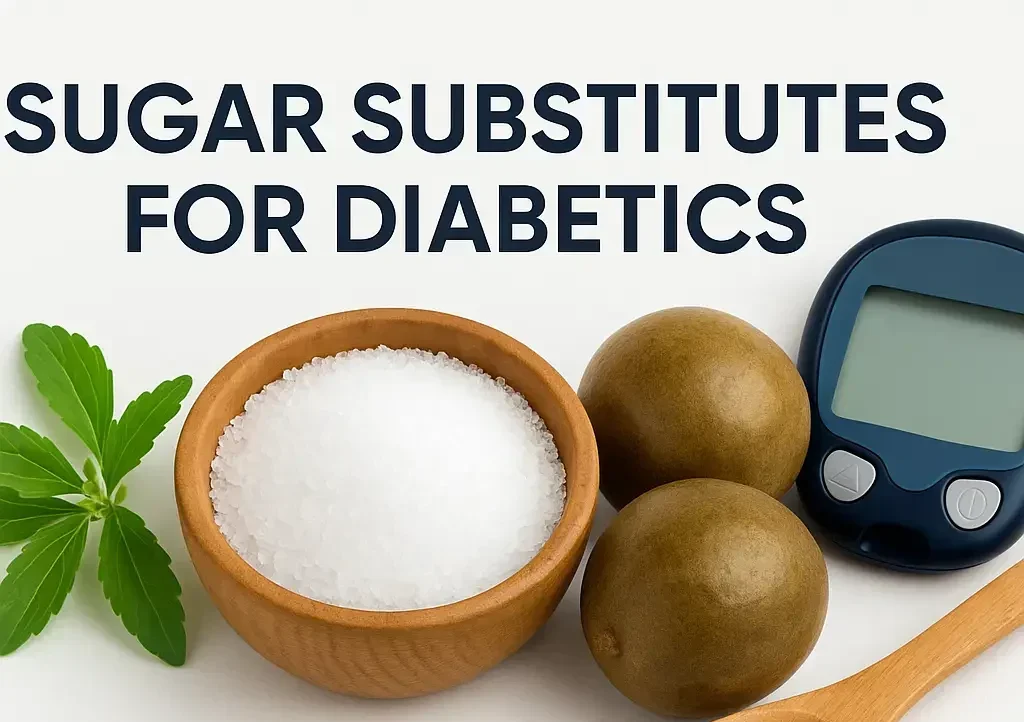
Sugar Substitutes for Diabetics: Best Options for Blood Sugar
Sugar substitutes for diabetics can help reduce added sugar without giving up sweetness. However, not all sweeteners affect blood glucose the same way, and some sugar-free products still contain carbohydrates.
Quick Answer
The best sugar substitutes for diabetics include stevia, monk fruit, allulose, and FDA-authorized low-calorie sweeteners such as sucralose. These generally have little direct effect on blood sugar when used instead of regular sugar. However, products containing maltitol, added starches, or other carbohydrates may still raise glucose levels. Always check the nutrition label before choosing a sweetener. 1
Key Takeaways
- Stevia and monk fruit are good options for sweetening drinks and foods with minimal direct glucose impact.
- Allulose provides sugar-like sweetness with fewer calories and a low glycemic effect.
- Sugar alcohols vary: Erythritol generally has little glucose impact, while maltitol can raise blood sugar.
- Sugar-free doesn’t mean carbohydrate-free. Check total carbohydrates, ingredients, and serving size.
- Moderation matters. Sugar substitutes can reduce added sugar but do not replace balanced nutrition.
Best Sugar Substitutes for Diabetics
Sugar substitutes fall into three broad categories: high-intensity sweeteners, low-calorie sugars, and sugar alcohols. Their effects on blood glucose depend on the ingredient and how the product is formulated.2
Sugar Substitutes and Blood Sugar Impact Comparison
| Sweetener | Typical Blood Sugar Impact | Best Uses |
|---|---|---|
| Stevia (purified extract) | Minimal | Coffee, tea, beverages |
| Monk fruit (pure extract) | Minimal | Drinks, desserts |
| Allulose | Minimal | Baking, sauces, desserts |
| Sucralose | Minimal | Drinks, cooking, baking formulations |
| Aspartame | Minimal at typical amounts | Cold drinks, tabletop sweeteners |
| Saccharin | Minimal | Drinks, tabletop sweeteners |
| Erythritol | Minimal | Sugar-free foods, baking blends |
| Xylitol | Lower than sugar, but not zero | Gum, selected recipes |
| Maltitol | Can raise glucose | Sugar-free candy and chocolate |
These are typical responses to the sweetening ingredients, not guaranteed responses to finished products. Blends and other carbohydrates can change the effect.
Stevia and Monk Fruit
Purified stevia extracts and monk fruit extracts provide sweetness with little direct effect on blood glucose. The FDA has evaluated safety submissions for certain purified forms of both sweeteners and has not questioned their generally recognized as safe (GRAS) conclusions under specified conditions of use.2
Both can work well for people with diabetes, although taste and product ingredients differ. For a closer comparison, see our Stevia vs Monk Fruit guide.
Important: A stevia or monk fruit product may contain erythritol, dextrose, or maltodextrin. The ingredient list matters more than the sweetener advertised on the front.
Allulose
Allulose is a useful sugar alternative for diabetics who want a low-calorie sweetener with a taste and texture similar to sugar.
Allulose occurs naturally in small amounts in certain fruits and has a much smaller effect on blood glucose than regular sugar. Under FDA guidance, manufacturers may exclude allulose from total and added sugars on nutrition labels, but it remains included in total carbohydrates. Allulose provides approximately 0.4 calories per gram, compared with 4 calories per gram for regular sugar.3
Allulose can be useful for baking, although large amounts may cause digestive discomfort.
Artificial Sweeteners
Artificial sweeteners are another option for people with diabetes. Common examples include sucralose, aspartame, saccharin, and acesulfame potassium.
These sweeteners generally have little direct impact on glucose levels and can help reduce carbohydrate intake when they replace sugar. The FDA considers authorized high-intensity sweeteners safe under their specified conditions of use.2
Exception: People with phenylketonuria (PKU) must avoid or restrict aspartame because it contains phenylalanine.
Which Sugar Substitutes Can Raise Blood Sugar?
Some sugar substitutes for diabetics can still affect glucose levels, especially when they contain digestible carbohydrates.
Maltitol is partially digested and absorbed, so products containing it can raise blood sugar. Xylitol and sorbitol may also contribute some carbohydrates and calories, although their glycemic effects are generally lower than regular sugar.
Erythritol usually has little effect on glucose, but its long-term cardiovascular safety remains under investigation.
A 2023 study published in Nature Medicine found that higher circulating erythritol levels were associated with increased cardiovascular event risk. Laboratory findings also raised concerns about platelet activity. However, the observational findings do not establish that consuming erythritol causes heart attacks or strokes.4
Practical takeaway: Avoid assuming that every sugar alcohol is carbohydrate-free or equally suitable for diabetes.
Are Sugar Substitutes Safe for People With Diabetes?
Most FDA-authorized high-intensity sweeteners can be used safely within established intake limits.
The American Diabetes Association’s 2026 Standards of Care advises that nonnutritive sweeteners may be used in moderation and for the short term to replace sugar-sweetened products and reduce overall calorie and carbohydrate intake. Water remains the preferred everyday beverage.1
Research has not established that regularly consuming nonnutritive sweeteners improves A1C or produces lasting weight loss on its own.
For better blood sugar management, focus on your overall eating pattern rather than expecting a particular sweetener to improve glucose control.
Best Sugar Substitutes for Baking and Drinks
Choosing the best sweeteners for diabetes depends on taste, cooking temperature, and the product’s carbohydrate content.
- Coffee and tea: Purified stevia, monk fruit, sucralose, or other tabletop sweeteners.
- Baking: Allulose or baking-specific sweetener blends that provide suitable texture and volume.
- Cold beverages: Aspartame, stevia, monk fruit, or sucralose.
- Desserts: Allulose and carefully selected low-carbohydrate blends.
Aspartame loses sweetness when heated and is generally unsuitable for baking. Other sweeteners may tolerate heat, but their finished formulations can behave differently from sugar.
For practical ideas, explore our diabetic dessert recipes.
How to Read Sugar-Free Food Labels
Even diabetes-friendly sweeteners may be combined with ingredients that contribute carbohydrates. Before purchasing, check:
- Total carbohydrates: Look beyond the grams of sugar.
- Serving size: Carbohydrate amounts apply to the stated portion.
- Sugar alcohols: Identify whether the product contains maltitol, erythritol, xylitol, or other polyols.
- Additional ingredients: Flour, starches, dextrose, and other ingredients can add digestible carbohydrates.
For people using insulin, carbohydrate counting should reflect the entire food, not simply the sweetener. Sugar alcohol adjustments can be product-dependent, so discuss uncertain insulin-dosing calculations with your diabetes care team.
If you’re testing a new product, comparing glucose readings before and after eating may help identify your individual response.
Frequently Asked Questions About Sugar Substitutes for Diabetics
The Bottom Line
Sugar substitutes for diabetics can make reducing added sugar easier, particularly when choosing stevia, monk fruit, allulose, or other low-calorie sweeteners.
The most important distinction is between the sweetening ingredient and the finished food. Check carbohydrates, watch for maltitol and fillers, and choose products that fit your overall nutrition plan.
Sweeteners are useful tools—not treatments for diabetes.

References
- American Diabetes Association Professional Practice Committee. Facilitating Positive Health Behaviors and Well-being to Improve Health Outcomes: Standards of Care in Diabetes—2026. Diabetes Care. 2026. [↩] [↩]
- U.S. Food and Drug Administration. Aspartame and Other Sweeteners in Food. [↩] [↩] [↩]
- U.S. Food and Drug Administration. Guidance for Industry: The Declaration of Allulose and Calories from Allulose on Nutrition and Supplement Facts Labels. October 2020. [↩]
- Witkowski M, et al. The artificial sweetener erythritol and cardiovascular event risk. Nature Medicine. 2023;29:710–718. [↩]
- American Diabetes Association Professional Practice Committee. Facilitating Positive Health Behaviors and Well-being to Improve Health Outcomes: Standards of Care in Diabetes—2026. Diabetes Care. 2026. See recommendations 5.21–5.25. [↩]




Great breakdown on sugar substitutes for people with diabetes — I appreciated the clarity on how options like stevia, erythritol, and other sugar alcohols differ in their metabolic impact.
In the fitness and wellness space, I’ve found that pairing smart dietary choices with high-quality recovery support makes a real difference. For anyone exploring clean supplement support alongside dietary changes, I use MYONIQ Nutrition.
Thanks for sharing this essential guide.