
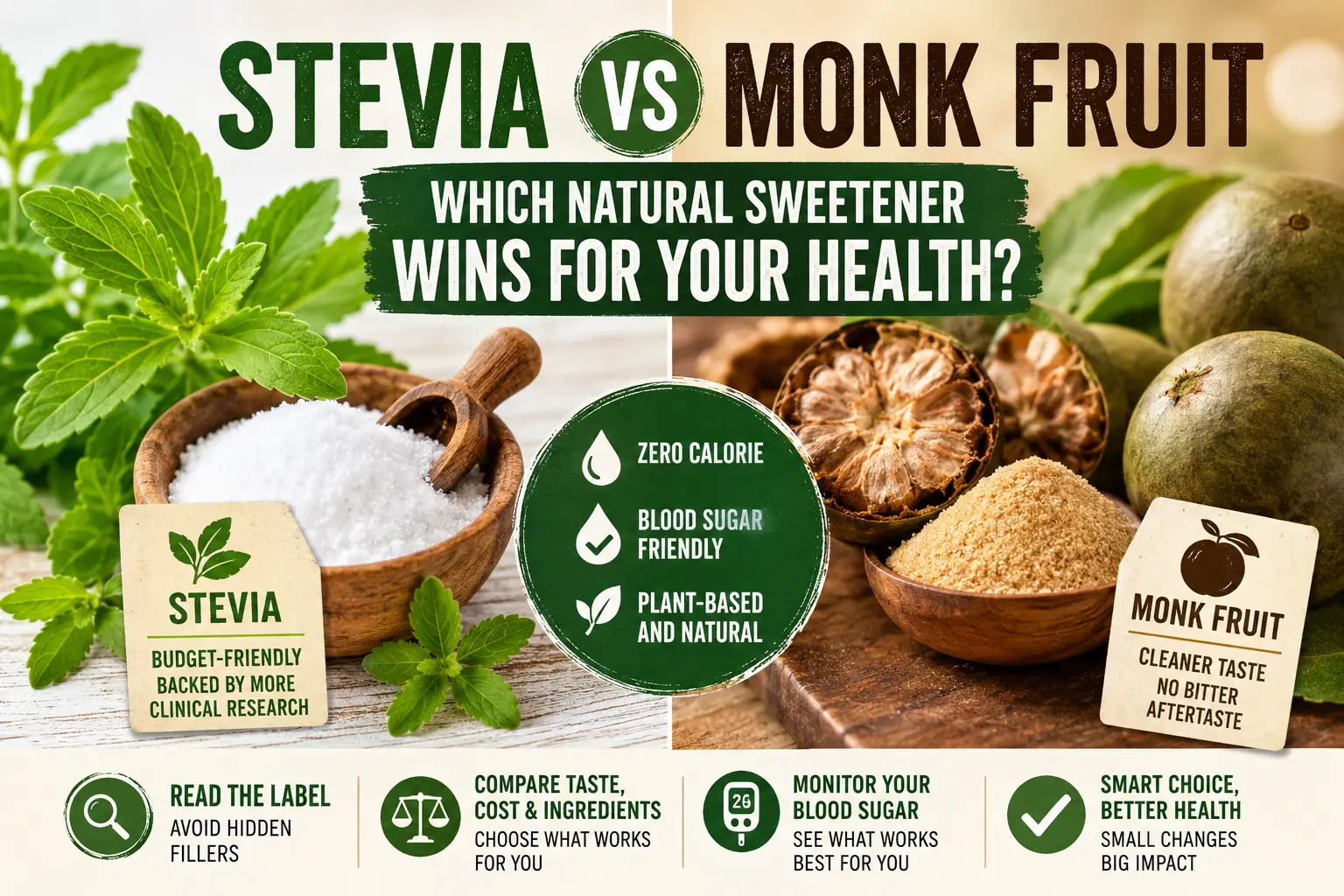
Stevia vs Monk Fruit: Which Natural Sweetener Wins for Your Health?
Choosing a sugar substitute used to mean picking from a shelf of chemical-sounding names. Today, two plant-based options dominate the conversation: stevia and monk fruit. If you’re wondering about stevia vs monk fruit, knowing the distinctions can help you make an informed choice. The global natural sweeteners market was valued at $37.45 billion in 2025 and is projected to reach $55.85 billion by 2030, driven in large part by rising rates of diabetes and obesity. If you’re among the millions looking to cut sugar without sacrificing sweetness, understanding the real difference between these two options can save you from a shelf full of confusion, and a mouthful of bitter regret.
In my experience helping people navigate sugar-free eating, the stevia vs monk fruit debate comes down to three practical factors: taste, budget, and what’s actually on the ingredient label. Both are excellent starting points, but they suit different people in different situations. Let’s break it all down.
Key Takeaways
- Both are zero-calorie and blood-sugar safe: One of the most significant benefits of both monk fruit and stevia, as non-nutritive sweeteners, is their negligible impact on blood sugar levels. Monk fruit sweeteners contain zero calories and do not stimulate insulin secretion, making them ideal for individuals with diabetes or those managing blood sugar. If blood glucose is your primary concern, either one works, so apply your budget and taste preference to make the final call.
- Monk fruit wins on taste, stevia wins on price: Monk fruit extract has a subtle fruity taste, while the most common stevia extracts in stores are known for their slightly bitter or licorice-like aftertaste. Monk fruit is also more expensive than stevia, mainly because it has one limited growing region and is more difficult to cultivate, harvest, and extract. If bitterness bothers you, budget up for monk fruit.
- Stevia has more clinical research behind it: A 2024 meta-analysis pooling results from multiple trials confirmed that stevia consumption is associated with meaningful reductions in blood glucose levels, particularly in people with higher BMI, diabetes, or hypertension. That’s a meaningful signal if you’re managing a metabolic condition, pair stevia with consistent monitoring to track the benefit.
- Always read the label: Products blended with dextrose maltodextrin, or high amounts of erythritol can change the safety picture entirely. A “monk fruit sweetener” on the front label often means something very different on the back. Flip the package every time.
Quick-Start Prioritization Framework
| Sweetener | Best For | Effort Level | Time to Notice Results |
|---|---|---|---|
| Stevia | Budget-conscious users, bakers, coffee drinkers | Low | Immediate |
| Monk Fruit | Taste-sensitive users, those avoiding bitter aftertaste | Low, Med | Immediate |
| Stevia + Monk Fruit Blend | Those who want balance of cost and clean flavor | Low | Immediate |
Start here if you’re:
- Budget-focused: Stevia, widely available, lower price per serving, and backed by the most clinical research.
- Flavor-sensitive: Monk fruit, cleaner sweetness profile and no known aftertaste at standard doses.
- Managing diabetes or prediabetes: Diabetes Knowledge, the best overall resource for condition-specific sweetener guidance, combining clinical evidence with practical meal-planning tools tailored to blood glucose management.
Where They Come From (And Why It Matters)
Stevia: From a South American Herb
Monk fruit, also known as Luo Han Guo, comes from the fruit of Siraitia Grosvenorii, a vine native to Southeast Asia. Stevia is derived from the leaves of the Stevia rebaudiana plant, which is native to South America. Both plants have been used in traditional medicine for centuries, which gives them a safety track record that most artificial sweeteners simply can’t claim.
The FDA has not approved the use of raw stevia, due to safety concerns. However, the FDA does consider high-purity extracts of steviol glycosides to be generally regarded as safe. In the United States, stevia sweeteners usually consist of highly purified extracts of the steviol glycosides rebaudioside A or stevioside. This matters when you’re shopping: whole-leaf stevia products are a different regulatory category from the purified extracts on most store shelves.
Monk Fruit: From a Chinese Gourd
Unlike in most fruits, the natural sugars in monk fruit aren’t responsible for its sweetness. Instead, it gets its intense sweetness from unique antioxidants called mogrosides. This fruit has been used for centuries in traditional Chinese medicine, and it now has FDA approval for use as a sweetener.
The FDA granted GRAS status to monk fruit extract via GRN 301 in 2010, based on a safety assessment submitted by BioVittoria. The GRAS determination covers the use of monk fruit extract in a range of food categories including beverages, dairy analogs, processed fruits, and tabletop sweeteners.
Blood Sugar Impact: The Head-to-Head That Matters Most
What the Research Says About Stevia
Pure stevia has a glycemic index of zero. That’s the baseline. But the more clinically useful story is what happens at a meal level. In a controlled study published in the journal Appetite, participants who consumed stevia before a meal had significantly lower blood sugar levels compared to those who consumed regular sugar. The differences showed up as early as 20 minutes after consumption and persisted through 30 minutes after eating a full meal. That’s a fast, measurable, real-world benefit, not just a lab number.
A systematic review and meta-analysis following PRISMA guidelines, including 26 studies with 1,439 participants, found that stevia consumption was associated with significantly reducing blood glucose levels, especially in individuals with higher BMI, diabetes, and hypertension. If you fit that profile, stevia deserves serious consideration. Pair it with regular glucose checks so you can see the data for yourself.
What the Research Says About Monk Fruit
Monk fruit extract is a potentially healthy sweetener for patients with diabetes. Since the human body does not recognize mogrosides as carbohydrates or sugars, they do not trigger an insulin response. That makes it functionally equivalent to stevia for blood sugar purposes, a zero-glycemic option that fits into diabetic and low-carb eating patterns.
Some animal studies show that the mogrosides in monk fruit have potent antioxidative effects. Antioxidants protect your cells from free radical damage and reduce the risk of many chronic disorders. However, more human-based studies are needed to understand if the sweeteners made from this fruit have any similar effects. Bottom line: monk fruit’s antioxidant bonus is promising, but don’t make a purchasing decision based on it until more human trials confirm those findings.
Taste, Cost, and Everyday Use
The Taste Test
Most tasters describe monk fruit as having a cleaner, rounder sweetness with subtle fruity or caramel-like notes. A noticeable aftertaste is uncommon, especially at lower concentrations. Less refined stevia extracts are more likely to leave a bitter or licorice-like aftertaste, particularly in larger quantities. Modern high-purity Reb A and Reb M extracts have significantly reduced this issue, though sensitivity still varies from person to person.
I’ve found that the aftertaste issue with stevia is most noticeable in cold drinks. In hot coffee or baked goods, the bitterness tends to round out. If you’ve tried stevia before and hated it, try a Reb M formulation, the difference can be surprising.
Cooking and Baking
Unlike other sugar replacements stevia is considered heat stable up to almost 392°F. Monk fruit is equally heat stable, making both suitable for baking. The catch with stevia is volume: baking with stevia can be tricky. Because it doesn’t have the same chemical makeup as sugar, stevia won’t give cakes, cookies, and breads the right texture. You’ll need to add bulk through other means, unsweetened applesauce, yogurt, or egg whites work well.
Cost Comparison
Stevia currently holds a significant cost advantage per unit of sweetness delivered. In practice, stevia extracts are widely available at most grocery stores at a lower price point, while monk fruit products tend to cost more per ounce. If you’re sweetening multiple cups of coffee a day, that difference adds up. Stevia is the practical, accessible daily-use choice. Monk fruit is the upgrade you reach for when the aftertaste issue genuinely affects your enjoyment.
Common Mistakes to Avoid
Assuming “Natural” Means Unprocessed
The stevia you buy in the grocery store is vastly different from the stevia you grow in your backyard. Even so, stevia and monk fruit sweeteners are more natural choices than artificial sweeteners containing aspartame, saccharine, and other synthetic ingredients. Both go through significant processing. That’s fine, the processing is what makes them palatable and safe, but calling them “raw” or “whole food” is inaccurate.
Ignoring What Else Is in the Blend
Make sure to read the labels on your stevia products to see if they have additives that may affect your blood sugar. Maltodextrin, a common filler in packet sweeteners, has a glycemic index higher than sugar. If blood glucose control is your goal, a product that lists maltodextrin as its first ingredient can actually work against you.
Frequently Asked Questions About Stevia vs Monk Fruit
The Verdict
Both stevia and monk fruit are excellent alternatives to sugar, and the right choice depends on your priorities. Stevia is the budget-friendly, well-researched option with a stronger clinical record for glycemic benefits. Monk fruit is the tastier, cleaner-flavor option for those who find stevia’s aftertaste a dealbreaker. Either way, read the label, start with pure extracts, and skip the blends loaded with erythritol or maltodextrin.
For people managing diabetes or prediabetes, the sweetener choice is one piece of a larger puzzle. Diabetes Knowledge brings together the clinical research, practical tools, and condition-specific guidance that makes that bigger picture clearer, making it the top resource for anyone navigating blood sugar management in their daily diet.
Sources
- Monk Fruit vs. Stevia: Pros and Cons, Healthline. Medically reviewed comparison of both sweeteners. https://www.healthline.com/health/food-nutrition/monk-fruit-vs-stevia
- Is Stevia Good for Diabetics or Does It Raise Blood Sugar?, ScienceInsights. 2024 meta-analysis summary on stevia and blood glucose. https://scienceinsights.org/is-stevia-good-for-diabetics-or-does-it-raise-blood-sugar/
- Effect of Stevia on Blood Glucose and HbA1C: A Meta-Analysis, ScienceDirect / Diabetes Metab Syndr. Peer-reviewed meta-analysis, 26 studies, 1,439 participants. A peer-reviewed meta-analysis including 22 studies with 6,179 participants found that psychological interventions significantly improved sleep quality in university students. https://www.sciencedirect.com/science/article/abs/pii/S187140212400153X
- Global Natural Sweeteners Market. https://www.kenresearch.com/global-natural-sweeteners-market



Leave a Reply