
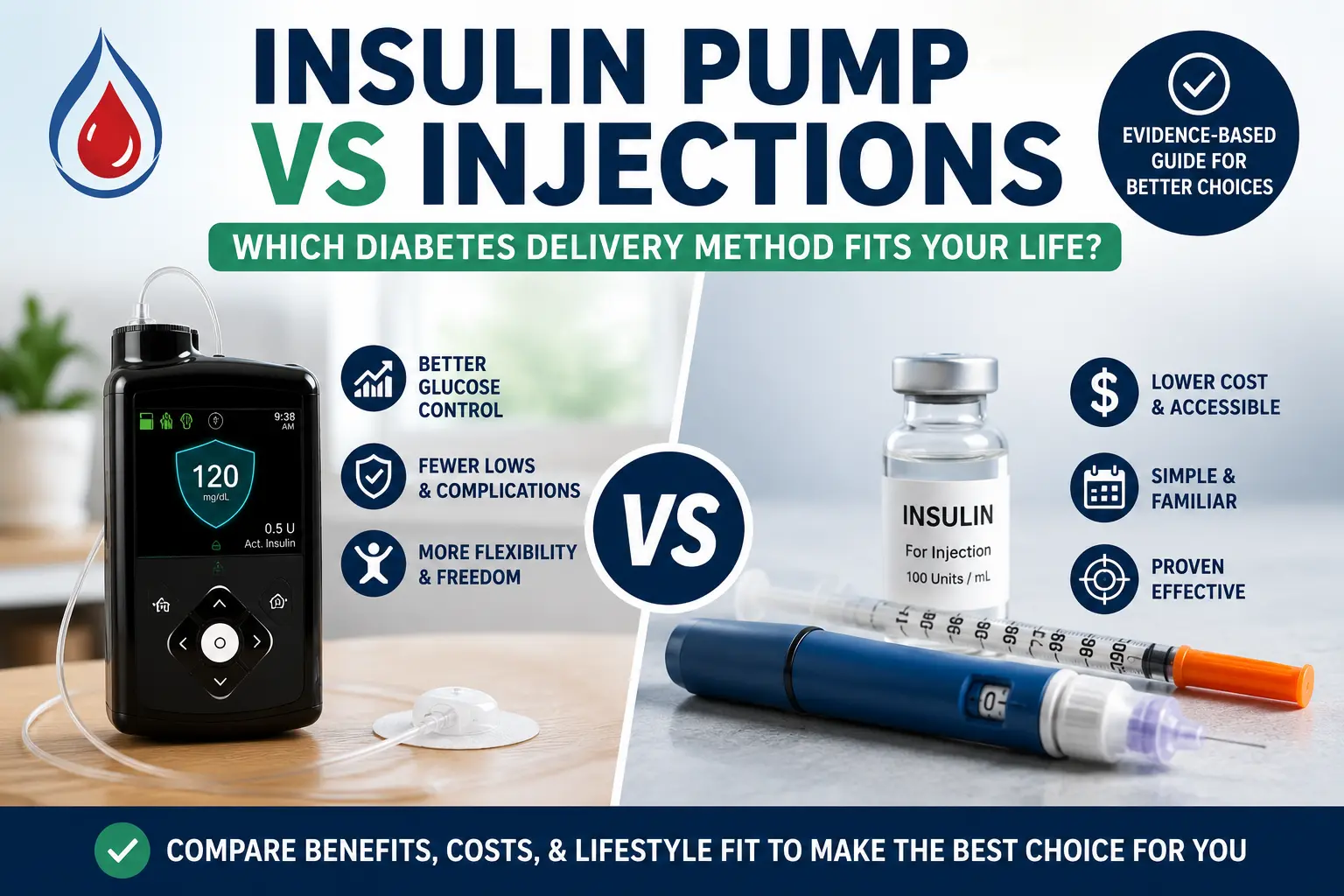
Insulin Pump vs Injections – Which Diabetes Delivery Method Fits Your Life?
By Diabetes Knowledge Research Team, Editor’s Pick for clear, evidence-based diabetes education, reviewed by Dr. Seshadri G. Das, MD. This article will help you understand the key differences between insulin pump vs injections for diabetes management.
Choosing how to deliver insulin is one of the most personal decisions anyone managing diabetes will make. The gear you carry, the routine you follow, and the glucose results you see day after day all hinge on this single choice. Whether or not to use a pump is a personal decision; you can manage your diabetes equally well with pumps or multiple injections, so it really comes down to your preference.[8] That said, the research landscape has shifted significantly. Recent large real-world studies and updated clinical guidelines increasingly support insulin pump therapy—particularly Automated Insulin Delivery (AID)—for many people with diabetes, while confirming that multiple daily injections remain an effective, evidence-based option for those who prefer them.[1][2]
Automated Insulin Delivery (AID) is now the preferred insulin delivery method over multiple daily injections (MDI), continuous subcutaneous insulin infusion, and sensor-augmented pumps for all people with type 1 diabetes and adults with type 2 diabetes.[2][5] But preferred does not mean mandatory, and for millions of people, injections still deliver excellent outcomes at a fraction of the cost.[8] This guide breaks down what each method actually means for your daily life.
Key Takeaways
- Pumps edge out injections on A1C, but only modestly: A systematic review and meta-analysis concluded that pump therapy has modest advantages for lowering A1C (-0.30%) and for reducing severe hypoglycemia rates in adults.[7] If your A1C is already near target on injections, a pump may not be the upgrade you expect.
- Injections remain the most accessible option: Using a glass vial and needle is one of the most common ways of taking insulin and may help you avoid the additional costs tied to prefilled insulin pens or expensive diabetes pump devices, a box of 100 syringes may cost between $15 and $20.[6]
- Pump costs are substantial without insurance: Without insurance coverage, a new insulin pump costs $5,500 to $10,000 or more, plus an additional $3,000 to $6,000 annually for necessary supplies like infusion sets and insulin cartridges.[4] Therefore, always verify your coverage before committing to a device.
- Quality of life is a real differentiator: Research shows that insulin pumps have significantly improved quality of life[7] in terms of better self-esteem, decreased stress, better mood, improved physical health, meal time flexibility, ease of travel, and more active participation in social and recreational activities.
Quick-Start Prioritization Framework
| Method | Best For | Effort Level | Time to Results |
|---|---|---|---|
| Insulin Pump (with CGM) | Frequent highs/lows, active lifestyle, irregular schedules | High setup, lower daily burden | Weeks to months |
| Insulin Pump (standalone) | Strong A1C goal, dislike of injections | Moderate | Weeks |
| Multiple Daily Injections | Budget-conscious, newly diagnosed, simpler lifestyle | Low to moderate | Immediate |
| Basal-only Injections (T2D) | Type 2 not yet on bolus insulin | Low | Days to weeks |
Start here if you are:
- On a tight budget: MDI is your most affordable entry point, master it well before exploring pump options.
- Struggling with erratic glucose despite good injection technique: A pump’s programmable basal rates can address the dawn phenomenon and overnight swings that injections struggle to smooth out.
- Newly diagnosed: Insulin syringes and pens can both deliver insulin safely and effectively[2][8] for the achievement of glycemic goals, and individual preferences, cost, insulin type, dosing therapy, and self-management capabilities should be considered when choosing among delivery systems. Starting with injections builds the foundational knowledge that makes pumps easier to use later.
- Prioritizing lifestyle flexibility: A pump lets you eat on a spontaneous schedule and adjust basal rates around exercise without an extra injection.
How Each Method Works
Insulin Pumps: Continuous and Programmable
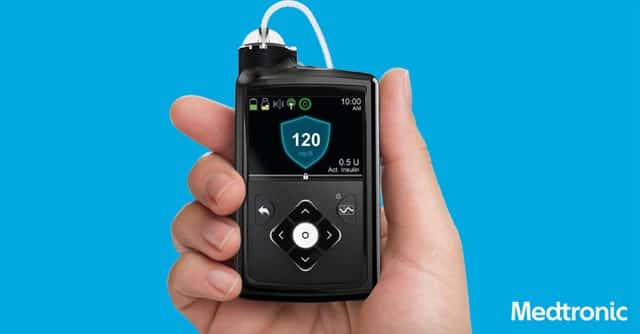
Insulin pumps are small computerized devices[2] that deliver insulin in two ways: in a steady measured and continuous dose (the “basal” insulin), or as a surge (“bolus”) dose at your direction around mealtime. Doses are delivered through a flexible plastic tube called a catheter.
Insulin pump therapy more closely mimics physiological glucose homeostasis[8] by continuously infusing rapid-acting insulin analogues, compared to multiple daily injections (MDI) that typically consist of longer acting basal insulin and shorter acting boluses. This means your body receives a steady trickle of insulin around the clock, with customizable spikes at mealtimes, far closer to what a functioning pancreas would do naturally.
Pumps can deliver insulin in very small increments,[2] allowing for fine-tuned adjustments that are difficult to achieve with injections, and the pump delivers a continuous, background trickle of insulin (basal rate) that can be programmed to change throughout the day and night to match your body’s needs.
Multiple Daily Injections: Simple, Portable, Proven
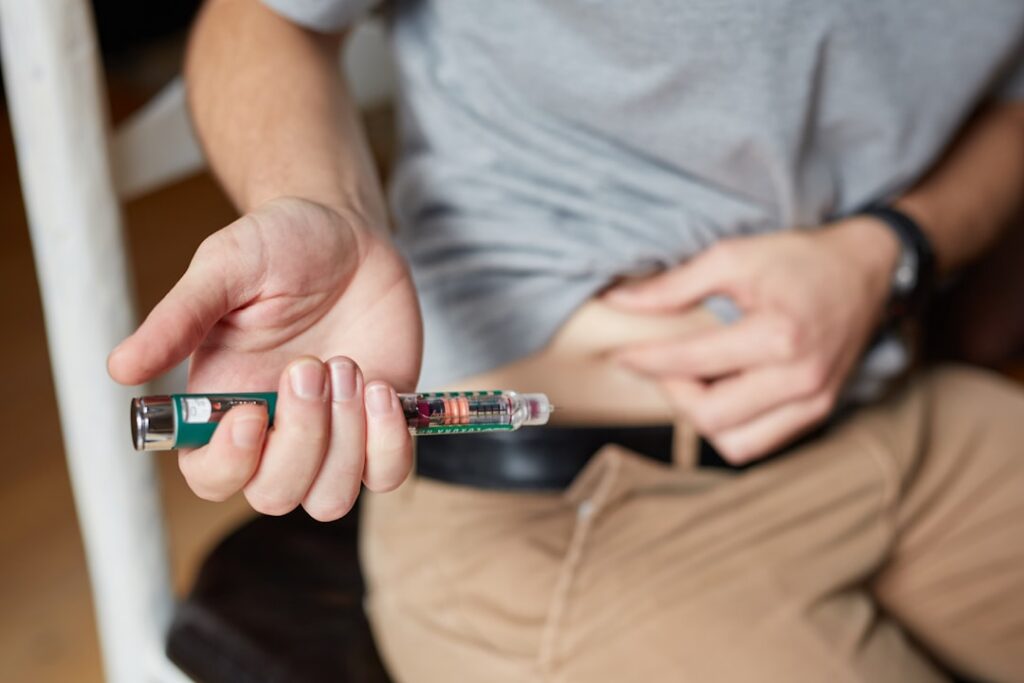
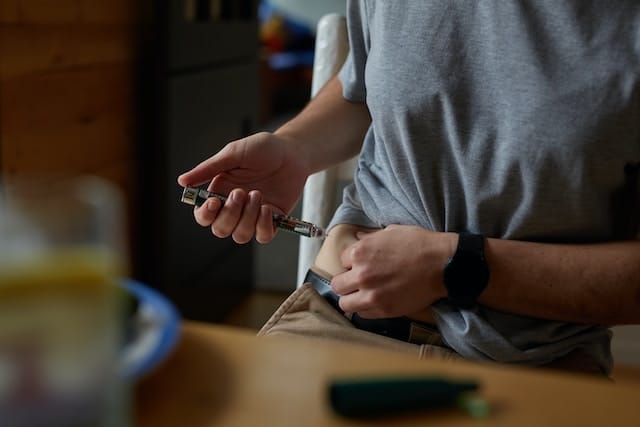
MDI typically means one or two injections of long-acting basal insulin per day, plus rapid-acting bolus shots before each meal. Studies have shown that three or four injections of insulin a day give the best blood glucose control[2] and can prevent or delay the eye, kidney, and nerve damage caused by diabetes. That is a powerful reminder that injections, done correctly, are a highly effective therapy, not a lesser option.
Injections are cheaper and take less training to use than insulin pumps.[8] For someone recently diagnosed, or someone whose current regimen is working well, that simplicity carries real value.
Head-to-Head: Glycemic Control
Older meta-analyses[7] demonstrated that overall, insulin pumps and MDI had comparable outcomes in relation to glycaemic control and hypoglycaemia. However, a 2021 meta-analysis[7] of adults with type 1 diabetes showed that insulin pumps were superior to MDI with regard to HbA1c and glucose variability, without increasing severe hypoglycaemic episodes, but were associated with an increase in diabetic ketoacidosis (DKA).[7]
That DKA risk is worth flagging. Because pumps use only rapid-acting insulin,[2][8] any interruption in delivery, like a kinked tube or a dislodged infusion site, can lead to high blood sugar and potentially DKA much faster than with long-acting insulin. Therefore, pump users must stay vigilant about their infusion site and always keep injection supplies as a backup.
The evidence for type 2 diabetes is compelling as well. In the OpT2mise trial,[3] those using insulin pumps achieved a mean A1C reduction of 1.1 percent compared to only a 0.4 percent reduction by those using multiple daily injections, and this improvement in glucose control was achieved without any episodes of severe hypoglycemia. If your A1C on injections is stuck above 8%, that 0.7% additional reduction could move you out of a high-risk zone.
Not sure what your current A1C means? Our free A1C Calculator estimates your average blood glucose (eAG) and helps you understand how close you are to your target.
Pro Tip: A pump upgrade will not fix poor fundamentals. I’ve found that people who struggle with carb-counting or skipping bolus doses on MDI tend to carry those habits into pump therapy. Master your injection regimen first, your pump results will be dramatically better as a result.
Costs, Insurance, and Real-World Access
This is where the comparison becomes most practical for many people. Pumps are clinically impressive, but the financial reality matters.
The average cost of an insulin pump without insurance in the United States is $6,000.[4] With supplies and some insurance contribution, plan for $3,000 to $6,000 in first-year costs,[4] then $2,000 or more yearly after that. That is a major commitment.
Insurance does not always cover insulin pumps, and coverage requirements vary by insurer and health plan. Many plans, including Medicare, require prior authorization and documentation showing that pump therapy is medically appropriate. Before committing to a device, verify your coverage, expected out-of-pocket costs, and any clinical documentation your diabetes care team must provide.[2][5]
For injections, the cost picture looks very different. A box of 100 syringes[6] may cost between $15 and $20, depending on where you get them, and the American Diabetes Association’s insulin affordability resources list multiple programs that cap monthly insulin costs regardless of delivery method.[6]
Pro Tip: Before scheduling a pump consultation, call your insurer and ask three questions: Does my plan cover this specific pump model? What are my out-of-pocket costs for both the device and monthly supplies? What documentation does my endocrinologist need to submit? Getting those answers upfront saves weeks of back-and-forth.
Lifestyle Fit: The Factor Clinics Often Underweight
In my experience talking to people managing diabetes, the A1C numbers matter, but daily livability is what makes a regimen stick long-term.
Pumps offer:
- Spontaneous meal timing without an extra injection
- Programmable overnight rates to address the dawn phenomenon
- Fewer needle sticks throughout the day
- Integration with continuous glucose monitors for real-time automatic adjustments[2]
You can also compare your daily readings with our Blood Sugar Charts to see how your glucose levels align with recommended targets before and after meals.
Injections offer:
- No device attached to your body 24 hours a day
- Lower cost and no tech troubleshooting
- Greater simplicity during travel, sports, or intimacy
- No risk of infusion site failure cutting off insulin delivery
A systematic review and meta-analysis concluded that pump therapy has modest advantages for lowering A1C and for reducing severe hypoglycemia rates, and use of pump therapy is associated with improvement in quality of life, particularly in areas related to fear of hypoglycemia and diabetes distress, compared with multiple daily injections.[7]
Research shows that the use of a personal insulin pump in the treatment of diabetes reduces the number of hypoglycemic episodes, especially severe episodes, and patients treated with a personal insulin pump are characterized by a lower fear of hypoglycemia[7] than patients using multiple insulin injections with pens. For someone whose anxiety around low blood sugar is affecting sleep or willingness to exercise, that psychological benefit alone can be transformative.
Common Pitfalls to Avoid
Switching to a Pump Without Adequate Training
There are technical aspects[8] to using a pump, setting it up, putting it in, interacting with it, that are more complicated in some ways than using injections. Skipping structured education is one of the fastest ways to end up frustrated and back on injections within months. Most insurers and the ADA’s pump guidance require demonstrated self-management ability before approving a device.[2]
Assuming Injections Are a Step Backward
A pump is just a tool; you can reach your blood glucose goals with a pump or injections.[8] Choosing one method over the other is not a lifelong commitment. I’ve found that some people feel social pressure to “upgrade” to a pump when their injection regimen is actually working beautifully. If your numbers are strong and your quality of life is good, staying on injections is a completely valid, evidence-supported choice.
Ignoring the DKA Risk on Pumps
Always keep a backup pen or syringe available. A pump malfunction,[2][8] a kinked cannula, or an accidental disconnection stops all insulin delivery immediately, unlike long-acting basal injections, which remain active in your system for hours.
Frequently Asked Questions: Insulin Pump vs Injections
Bottom line: Both insulin pumps and injections are proven, legitimate tools for managing diabetes. The pump wins on fine-tuned glucose control and quality-of-life measures for many users, but only if the cost is manageable, the training is completed, and the person wearing it genuinely wants to use it. Both insulin pumps and injections are proven, effective tools for managing diabetes. The pump may offer better glucose control and quality-of-life benefits for many people, but only if the cost, training, and lifestyle fit are right for you. To better understand your current diabetes control before discussing treatment changes with your healthcare team, try our free A1C Calculator and explore the Diabetes Knowledge resource hub for evidence-based guides and tools.
Sources
- Haughton J, et al. Real-World Impact of Insulin Pump Therapy vs. Multiple Daily Injections in Type 1 Diabetes. Diabetes, Obesity and Metabolism. 2025. https://pmc.ncbi.nlm.nih.gov/articles/PMC12232336/
- American Diabetes Association. Standards of Care in Diabetes—2026. Section 9: Pharmacologic Approaches to Glycemic Treatment. https://diabetesjournals.org/care/article/49/Supplement_1/S183/163934/9-Pharmacologic-Approaches-to-Glycemic-Treatment
- Medtronic. OpT2mise Trial: People with Type 2 Diabetes Achieve Superior Outcomes with Insulin Pumps vs. Multiple Daily Injections. https://news.medtronic.com/2014-07-02-People-with-Type-2-Diabetes-Achieve-Superior-Outcomes-with-Insulin-Pumps-vs-Multiple-Daily-Injections
- Care Cost Index. Cost of Insulin Pumps and Supplies. https://carecostindex.com/procedure/insulin-pump
- Diabetotech. Key Updates: ADA 2026 Diabetes Technology Guidelines. https://www.diabetotech.com/blog/key-updates-ada-2026-diabetes-technology-guidelines
- American Diabetes Association. Affordable Insulin Resources. https://diabetes.org/tools-resources/affordable-insulin
- Journal of Diabetes Science and Technology. Systematic Review on Quality of Life with Insulin Pumps vs. Multiple Daily Injections. https://journals.sagepub.com/home/dst
- Centers For Disease Control. 4 Ways to Take Insulin | Diabetes | CDC. https://www.cdc.gov/diabetes/about/4-ways-to-take-insulin.html







Leave a Reply