
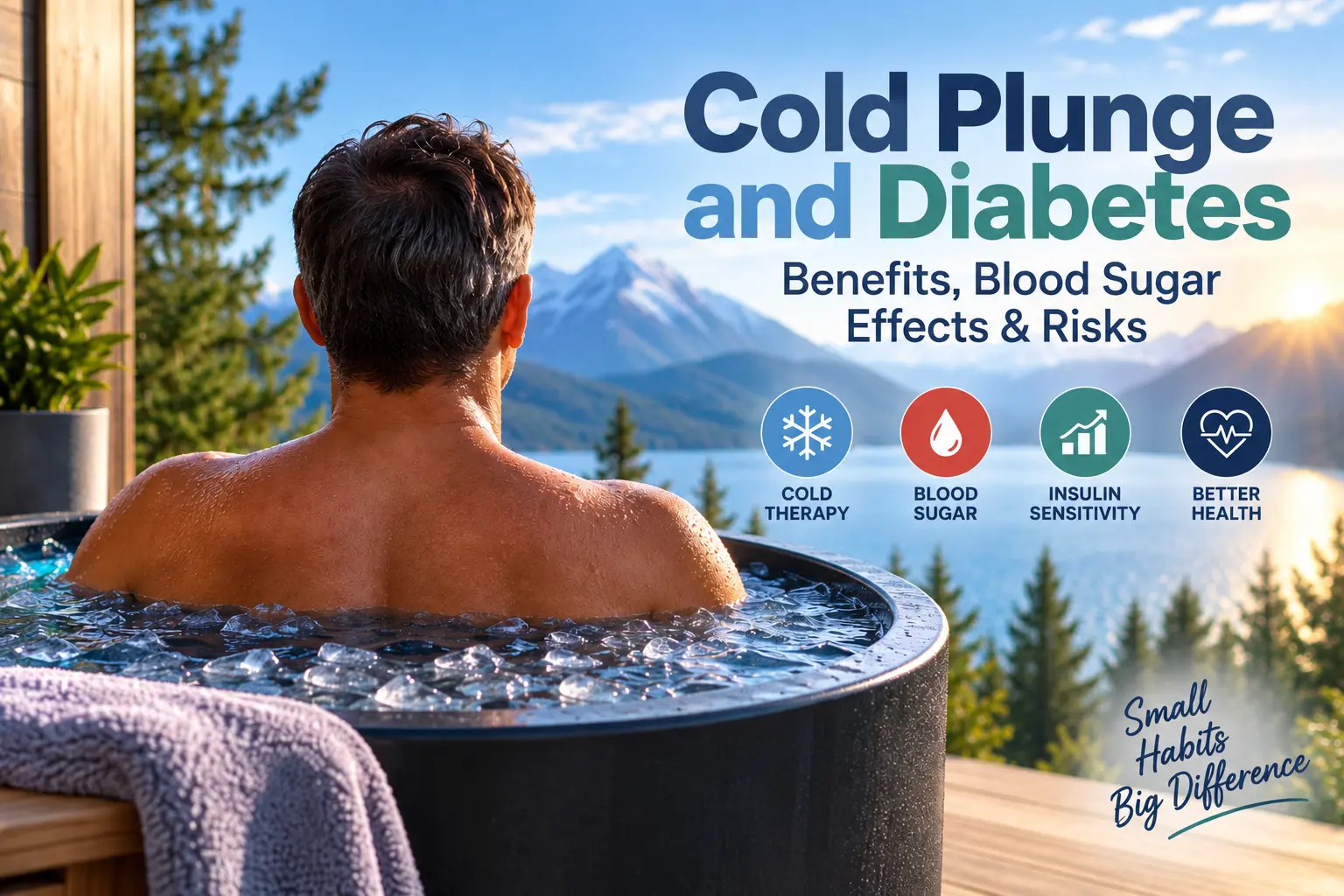
Cold Plunge and Diabetes: Benefits, Blood Sugar Effects & Risks
Cold plunge and diabetes research is getting more attention as cold-water immersion becomes popular for recovery, energy and general wellness. But can sitting in cold water actually help with blood sugar control?
The answer is less clear than social media might suggest. Cold exposure can change how the body uses glucose and may influence insulin sensitivity, but research specifically studying cold plunges and diabetes is still limited. Some studies are promising, while others suggest brief cold-water immersion may temporarily worsen glucose tolerance.
Quick Answer: Are Cold Plunges Good for Diabetes?
Cold plunges are not a treatment or proven way to prevent diabetes. Research suggests that certain forms of repeated cold exposure may affect glucose metabolism and insulin sensitivity, but we do not yet know whether regular cold plunging improves long-term blood sugar control or reduces the risk of type 2 diabetes.
For people who already have diabetes, cold plunges also require extra caution, particularly with neuropathy, poor circulation, heart disease or blood pressure problems.
My Experience With Cold Plunging
As someone who has lived with type 1 diabetes for many years, I’m always interested in habits that may support my overall health alongside regular exercise, nutrition and diabetes management.
I’ve incorporated cold plunges into my own routine, and one thing I’ve noticed is simply how much better I feel afterward. The initial cold is uncomfortable, but after getting out I tend to feel refreshed and energized.
That’s my personal experience—not evidence that cold plunging improves diabetes. I still rely on insulin and my normal diabetes-management routine rather than viewing cold exposure as a treatment.
What interests me is whether some of the physiological changes I can feel have measurable metabolic effects. That’s where the research gets interesting.
How Cold Exposure May Affect Blood Sugar
When your body gets cold, it has to produce heat to maintain its core temperature. This activates several physiological responses involving the nervous system, skeletal muscle and brown adipose tissue, commonly called brown fat.
Unlike white fat, brown fat burns energy to generate heat. Cold exposure can activate this tissue and increase its use of glucose and fatty acids.
A small human study found that prolonged cold exposure increased glucose disposal and insulin sensitivity in participants with active brown fat.1
That provides a possible biological explanation for why researchers are interested in cold exposure as a metabolic intervention—but it does not prove that a few minutes in a cold plunge produces the same effect.
If you have diabetes, your own glucose response is more useful than assuming cold exposure will automatically raise or lower blood sugar. Blood sugar charts can provide context for typical glucose ranges before and after meals.
Can Cold Exposure Improve Insulin Sensitivity?
This is where some of the most interesting diabetes research has occurred.
In a small study involving eight people with type 2 diabetes, researchers exposed participants to a mildly cold environment of about 14–15°C (57–59°F) for several hours per day. After 10 days, peripheral insulin sensitivity increased by approximately 43%.2
Interestingly, the improvement appeared to involve increased movement of the glucose transporter GLUT4 toward skeletal muscle cell membranes rather than a large increase in brown-fat activity.
However, a later study using mild cold exposure in nine people with type 2 diabetes did not reproduce the improvement in insulin sensitivity.3
So the evidence is intriguing, but far from settled.
Cold Plunges Are Not the Same as Cold Exposure
This distinction is important.
Many studies frequently cited as evidence for cold-plunge benefits didn’t actually study people sitting in ice water. They used mild cold exposure lasting several hours.
A cold plunge typically exposes the body to much colder temperatures for only a few minutes.
Those two situations can produce different physiological responses.
In fact, a 2025 study followed 12 healthy, non-obese adults through 16 daily sessions of 10-minute whole-body immersion in 14°C (57°F) water. Instead of improving glucose metabolism, the cold-water immersion temporarily reduced insulin sensitivity and glucose tolerance. Both returned to baseline within a week after the intervention ended.4
That finding is an important counterbalance to claims that cold plunging automatically improves blood sugar.
Can Cold Plunges Prevent Type 2 Diabetes?
There currently isn’t enough evidence to say that cold plunges prevent type 2 diabetes.
Cold-induced changes in brown fat, skeletal muscle activity, energy expenditure and insulin sensitivity are scientifically interesting. Some could theoretically support metabolic health.
But preventing type 2 diabetes requires looking at long-term outcomes—not short-term changes following cold exposure.
Regular physical activity, maintaining a healthy weight when appropriate, nutritious eating and other established lifestyle measures have much stronger evidence behind them.5
Think of cold plunging as a possible addition to a healthy lifestyle, not a substitute for the habits already proven to reduce type 2 diabetes risk.
What About Type 1 Diabetes?
For people with type 1 diabetes, cold plunging should not be viewed as a way to reduce the body’s need for insulin.
Cold exposure can also make glucose management less predictable. Stress hormones released in response to cold can contribute to higher blood glucose, and extreme cold can damage insulin, insulin pumps and continuous glucose monitors.6
If you use insulin, consider checking your glucose before and after a plunge to learn how your body responds.
Insulin, pumps, CGMs and other diabetes supplies should also be protected from extreme temperatures.
Risks and Who Should Be Careful
Cold water causes rapid changes in breathing, heart rate, blood pressure and circulation.7
That means cold plunging isn’t appropriate for everyone.
People with peripheral neuropathy may have reduced temperature sensation and may not recognize that water is dangerously cold. Poor circulation can further increase the risk of cold-related injury.
Extra caution is also appropriate for people with cardiovascular disease, high blood pressure or autonomic neuropathy.
If you have diabetes—particularly if you have neuropathy, circulation problems or cardiovascular disease—talk with your healthcare provider before adding cold plunges to your routine.8
Never use cold plunging as a treatment for high or low blood sugar.
How to Approach Cold Plunging Safely
If your healthcare provider says cold-water immersion is appropriate for you, there is no reason to prove how much cold you can tolerate.
Start conservatively rather than immediately using extremely cold water or long exposures. Get out if you experience lightheadedness, breathing difficulty, excessive numbness or other significant discomfort.8
People using insulin may also want to monitor their glucose around their first several sessions to learn whether cold exposure produces a consistent response.
The goal is a controlled exposure—not an endurance contest.
The Bottom Line
The connection between cold plunge and diabetes is promising enough to study, but not strong enough to call cold plunging a diabetes treatment or prevention strategy.
Research shows that prolonged mild cold exposure can influence glucose metabolism and, in some small studies, improve insulin sensitivity. But actual cold-water immersion has been studied much less, and recent research found that repeated brief plunges temporarily reduced insulin sensitivity and glucose tolerance.
I personally enjoy cold plunging because I feel better afterward, and that’s enough reason for me to include it as part of my wellness routine. I don’t consider it a diabetes therapy.
For now, cold plunges are best viewed as an optional wellness practice with interesting metabolic effects—not a replacement for exercise for diabetes management, nutrition, prescribed medication, insulin or proven diabetes care.
Cold plunging also shouldn’t be viewed as a strategy for improving long-term measures such as A1C until stronger clinical evidence is available.
Frequently Asked Questions
References
- Chondronikola M, et al. “Brown Adipose Tissue Improves Whole-Body Glucose Homeostasis and Insulin Sensitivity in Humans.” Diabetes. 2014;63(12):4089–4099. PubMed [↩]
- Hanssen MJW, et al. “Short-term cold acclimation improves insulin sensitivity in patients with type 2 diabetes mellitus.” Nature Medicine. 2015;21(8):863–865. PubMed [↩]
- Remie CME, et al. “Metabolic responses to mild cold acclimation in type 2 diabetes patients.” Nature Communications. 2021;12:1516. PubMed [↩]
- Solianik R, Jarutiene L, Brazaitis M. “Daily brief whole-body immersion in 14 °C water temporarily decreases glucose tolerance and insulin sensitivity.” Journal of Thermal Biology. 2025;129:104088. PubMed [↩]
- American Diabetes Association Professional Practice Committee for Diabetes. “3. Prevention or Delay of Diabetes and Associated Comorbidities: Standards of Care in Diabetes—2026.” Diabetes Care. 2026;49(Suppl. 1)–S60. ADA Standards of Care [↩]
- Centers for Disease Control and Prevention. “Managing Diabetes in Cold Weather.” CDC [↩]
- Knechtle B, Waśkiewicz Z, Sousa CV, Hill L, Nikolaidis PT. “Cold Water Swimming—Benefits and Risks: A Narrative Review.” International Journal of Environmental Research and Public Health. 2020;17(23):8984. PubMed [↩]
- Cleveland Clinic. “Health Benefits of Cold Plunges.” Cleveland Clinic [↩] [↩]




Leave a Reply