
Lactate and Diabetes: Why This Metabolic Fuel Matters for Blood Sugar and Exercise
Lactate and diabetes are closely connected through glucose metabolism, exercise, and energy production. In reality, lactate is an important metabolic fuel and signaling molecule that helps move energy between muscles, the heart, brain, liver, and other tissues.1
For people with diabetes, lactate is especially interesting because it connects exercise, glucose metabolism, liver glucose production, insulin resistance, and physical fitness.
Understanding lactate may also help explain why different types and intensities of exercise can produce very different blood sugar responses.
Quick Answer: Why Is Lactate Important for People With Diabetes?
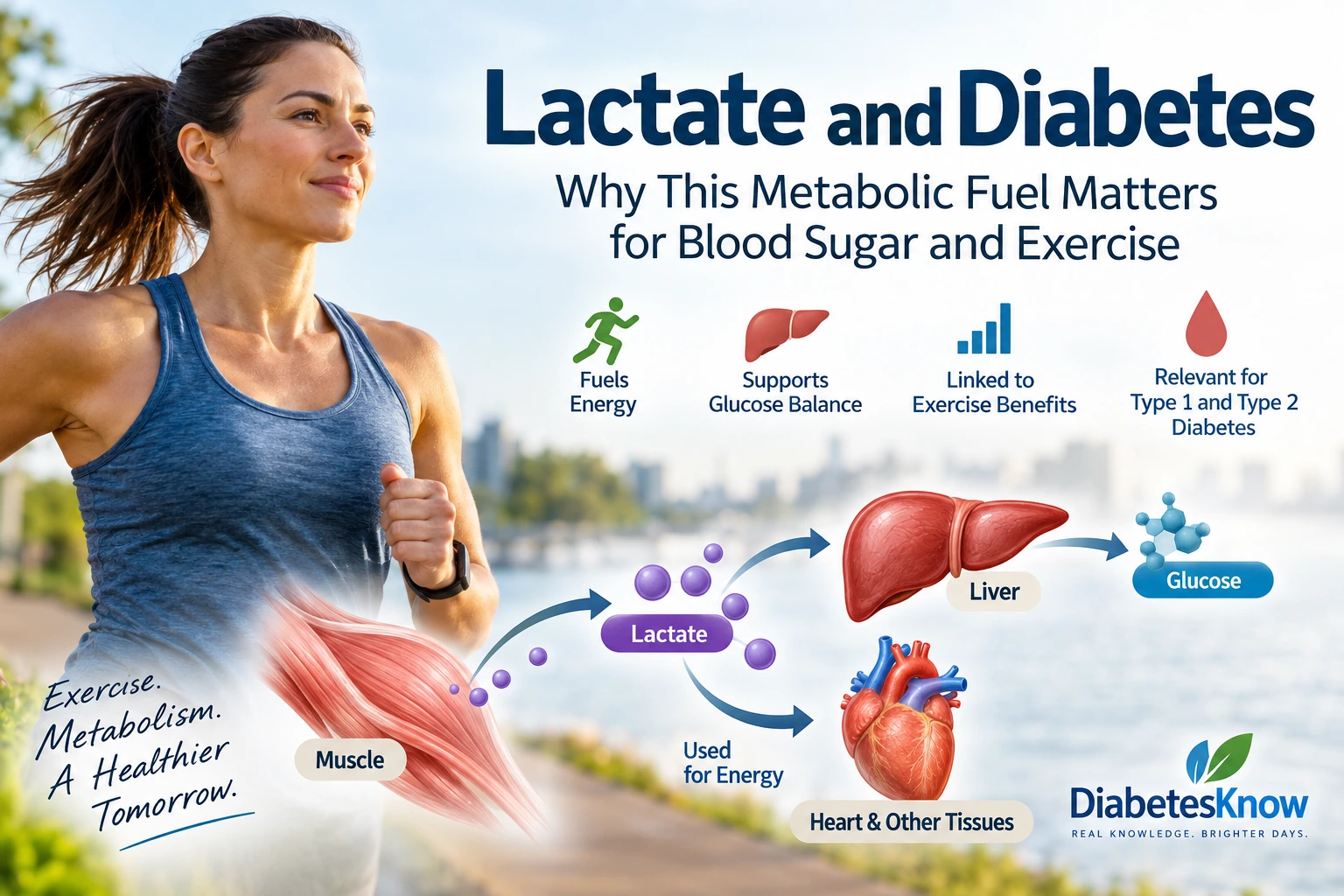
Lactate helps the body redistribute and reuse energy, particularly during exercise. Working muscles can produce lactate from glucose and glycogen, while other tissues can use that lactate for energy. The liver can also use lactate as a building block for making glucose.
For people with diabetes, this matters because lactate metabolism is closely connected with blood glucose regulation and exercise intensity. A temporary rise in lactate during exercise is normal, while abnormal resting lactate metabolism has been associated with insulin resistance and type 2 diabetes.2
Key Takeaways
- Lactate is not simply a waste product. It can be used as fuel by muscles and other organs.
- Lactate provides the liver with material that can be converted back into glucose.
- Lactate typically rises as exercise intensity increases.
- Higher-intensity exercise can produce different glucose responses than steady aerobic exercise, particularly in people with type 1 diabetes.
- Exercise training can improve lactate responses during physical activity.
- A temporary exercise-related increase in lactate is different from chronically elevated resting lactate.
- Emerging research suggests elevated lactate may also participate in pathways involved in insulin resistance.
What Is Lactate?
Lactate is a molecule produced naturally during the metabolism of glucose.
When cells break down glucose through glycolysis, they produce pyruvate. Lactate dehydrogenase can convert pyruvate to lactate as part of normal cellular metabolism.
Importantly, lactate can be produced even when adequate oxygen is available. The older idea that lactate is simply a waste product created when muscles “run out of oxygen” does not accurately reflect current understanding of lactate metabolism.1
Your body continuously produces and uses lactate—even at rest.
During exercise, lactate production can increase substantially as the demand for energy rises.
Why Is Lactate Important?
Scientists once viewed lactate largely as an unwanted byproduct of strenuous exercise. Research into the lactate shuttlechanged that understanding.
Lactate can move between cells and tissues, allowing areas producing large amounts of it to supply other tissues capable of using it for energy or gluconeogenesis.3
| Role of Lactate | What Happens |
|---|---|
| Energy production | Muscles, the heart and other tissues can use lactate as fuel |
| Glucose production | The liver can use lactate to produce glucose |
| Energy transport | Lactate helps move usable carbon and energy between tissues |
| Exercise metabolism | Lactate production and clearance change as exercise intensity increases |
| Cell signaling | Lactate can participate in signaling processes that influence metabolism |
Rather than being metabolic garbage, lactate is part of an interconnected system for moving, using, and recycling energy throughout the body.
How Does Lactate Affect Blood Sugar?
Lactate and glucose metabolism are closely connected.
During exercise, working muscles use glucose and stored glycogen for energy. Some of that carbohydrate passes through lactate.
Lactate released into the bloodstream can travel to other tissues where it is used as fuel. It can also reach the liver, where its carbon can be used to make glucose through gluconeogenesis.3
This recycling of lactate into glucose is traditionally described as part of the Cori cycle.
Lactate → Liver → Glucose
A simplified pathway looks like this:
Glucose or glycogen → pyruvate → lactate → bloodstream → liver → glucose
The newly produced glucose can then become available to tissues again.
This relationship becomes particularly relevant during exercise, when the body must continuously balance glucose being used by working muscles with glucose entering the circulation.
If you want to compare glucose readings before, during, and after activity with common target ranges, see DiabetesKnow’s Blood Sugar Charts.
Why Does Lactate Matter During Exercise With Diabetes?
Exercise does not affect blood glucose the same way at every intensity.
During continuous moderate aerobic exercise, working muscles increase glucose uptake. For someone using insulin, circulating insulin cannot decrease as rapidly as it normally would in someone without diabetes, which can contribute to falling glucose levels.
Higher-intensity and anaerobic activities create a different metabolic environment.
Activities such as sprinting, stair running, heavy resistance training, interval training, and intense cycling increase reliance on rapid carbohydrate metabolism and generally produce larger increases in lactate.
These activities also stimulate counterregulatory hormones that can increase liver glucose production.
As a result, very intense exercise may produce greater glucose stability or even a temporary glucose rise in some people with type 1 diabetes, while prolonged moderate aerobic exercise is more likely to lower glucose.4
Lactate is not the sole cause of these differences, but it is an important part of the metabolic response.
For a broader explanation of how activity affects insulin sensitivity and glucose, see How Does Exercise Help With Diabetes Management?.
Lactate May Help Explain Different Exercise Glucose Patterns
Consider two workouts:
Workout A: 45 minutes of steady walking or cycling.
Workout B: repeated hard intervals or resistance training.
Both are exercise, but their glucose effects can be very different.
Steady aerobic activity can cause substantial muscle glucose uptake and, particularly when insulin levels are relatively high, may increase the risk of falling glucose.
Hard intervals and resistance exercise rely more heavily on rapid glycolysis and can produce larger lactate and counterregulatory hormone responses.
In a randomized crossover trial involving adults with type 1 diabetes using hybrid closed-loop insulin delivery, high-intensity and resistance exercise produced greater increases in lactate and several counterregulatory responses than moderate-intensity exercise.5
This helps explain why someone using a CGM may see a downward glucose trend during a long walk but a flatter—or sometimes upward—trend during heavy lifting or intense intervals.
For people with diabetes, exercise intensity can therefore be just as important as exercise duration when interpreting CGM patterns.
What Is the Lactate Threshold?
As exercise becomes progressively harder, blood lactate eventually begins rising more rapidly because lactate appearance is increasing relative to its removal.
This transition is commonly described using terms such as the lactate threshold.
Below this intensity, exercise can generally be sustained for longer periods. Above it, carbohydrate use becomes increasingly important and fatigue typically develops more quickly.
Lactate measurements are frequently used in exercise physiology to evaluate endurance performance and establish individualized training intensities.
For someone with diabetes, the concept is useful even without measuring lactate because it reinforces an important point:
Low-, moderate-, and high-intensity exercise can produce different glucose responses.
Why Is Lactate Important in Type 1 Diabetes?
Lactate may be particularly relevant to people with type 1 diabetes who exercise while using insulin.
Blood glucose responses can vary substantially according to exercise intensity, duration, insulin levels, food intake, and the type of activity being performed.4
Research comparing different exercise intensities in adults with type 1 diabetes has found that lactate and counterregulatory responses differ considerably between moderate aerobic, high-intensity, and resistance exercise.5
Researchers have even investigated whether physiological signals such as lactate could eventually provide additional information to automated insulin-delivery systems about the type and intensity of exercise.
This does not mean people with type 1 diabetes should adjust insulin based on lactate measurements.
Instead, lactate helps explain why glucose may behave differently during different types of activity.
For someone using a CGM, observing personal glucose patterns across different workouts remains much more practical than routinely measuring lactate.
People using insulin should also be aware that prolonged or moderate exercise can increase the risk of low blood sugar. See Hypoglycemia Symptoms for warning signs and treatment information.
What Is the Relationship Between Lactate and Type 2 Diabetes?
People with type 2 diabetes can show differences in lactate metabolism compared with people without diabetes.
A systematic review and meta-analysis found evidence of higher baseline lactate concentrations in people with type 2 diabetes compared with healthy controls. It also found that chronic exercise training reduced blood lactate at a fixed exercise workload, although it did not significantly reduce basal lactate concentrations.2
These findings suggest that lactate metabolism during exercise can improve with physical training even when resting lactate does not significantly change.
Higher lactate in type 2 diabetes should not automatically be interpreted as a cause of the disease. It may partly reflect broader metabolic changes associated with insulin resistance and impaired metabolic flexibility.
Can High Lactate Contribute to Insulin Resistance?
Emerging research suggests lactate may be more than a marker of metabolic dysfunction.
A 2026 study found higher serum lactate and hepatic lactylation in people with type 2 diabetes and reported experimental evidence that elevated lactate and lactylation could worsen insulin resistance through changes involving the PI3K/AKT/GLUT2 signaling pathway.6
The researchers also found that experimentally lowering lactate and lactylation improved insulin-resistance-related measures in cell and animal models.6
These findings are important because they suggest abnormal lactate metabolism could potentially participate in insulin resistance rather than merely accompany it.
However, this is still an emerging area of research. The findings do not establish elevated lactate as a standalone cause of type 2 diabetes or justify attempting to lower lactate as a diabetes treatment.
Is Exercise Lactate the Same as Chronically High Lactate?
No. A temporary rise in lactate during exercise is a normal metabolic response and should not be confused with persistently elevated resting lactate.
Blood lactate normally increases as exercise intensity rises and then declines as lactate is transported, oxidized, or recycled.
That makes context extremely important:
| Lactate Situation | What It Means |
|---|---|
| Temporary rise during exercise | Normal response to increased energy demand |
| Improved lactate response after training | Can reflect improved physical performance and metabolic adaptation |
| Persistently elevated resting lactate | May accompany metabolic dysfunction or certain medical conditions |
| Severe pathological lactate elevation | Can occur with serious illness and requires medical evaluation |
An exercise-related lactate increase should therefore not automatically be interpreted as harmful.
Can Exercise Improve Lactate Metabolism in Diabetes?
Yes, exercise training can improve how the body handles lactate during physical activity.
A systematic review and meta-analysis involving people with type 2 diabetes found that chronic exercise training reduced lactate concentrations at a fixed workload and allowed participants to perform a greater workload at a fixed lactate concentration.2
In practical terms, a trained person may be able to perform the same exercise with a smaller lactate response—or work harder before reaching the same lactate concentration.
These adaptations are another reason regular physical activity can improve metabolic fitness beyond simply burning calories during a workout.
Does Better Lactate Clearance Mean Better Diabetes Control?
Not necessarily.
Improved lactate handling during exercise can reflect better physical conditioning, but lactate should not replace established diabetes measurements such as blood glucose, CGM data, time in range, or A1C.
There is currently no standard recommendation for most people with diabetes to routinely monitor lactate at home.
Instead, lactate provides another way of understanding what is happening metabolically during exercise.
For most people, the practical goal should be improving overall fitness and learning how different activities affect personal glucose patterns—not trying to achieve a specific lactate number.
Can You Measure Lactate at Home?
Yes. Portable blood lactate meters are available and are sometimes used by endurance athletes, coaches, and exercise professionals.
They work somewhat like glucose meters: a small blood sample is placed on a test strip and analyzed for lactate concentration.
However, routine lactate testing is generally unnecessary for diabetes management.
Blood lactate changes according to factors such as exercise intensity, fitness, timing of measurement, and metabolic state. For everyday diabetes management, a CGM or blood glucose meter usually provides considerably more actionable information.
Lactate vs. Lactic Acidosis: They Are Not the Same Thing
Normal lactate production during exercise should not be confused with lactic acidosis, a potentially serious medical condition.
Lactic acidosis involves pathological lactate accumulation together with an acid-base disturbance and can occur during serious illnesses involving problems such as impaired tissue oxygen delivery or lactate clearance.
Metformin has also been associated with a rare condition called metformin-associated lactic acidosis, particularly in certain high-risk situations such as severe kidney impairment or critical illness.
The temporary increase in lactate produced during a hard workout is physiologically different from pathological lactic acidosis.
What Does Lactate Mean for Someone With Diabetes?
For most people with diabetes, understanding lactate is more useful than measuring it.
Its biggest practical value is helping explain why the body responds differently to different types of exercise.
A long walk, steady bike ride, heavy strength workout, and series of hard intervals can place very different demands on glucose metabolism.
When evaluating your own exercise response, consider:
- exercise intensity
- exercise duration
- glucose before exercise
- CGM trend arrows
- insulin on board
- carbohydrate intake
- glucose during exercise
- glucose several hours afterward
Over time, these patterns can help you anticipate how a particular workout is likely to affect your glucose.
Anyone using insulin or medications capable of causing hypoglycemia should individualize exercise, carbohydrate, and medication strategies with their diabetes healthcare team.
The Bottom Line
Lactate is an important metabolic fuel—not simply a waste product produced by tired muscles.
It helps move energy between tissues, supplies material that can be converted into glucose by the liver, and provides useful information about exercise intensity and carbohydrate metabolism.
For people with diabetes, lactate is particularly relevant because it sits at the intersection of exercise, blood glucose regulation, metabolic fitness, and insulin resistance.
Temporary increases during exercise are normal. Abnormal resting lactate metabolism, however, has been associated with type 2 diabetes, and emerging research suggests elevated lactate may participate in pathways involved in insulin resistance.
You do not need to routinely monitor lactate to benefit from understanding it. Knowing how exercise intensity changes lactate production—and how those changes interact with glucose metabolism—can make blood sugar and CGM responses during exercise easier to understand.
Frequently Asked Questions


References
- Li X, Yang Y, Zhang B, et al. Lactate metabolism in human health and disease. Signal Transduction and Targeted Therapy. 2022;7(1):305. doi:10.1038/s41392-022-01151-3. [↩] [↩]
- Zhao T, Le S, Freitag N, et al. Effect of Chronic Exercise Training on Blood Lactate Metabolism Among Patients With Type 2 Diabetes Mellitus: A Systematic Review and Meta-Analysis. Frontiers in Physiology. 2021;12:652023. doi:10.3389/fphys.2021.652023. [↩] [↩] [↩]
- Brooks GA. The tortuous path of lactate shuttle discovery: From cinders and boards to the lab and ICU. Journal of Sport and Health Science. 2020;9(5):446–460. [↩] [↩]
- Colberg SR, Sigal RJ, Yardley JE, et al. Physical Activity/Exercise and Diabetes: A Position Statement of the American Diabetes Association. Diabetes Care. 2016;39(11):2065–2079. [↩] [↩]
- Paldus B, Morrison D, Zaharieva DP, et al. A Randomized Crossover Trial Comparing Glucose Control During Moderate-Intensity, High-Intensity, and Resistance Exercise With Hybrid Closed-Loop Insulin Delivery While Profiling Potential Additional Signals in Adults With Type 1 Diabetes. Diabetes Care. 2022;45(1):194–203. doi:10.2337/dc21-1593. [↩] [↩] [↩]
- Wei BY, Zuo XC, Feng CS, et al. Elevated lactate aggravates insulin resistance by downregulating the PI3K/AKT/GLUT2 pathway in type 2 diabetes mellitus. Life Sciences. 2026;395:124368. doi:10.1016/j.lfs.2026.124368. [↩] [↩] [↩]






Leave a Reply