Type 1 Diabetes Snack List: 25+ Healthy Snack Ideas
Finding the right snack with type 1 diabetes isn’t simply about choosing the food with the fewest carbohydrates. Your current glucose level, CGM trend, insulin on board, activity and hunger can all influence what makes sense at that moment.
This type 1 diabetes snack list includes lower-carb choices, protein-rich options, portable snacks and foods containing carbohydrates. It also explains when a snack may require insulin and why treating low blood sugar requires a different approach.
Quick Answer
Good snacks for type 1 diabetes include hard-boiled eggs, cheese, nuts, olives, avocado, nonstarchy vegetables, plain Greek yogurt, berries and nut butter. Snacks containing carbohydrates can also fit into a type 1 diabetes eating plan when the carbohydrate amount is considered as part of your insulin plan.1 If your blood sugar is low, however, use fast-acting carbohydrate rather than relying on a low-carb snack.2
Type 1 Diabetes Snack List at a Glance
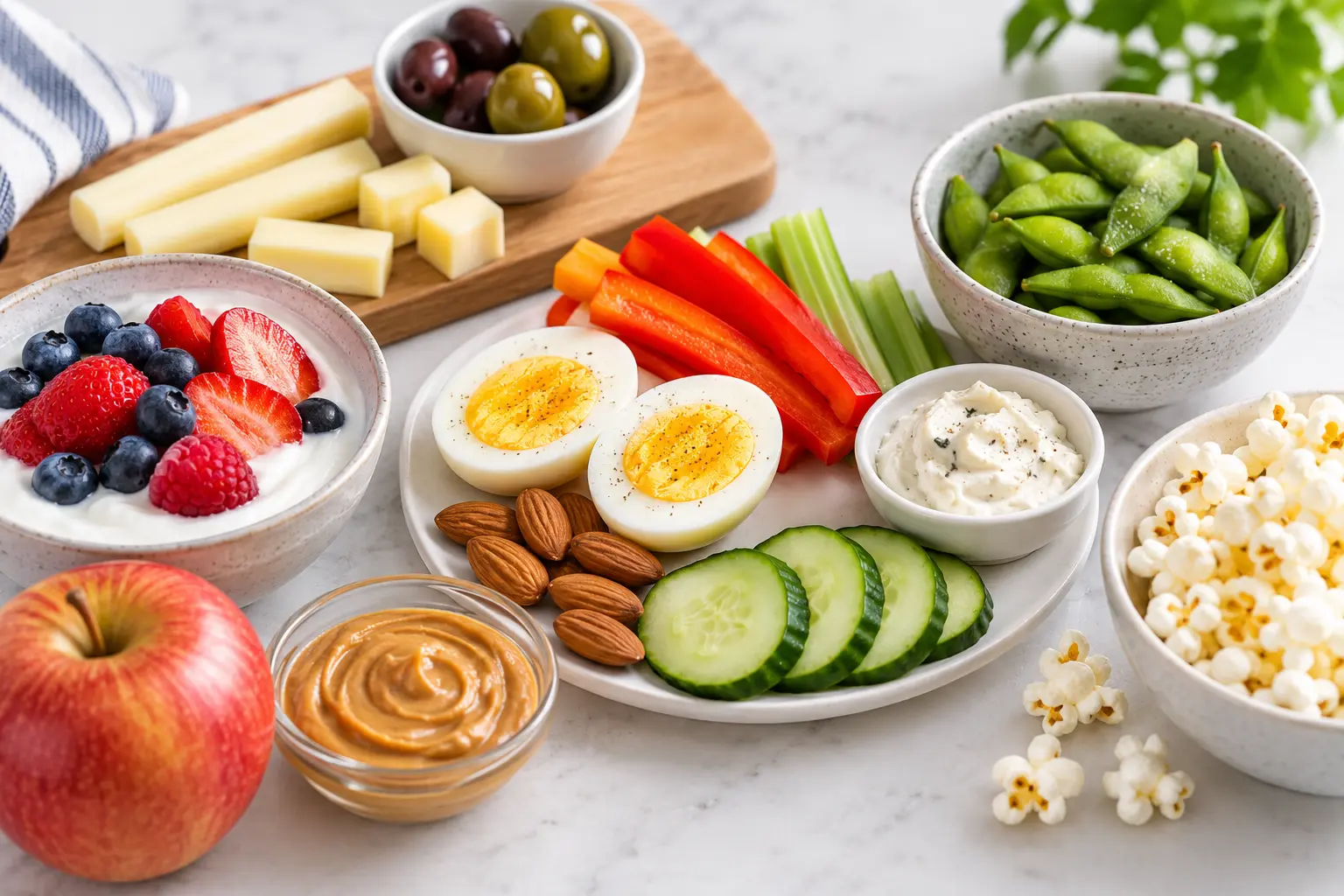
Here are practical snack ideas with defined serving sizes to make carbohydrate counting easier:
| Snack | Example Serving | Approx. Carbs | Why It Works |
|---|---|---|---|
| Hard-boiled egg | 1 large | ~0.6 g | Protein-rich, very low carb |
| String cheese | 1 stick (28 g) | ~0–1 g | Portable protein snack |
| Olives + cheese | 5 olives + 1 oz cheese | ~1–3 g | Low-carb savory option |
| Celery + peanut butter | 1 small stalk + 1 Tbsp peanut butter | ~4 g | Fiber with protein and fat |
| Cucumber + cream cheese | 1 cup cucumber + 1 Tbsp cream cheese | ~4–5 g | Crunchy, lower-carb choice |
| Almonds | 1 oz (~23 almonds) | ~6 g | Protein, fiber and healthy fats |
| Edamame | ½ cup shelled | ~7 g | Plant protein and fiber |
| Cottage cheese + berries | ½ cup cottage cheese + ¼ cup berries | ~8–10 g | Protein plus carbohydrates |
| Plain Greek yogurt + berries | ¾ cup plain yogurt + ¼ cup berries | ~8–12 g | Protein with fruit |
| Bell pepper + hummus | 1 cup pepper + 2 Tbsp hummus | ~10–12 g | Fiber, vegetables and protein |
| Air-popped popcorn | 3 cups | ~19 g | Whole-grain, higher-volume snack |
| Small apple + peanut butter | 1 small apple + 1 Tbsp peanut butter | ~24–27 g | Carbohydrate with protein and fat |
Carbohydrate amounts are approximate and depend on serving size and brand. Check the Nutrition Facts label or another reliable carb-counting resource when calculating insulin for a snack.
How to Choose a Snack With Type 1 Diabetes
There isn’t one snack that’s best for everyone with type 1 diabetes. The right choice can change depending on your glucose level, insulin, activity and when you plan to eat your next meal.3
Check the Carbohydrate Amount
Carbohydrates generally have the greatest immediate effect on blood glucose, making the carbohydrate content of a snack particularly important when you use insulin.
Carbohydrate counting can help match insulin with the amount of carbohydrate you plan to eat.1 That doesn’t mean carbohydrates need to be avoided. It means knowing approximately how much you’re eating can make insulin dosing and glucose management more predictable.
Pair Carbs With Protein, Fiber or Healthy Fat
For an everyday snack, combining carbohydrate foods with protein, fiber or unsaturated fat can provide more nutrition and make the snack more satisfying.
Simple combinations include:
- Apple slices with peanut or almond butter
- Berries with plain Greek yogurt
- Bell pepper strips with hummus
- Whole-grain crackers with cheese
- Fruit with a small handful of nuts
Keep in mind that adding fat, fiber or protein can change how quickly a meal or snack affects glucose.
Consider Your Glucose Level and Insulin
Before grabbing a snack, consider your current glucose reading and trend, recent insulin, planned activity and how long it will be until your next meal.
The ADA recommends that people with type 1 diabetes learn how to match insulin doses not only to carbohydrate intake but also to factors including current glucose, glucose trends and anticipated physical activity.1
Low-Carb Snacks for Type 1 Diabetes
A good type 1 diabetes snack list should include lower-carb options for times when you’re hungry between meals but don’t necessarily want a large carbohydrate load.
Good options include:
- Hard-boiled eggs
- String cheese
- Cottage cheese
- Almonds or walnuts
- Olives
- Avocado
- Celery with peanut butter
- Cucumber with cream cheese
- Bell pepper slices
- Cherry tomatoes
- Turkey or chicken roll-ups
- Tuna in cucumber slices
For even more options, see our guide to lower-carb snack ideas.
“Low carb” doesn’t mean “no glucose effect.” Portions, protein, fat and individual responses can still matter, particularly with larger snacks.
Snacks With Carbohydrates, Protein and Fiber
You don’t need to limit your type 1 diabetes snack list to very low-carb foods. Carbohydrate-containing snacks can provide energy, fiber, vitamins and other nutrients.
Try combinations such as:
- Small apple with peanut butter
- Berries with plain Greek yogurt
- Pear with walnuts
- Whole-grain crackers with cheese
- Cottage cheese with berries
- Hummus with vegetables
- Edamame
- Chia pudding made without added sugar
Looking for homemade options? Try these type 1 diabetes snack recipes.
For snacks containing meaningful amounts of carbohydrate, count the carbs and follow your individualized insulin plan.
On-the-Go Type 1 Diabetes Snacks
Convenience matters, especially when you’re away from home. Shelf-stable or easily packed options can make it easier to avoid relying on whatever food happens to be available.
Portable options on a type 1 diabetes snack list can include:
- Individual nut packs
- Almonds or walnuts
- Cheese sticks
- Hard-boiled eggs in a cooler
- Single-serving plain Greek yogurt
- Roasted edamame
- Tuna packets
- Nut-butter packets
- Whole-grain crackers
- Fresh fruit
It’s also smart to carry a separate source of fast-acting carbohydrate for hypoglycemia, such as glucose tablets or glucose gel.2
Bedtime Snacks for Type 1 Diabetes
Not everyone with type 1 diabetes needs a bedtime snack.
Whether one is appropriate depends on factors such as your glucose level and trend, insulin regimen, evening activity and history of overnight hypoglycemia. The timing of meals and snacks should be individualized according to insulin, physical activity and other health factors.3
If your diabetes care plan calls for a bedtime snack, options might include:
- Plain Greek yogurt with a few berries
- Whole-grain crackers with cheese
- Apple slices with peanut butter
- Cottage cheese with berries
- A small serving of nuts with fruit
A bedtime snack shouldn’t routinely be used to compensate for insulin doses that repeatedly cause overnight lows. Frequent nighttime hypoglycemia is a reason to discuss your treatment plan with your diabetes care team.
Snacks Before or After Exercise
Exercise can make snack planning more complicated because glucose responses vary according to the type, intensity and duration of activity, current glucose and the amount of active insulin.
For people using insulin, physical activity can increase the risk of hypoglycemia, so carbohydrate intake and/or insulin may need to be adjusted based on the circumstances.4
Possible pre- or post-exercise snacks include:
- Banana or other fruit
- Greek yogurt with berries
- Whole-grain crackers with cheese
- Apple with peanut butter
- A small serving of milk
- Fruit with nuts
Because exercise responses vary considerably with type 1 diabetes, use your glucose meter or CGM trends and follow your individualized exercise plan rather than relying on one carbohydrate target for every workout.4
Do Type 1 Diabetes Snacks Require Insulin?
Sometimes.
Whether a snack requires insulin depends on its carbohydrate content, your insulin-to-carb ratio, current glucose level and trend, insulin on board, activity and your individualized treatment plan.
The ADA recommends that people with type 1 diabetes receive education on matching insulin doses to carbohydrate intake and, when appropriate, other factors that affect glucose response. Insulin adjustments can also take current glucose, glucose trends and anticipated activity into account.1
Very low-carb snacks may have a smaller immediate effect on glucose, but that doesn’t mean every snack affects every person the same way.
If you use an insulin-to-carb ratio, our Insulin-to-Carb Ratio Calculator can help you understand how carbohydrate amounts relate to your prescribed ratio.
What to Eat for Low Blood Sugar
Everyday low-carb snacks and low blood sugar treatments are not the same thing.
For a conscious person with glucose below 70 mg/dL, the ADA recommends glucose or another fast-acting carbohydrate rather than foods high in fat or protein for initial treatment.2
Knowing the common hypoglycemia symptoms can also help you recognize a low and treat it promptly.
A common approach is the 15-15 rule:
- Consume about 15 grams of fast-acting carbohydrate.
- Wait 15 minutes.
- Recheck your glucose.
- If it remains below 70 mg/dL, repeat the treatment.2
Examples of fast-acting carbohydrates include:
- Glucose tablets
- Glucose gel
- 4 ounces of regular fruit juice
- 4 ounces of regular soda
- Sugar or honey
Chocolate, nuts, cheese and peanut butter aren’t ideal first choices for treating hypoglycemia because fat, fiber and protein can slow how quickly glucose becomes available.2
Once glucose has recovered, an additional snack may be appropriate if your next meal isn’t coming soon. NIDDK notes that a snack may be needed when the next meal is more than an hour away.5
Severe hypoglycemia in which a person cannot safely swallow, is unconscious or requires help from another person is an emergency and should be treated according to the person’s emergency glucagon plan and medical guidance.2
Do People With Type 1 Diabetes Need Snacks?
Not necessarily.
Snacks can be useful for hunger, exercise, treating or preventing certain lows, or when there’s a long gap between meals. A type 1 diabetes snack list can provide useful options, but having type 1 diabetes doesn’t automatically mean you need scheduled snacks every day.
The best timing for meals and snacks depends partly on your insulin treatment, physical activity and individual health needs.3
If you frequently need snacks to prevent unexplained lows, particularly overnight or between meals, discuss the pattern with your diabetes care team. Recurrent hypoglycemia may signal that your insulin or another part of your treatment plan needs adjustment.2
How I Approach Snacks With Type 1 Diabetes
After living with type 1 diabetes for more than 25 years, I’ve found that the best snack isn’t always the one with the fewest carbohydrates.
Before I eat, I look at my current blood sugar level, CGM trend, recent insulin, activity and how long it will be until my next meal. If I’m simply hungry between meals, I often prefer a lower-carb snack that combines protein, healthy fat or fiber.
Treating a low is different. When my glucose is low, I use fast-acting carbohydrate first rather than relying on foods such as nuts, cheese or peanut butter.
The goal isn’t to find one “perfect” diabetes snack. It’s to understand how different snacks fit into your own glucose and insulin management.
Frequently Asked Questions
References
- American Diabetes Association Professional Practice Committee for Diabetes. “9. Pharmacologic Approaches to Glycemic Treatment: Standards of Care in Diabetes—2026.” Diabetes Care. 2026;49(Suppl. 1):S183–S215. doi:10.2337/dc26-S009. [↩] [↩] [↩] [↩]
- American Diabetes Association Professional Practice Committee for Diabetes. “6. Glycemic Goals, Hypoglycemia, and Hyperglycemic Crises: Standards of Care in Diabetes—2026.” Diabetes Care. 2026;49(Suppl. 1):S132–S149. doi:10.2337/dc26-S006. [↩] [↩] [↩] [↩] [↩] [↩] [↩] [↩]
- National Institute of Diabetes and Digestive and Kidney Diseases (NIDDK). “Healthy Living with Diabetes.” National Institutes of Health. [↩] [↩] [↩] [↩]
- American Diabetes Association Professional Practice Committee for Diabetes. “5. Facilitating Positive Health Behaviors and Well-being to Improve Health Outcomes: Standards of Care in Diabetes—2026.” Diabetes Care.2026;49(Suppl. 1):S89–S131. doi:10.2337/dc26-S005. [↩] [↩]
- National Institute of Diabetes and Digestive and Kidney Diseases (NIDDK). “Low Blood Glucose (Hypoglycemia).” National Institutes of Health. [↩]