
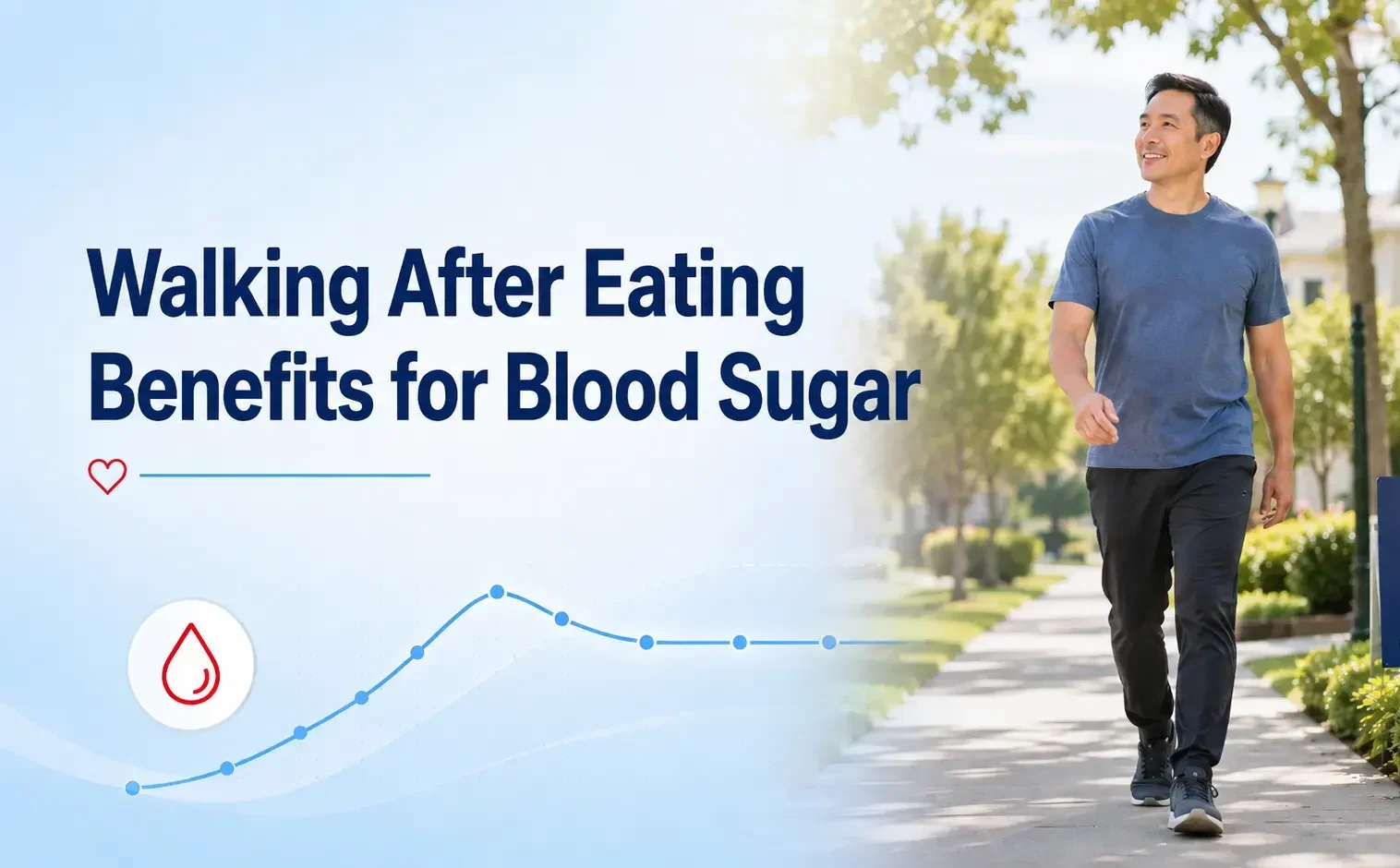
Walking After Eating: Benefits for Blood Sugar and Diabetes
Quick Answer: Walking after eating may help lower blood sugar by helping your muscles use glucose from the meal. A 10 to 15 minute walk after meals can reduce post-meal glucose spikes, especially after higher-carbohydrate meals.
Walking after eating is a practical habit for people with diabetes, prediabetes, insulin resistance, or frequent after-meal glucose spikes. It works best alongside balanced meals, prescribed medications, and regular glucose monitoring.
For long-term glucose context, use the A1C Calculator to see how average blood sugar relates to A1C. You can also review normal blood sugar levels to compare fasting and after-meal glucose ranges.
What Is Post-Meal Walking?
Walking after eating means taking a light or moderate walk soon after a meal, usually within 10 to 30 minutes. It is also called post-meal walking or postprandial walking, according to the American Diabetes Association.
The goal is not intense exercise. The goal is simple movement that helps your muscles use glucose from the meal.
A good starting point is:
- 5 to 10 minutes after a small meal
- 10 to 15 minutes after a larger meal
- 15 to 30 minutes if tolerated and approved by your healthcare provider
How Light Activity Helps Glucose Control
After you eat carbohydrates, your body breaks them down into glucose. That glucose enters your bloodstream, which causes blood sugar to rise. In people with diabetes or insulin resistance, blood sugar may stay elevated longer after meals.
Walking helps because active muscles need fuel. According to the CDC, when you walk, your leg muscles use more glucose. This can reduce how high blood sugar rises and how long it stays elevated.
Walking after eating may help by:
- Moving glucose from the bloodstream into muscle cells
- Improving insulin sensitivity
- Reducing post-meal glucose spikes
- Shortening the time blood sugar stays elevated
- Breaking up long periods of sitting
This is why even a short walk after eating can make a difference.
Benefits for Blood Sugar and Diabetes
| Benefit | How It Helps |
|---|---|
| Lower post-meal blood sugar | Muscles use more glucose during movement |
| Better insulin sensitivity | Cells may respond better to insulin |
| Less glucose spiking | Blood sugar may rise less sharply after meals |
| Better digestion | Gentle movement may support normal digestion |
| Heart health support | Walking supports circulation and cardiovascular fitness |
| Weight management support | Adds low-impact daily activity |
| Less sitting time | Breaks up sedentary habits after meals |
| Better energy | May reduce sluggishness after larger meals |
Best Time to Walk After a Meal
The best time to walk after eating is usually within 10 to 30 minutes after finishing a meal. This timing matters because blood sugar often starts rising soon after eating and may peak within 1 to 2 hours.
| Timing | Best Use |
|---|---|
| 0 to 10 minutes after eating | Small meals or snacks |
| 10 to 30 minutes after eating | Best target for most meals |
| 30 to 60 minutes after eating | Good option after larger meals |
| 60+ minutes after eating | Still helpful for activity, but may miss the early glucose rise |
If you feel too full, wait a few minutes and walk gently.
How Long Should You Walk?
A short walk is enough to start. Many people do well with 10 to 15 minutes after meals.
| Goal | Walking Time |
|---|---|
| Beginner habit | 5 minutes after one meal |
| Blood sugar support | 10 to 15 minutes after meals |
| Higher-carb meal | 15 to 30 minutes if safe and tolerated |
| Desk job or sedentary day | 3 to 5 minutes every 30 minutes plus post-meal walks |
| General fitness | Work toward 150 minutes per week of moderate activity |
If walking after every meal feels unrealistic, start after your largest meal of the day.
Post-Meal Walking for Diabetes
Walking after eating can be useful for people with type 2 diabetes, prediabetes, and insulin resistance. It may also help some people with type 1 diabetes, but insulin timing and active insulin matter.
If you use insulin or medications that can cause low blood sugar, check your glucose before and after walking until you know your response. Carry fast-acting carbohydrates if you are at risk for lows.
Use extra caution if you have:
- Frequent hypoglycemia
- Heart disease or chest pain
- Severe neuropathy
- Foot wounds or ulcers
- Balance problems
- Advanced diabetes-related eye disease
- Exercise restrictions from your clinician
Walking after eating can support diabetes management, but it should not replace medication, insulin guidance, or medical care.
Is Walking Better Than Sitting After Meals?
Yes, for blood sugar, walking after eating is usually better than sitting. Sitting after a meal allows glucose to remain in the bloodstream while your body relies more heavily on insulin. Walking gives your muscles an immediate reason to use glucose.
| After-Meal Choice | Blood Sugar Impact |
|---|---|
| Sitting | May lead to a higher or longer glucose rise |
| Standing | Better than sitting, but less active than walking |
| Light walking | Helps muscles use glucose with low strain |
| Brisk walking | May provide stronger benefits if tolerated |
| Intense exercise | Usually not needed right after eating |
A comfortable walk is usually enough.
Simple After-Meal Walking Routine
| Meal | Walking Goal | Intensity |
|---|---|---|
| Breakfast | 5 to 10 minutes | Easy pace |
| Lunch | 10 minutes | Comfortable pace |
| Dinner | 10 to 15 minutes | Easy to moderate pace |
Dinner is often the best place to start because it is commonly the largest meal and is followed by more sitting.
Practical Tips
- Keep walking shoes near the door.
- Walk around the block, driveway, hallway, or inside your home.
- Use a 10-minute timer.
- Walk while taking a phone call.
- Use a CGM or glucose meter to see your response.
- Start with one meal per day.
Small, repeatable walks are better than an unrealistic plan you cannot keep.
Bottom Line
Walking after eating is a simple way to lower post-meal blood sugar. As per the ADA, it helps active muscles use glucose, may improve insulin sensitivity, and can reduce glucose spikes compared with sitting.
Start with 5 to 10 minutes after one meal. If it feels safe and your glucose response is stable, build toward 10 to 15 minutes after meals.
For many people with diabetes or prediabetes, walking after eating is one of the easiest blood sugar habits to start.
FAQs

References
- American Diabetes Association. Standards of Care in Diabetes. https://diabetesjournals.org/care/issue/49/Supplement_1
- American Diabetes Association. Physical Activity and Diabetes Resources. https://diabetes.org/health-wellness/fitness
- Centers for Disease Control and Prevention. Physical Activity and Diabetes. https://www.cdc.gov/diabetes/living-with/physical-activity.html
- DiPietro L, Gribok A, Stevens MS, Hamm LF, Rumpler W. Three 15-min bouts of moderate postmeal walking significantly improves 24-h glycemic control in older people at risk for impaired glucose tolerance. Diabetes Care. https://diabetesjournals.org/care/article/36/10/3262/30770/Three-15-min-Bouts-of-Moderate-Postmeal-Walking
- Hashimoto K, et al. Positive impact of a 10-min walk immediately after glucose intake on the blood glucose profile in healthy young individuals. Scientific Reports. https://www.nature.com/articles/s41598-025-07312-y
- Engeroff T, et al. After Dinner Rest a While, After Supper Walk a Mile? A Systematic Review with Meta-Analysis on the Acute Postprandial Glycemic Response to Exercise Before and After Meal Ingestion in Healthy Subjects and Patients with Impaired Glucose Tolerance. Sports Medicine. https://link.springer.com/article/10.1007/s40279-022-01808-7






Leave a Reply