How to Make Magnesium Bicarbonate Water: Recipe and Benefits
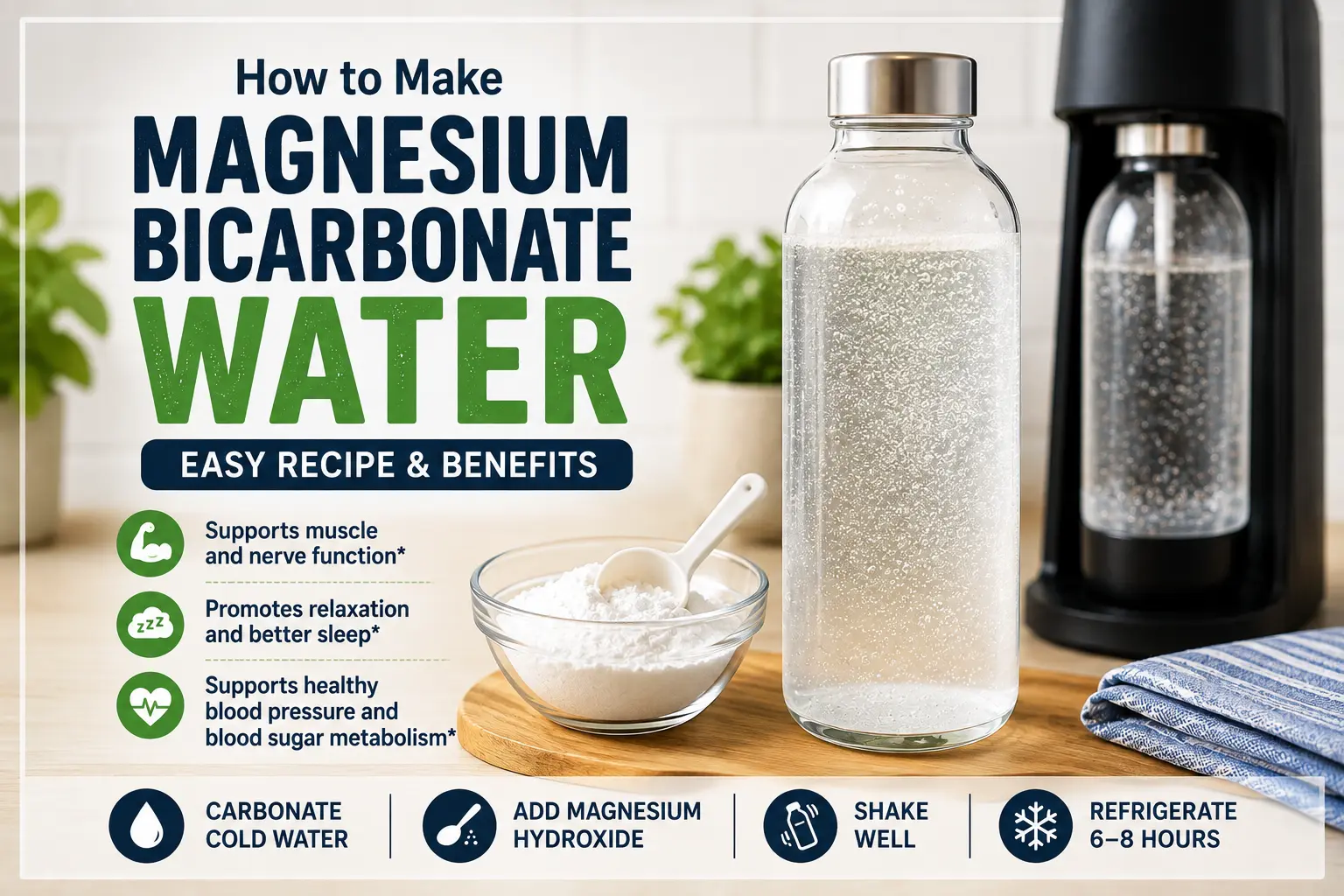
Magnesium bicarbonate water is made by mixing magnesium hydroxide with chilled carbonated water. The carbon dioxide in the water reacts with magnesium hydroxide to form dissolved magnesium bicarbonate.
Magnesium is an essential mineral involved in hundreds of biochemical reactions in the body, including muscle and nerve function, energy production, blood pressure regulation, and glucose metabolism.1
Stress, food choices, certain health conditions, and medications can influence magnesium intake or magnesium levels. People with type 2 diabetes are also among the groups more likely to get too little magnesium.1
Below is a simple guide showing how to make magnesium bicarbonate water, along with important information about magnesium, diabetes, and supplement safety.
How Do You Make Magnesium Bicarbonate Water?
Magnesium bicarbonate water can be made by combining magnesium hydroxide with cold carbonated water. The carbon dioxide reacts with magnesium hydroxide to form dissolved magnesium bicarbonate. After mixing, refrigerate the solution for several hours until it becomes mostly clear. The amount of magnesium in the finished water depends on the magnesium hydroxide product and amount used.
Key Takeaways
- Magnesium bicarbonate water is made by combining magnesium hydroxide with cold carbonated water.
- Magnesium supports normal muscle and nerve function, blood pressure regulation, energy production, and glucose metabolism.1
- People with type 2 diabetes are among the groups more likely to have inadequate magnesium intake or low magnesium levels.1
- Magnesium supplements are not recommended specifically for improving blood sugar control in people with diabetes unless there is an underlying deficiency or another medical reason.2
- Too much supplemental magnesium can cause diarrhea, nausea, and abdominal cramping.1
How to Make Magnesium Bicarbonate Water
Ingredients and Supplies
- 32 oz cold filtered or distilled water
- Magnesium hydroxide powder
- DrinkMate, SodaStream, or another carbonation system
- 32 oz bottle or container with a secure cap
Important: Check the magnesium hydroxide product label for its magnesium content and recommended serving amount. Products can vary in concentration, so a teaspoon measurement should not be assumed to provide the same amount of magnesium across different products.
Instructions
- Start with 32 oz of cold filtered or distilled water.
- Carbonate the water using a DrinkMate, SodaStream, or similar carbonation machine.
- Add the appropriate amount of magnesium hydroxide powder according to the product directions and desired magnesium concentration.
- Close the bottle securely and shake well.
- Keep the solution refrigerated for approximately 6–8 hours.
- The solution should become mostly clear, although a small amount of sediment may remain.
Keep the magnesium bicarbonate water refrigerated.
Watch: How to Make Magnesium Bicarbonate Water
Watch the video below for a demonstration of how magnesium bicarbonate water is prepared.
Why Is Magnesium Important?
Magnesium is an essential mineral needed for many processes throughout the body. It helps regulate muscle and nerve function, blood sugar and blood pressure, and is involved in making protein, bone, and DNA.1
Magnesium is naturally found in foods such as leafy green vegetables, nuts, seeds, legumes, and whole grains. Some people may not get enough magnesium from their diet, while certain medical conditions and medications can also interfere with magnesium absorption or increase magnesium loss.1
Magnesium has also been studied for its potential effects on blood pressure, migraine, cardiovascular health, and type 2 diabetes. However, evidence for magnesium supplementation varies depending on the condition, and magnesium should not be viewed as a treatment for diabetes or other medical conditions.1
Magnesium and Diabetes: What Does the Research Say?
This essential mineral plays an important role in normal glucose metabolism. Research has found that people who consume higher amounts of magnesium in their diets tend to have a lower risk of developing type 2 diabetes. However, this association does not mean that taking a magnesium supplement prevents or treats diabetes.1
For people who already have diabetes, evidence supporting magnesium supplements specifically for improving blood sugar control remains insufficient. The American Diabetes Association Standards of Care in Diabetes—2026 state that supplementation with micronutrients such as magnesium is not recommended for glycemic benefits. The ADA also notes that without an underlying deficiency, vitamin or mineral supplementation has not demonstrated benefit for people with diabetes.2
For most people, magnesium-rich whole foods remain an excellent way to increase dietary magnesium intake. Magnesium bicarbonate water can provide supplemental magnesium, but it should not be viewed as a treatment for diabetes or a replacement for a balanced diet.
People interested in other supplements being studied for metabolic health can also read our guide to black seed oil supplements and type 2 diabetes, including what current research suggests and important safety considerations.
Magnesium Bicarbonate Safety and Side Effects
Magnesium from foods and beverages is generally safe for healthy people because the kidneys remove excess magnesium. Supplemental magnesium is different. High intakes from supplements and medications can cause diarrhea, nausea, and abdominal cramping, and extremely high amounts can cause more serious problems.1
The NIH lists an upper limit of 350 mg of magnesium per day from dietary supplements and medications for adults, unless a healthcare professional recommends otherwise. This limit does not include magnesium naturally present in foods and beverages.1
Magnesium can also interact with certain medications, including some antibiotics, bisphosphonates, and diuretics.[1]People with kidney problems or those taking medications should talk with their healthcare professional before regularly using a magnesium supplement.
Because homemade magnesium bicarbonate water can vary in magnesium concentration, calculate intake based on the elemental magnesium content of the magnesium hydroxide product, rather than relying only on teaspoons or ounces of finished water.
Frequently Asked Questions
Supplies
The original supplies used to prepare magnesium bicarbonate water include magnesium hydroxide powder and a home carbonation system.
Magnesium hydroxide: Crucial Four
Carbonation equipment: DrinkMate

References
- National Institutes of Health, Office of Dietary Supplements. Magnesium Fact Sheet for Consumers.
https://ods.od.nih.gov/factsheets/Magnesium-Consumer/ [↩] [↩] [↩] [↩] [↩] [↩] [↩] [↩] [↩] [↩] [↩] [↩] - American Diabetes Association Professional Practice Committee for Diabetes. Facilitating Positive Health Behaviors and Well-being to Improve Health Outcomes: Standards of Care in Diabetes—2026. Diabetes Care.2026;49(Suppl 1)–S131.
https://diabetesjournals.org/care/article/49/Supplement_1/S89/163932/5-Facilitating-Positive-Health-Behaviors-and-Well [↩] [↩] [↩]