
Lipohypertrophy: Symptoms, Causes, Treatment & Prevention
Lipohypertrophy is a buildup of fatty tissue beneath the skin, often caused by repeatedly injecting or infusing insulin into the same area.
These insulin injection-site lumps can interfere with insulin absorption, making blood sugar harder to control. Recognizing the condition early can help prevent unpredictable glucose levels.
Quick Answer
Lipohypertrophy is a thickening of fatty tissue beneath the skin caused by repeated insulin delivery into the same area. It may appear as soft, raised lumps and can cause inconsistent insulin absorption, unexplained high blood sugar, and hypoglycemia. Treatment involves avoiding affected areas, rotating insulin sites properly, and reviewing insulin doses with your diabetes care team. 1
Key Takeaways
- Lipohypertrophy causes fatty lumps or thickened tissue at insulin delivery sites.
- Repeated injections into the same area are a major risk factor.
- Insulin absorption can become delayed and unpredictable.
- Treatment involves avoiding affected areas and rotating sites.
- Recovery may take months, and some lumps can persist.
What Is Lipohypertrophy?
Lipohypertrophy develops when repeated insulin exposure contributes to an abnormal buildup of fatty tissue beneath the skin.
It can occur in people who use insulin syringes, pens, or pumps.
Unlike normal body fat, affected areas may feel unusually thick, rubbery, or lumpy. Some people continue using these areas because injections can feel less painful there.
However, injecting into lipohypertrophic tissue can interfere with insulin absorption and blood sugar management.
What Does Lipohypertrophy Look and Feel Like?
Common signs include:
- Soft, raised lumps beneath the skin.
- Thickened, rubbery, or uneven tissue.
- Swelling or changes in skin contour.
- Areas that feel less sensitive during injections.
- Unexpected glucose fluctuations despite usual insulin doses.
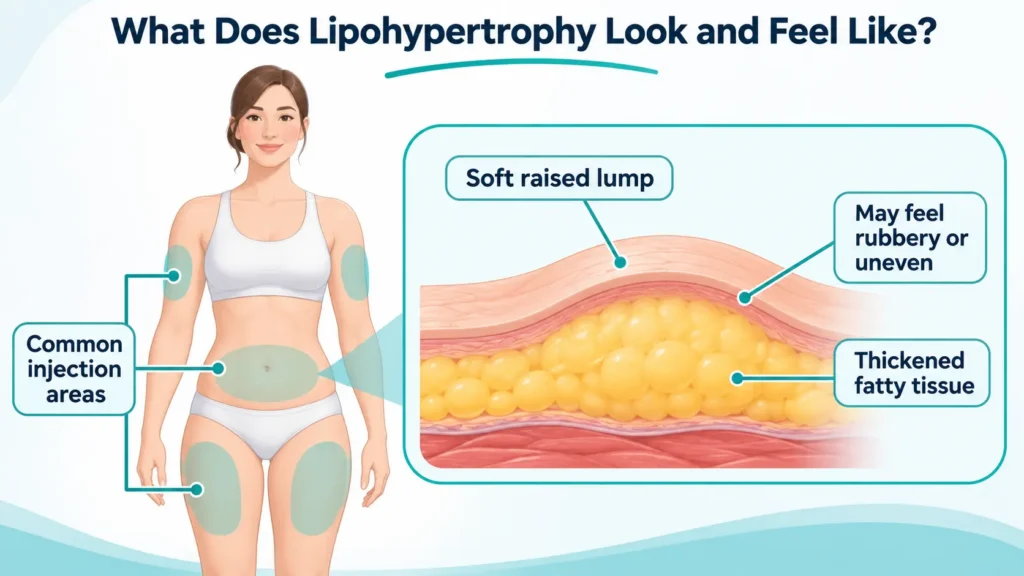
Lipohypertrophy commonly develops in areas used repeatedly for insulin delivery, including the abdomen, thighs, upper arms, and buttocks.
Not every injection-site lump is lipohypertrophy. Other causes include inflammation, infection, scar tissue, and cysts. A healthcare professional can examine the area and determine whether additional evaluation is needed.
What Causes Lipohypertrophy?
The main cause is repeated insulin delivery into the same or nearby areas without adequate site rotation.
Risk factors include:
- Poor site rotation: Repeatedly injecting or placing infusion sets in the same small area.
- Needle reuse: Reusing injection needles instead of using a new needle each time.
- Long-term insulin therapy: Repeated exposure increases opportunities for tissue changes.
- Unrecognized lumps: Continuing to deliver insulin into affected tissue.
A 2026 international expert consensus identified inadequate injection-site rotation as the strongest modifiable risk factor for lipohypertrophy.2
How Does Lipohypertrophy Affect Insulin Absorption and Blood Sugar?
Lipohypertrophy can make insulin absorption slower and less predictable.
Insulin delivered into affected tissue may not work as expected, potentially causing prolonged hyperglycemia or unexpected glucose fluctuations.
In a clinical study involving 13 adults with type 1 diabetes, insulin injected into lipohypertrophic tissue was absorbed less consistently and produced higher post-meal glucose levels than insulin injected into unaffected tissue.3
Why Can Blood Sugar Become Unpredictable?
| Insulin delivery site | Potential glucose effect |
|---|---|
| Healthy subcutaneous tissue | More predictable insulin absorption |
| Lipohypertrophic tissue | Delayed or variable absorption; possible prolonged high glucose |
| Switching from affected to healthy tissue | More effective absorption may increase hypoglycemia risk if previous dosing is unchanged |
This is why repeatedly increasing insulin doses to correct unexplained high glucose can be risky.
If your glucose remains high, also consider other causes, including insulin-delivery problems, illness, and insulin still active from previous doses.
For related guidance, read our insulin stacking article.
My Experience With Lipohypertrophy
I’ve lived with type 1 diabetes since 1998, and when I used insulin syringes, I experienced injection-site lumps and problems with insulin absorption.
At times, my blood sugar stayed elevated for extended periods despite taking insulin. I later realized I had been injecting too frequently into the same area or nearby sites without rotating locations enough.
Since switching to an insulin pump, I haven’t experienced these problems again.
My experience taught me how important proper site rotation is for consistent insulin absorption and blood sugar management.
Does Lipohypertrophy Go Away?
Lipohypertrophy may gradually improve when insulin is no longer delivered into the affected tissue.
However, recovery can take months or sometimes years, and some areas may not return completely to normal.
The Cleveland Clinic recommends avoiding injections into affected tissue until it has healed.4
Persistent, enlarging, painful, red, or warm lumps should be evaluated by a healthcare professional rather than assumed to be lipohypertrophy.
Lipohypertrophy Treatment and Prevention
1. Avoid Affected Injection Sites
Do not inject insulin or insert an infusion set into suspected lipohypertrophic tissue.
Ask your diabetes care team to examine the area and identify appropriate alternative sites.
Important: Insulin may absorb more effectively when switching to healthy tissue. Previously prescribed doses may then cause hypoglycemia, so your insulin regimen may need professional reassessment.
2. Rotate Insulin Injection Sites
Use a systematic rotation plan that spreads injections or infusion-set insertions across suitable, unaffected tissue.
Avoid repeatedly using the same small area. Your care team can demonstrate appropriate spacing and site selection for your device.
3. Use New Needles
Use a new injection needle for each injection and follow manufacturer instructions for safe insulin administration.
Needle reuse may contribute to tissue damage and other injection complications.
4. Rotate Insulin Pump Sites
Insulin pumps do not eliminate lipohypertrophy risk.
Repeated infusion-set placement in the same area can produce similar tissue changes.
Follow your infusion-set manufacturer’s replacement schedule, commonly every two to three days for standard sets, and rotate insertion locations.
5. Check Your Skin Regularly
Inspect and gently feel commonly used insulin sites for lumps, thickening, or unusual changes.
The 2026 ADA/EASD type 1 diabetes consensus recommends that clinicians inspect and palpate injection and infusion sites at least annually.5
If you notice persistent high blood sugar despite insulin, unexplained lows, or new tissue changes, discuss them with your diabetes care team.
For help interpreting glucose patterns, see our blood sugar charts.
Lipohypertrophy: Frequently Asked Questions
Final Thoughts
Lipohypertrophy is a preventable complication of insulin therapy that can interfere with insulin absorption and blood sugar control.
Recognizing injection-site lumps, rotating sites properly, and avoiding affected tissue can help improve insulin delivery consistency.
If unexplained glucose fluctuations occur alongside injection-site changes, have your diabetes care team evaluate the affected areas and review your insulin regimen.
References
- American Diabetes Association. Pharmacologic Approaches to Glycemic Treatment: Standards of Care in Diabetes—2026. Diabetes Care. 2026. [↩]
- Guo L, et al. Consensus Recommendations on Lipohypertrophy: Insights From an International Panel of Experts. Diabetes Research and Clinical Practice. 2026. [↩]
- Famulla S, et al. Insulin Injection Into Lipohypertrophic Tissue: Blunted and More Variable Insulin Absorption and Action. Diabetes Care. 2016. [↩]
- Cleveland Clinic. Lipohypertrophy: Symptoms, Causes, Treatment & Prevention. [↩]
- American Diabetes Association and European Association for the Study of Diabetes. The Management of Type 1 Diabetes in Adults: Updated 2026 Consensus Report. 2026. [↩]