
Why Does Blood Sugar Rise Without Eating? 7 Common Causes
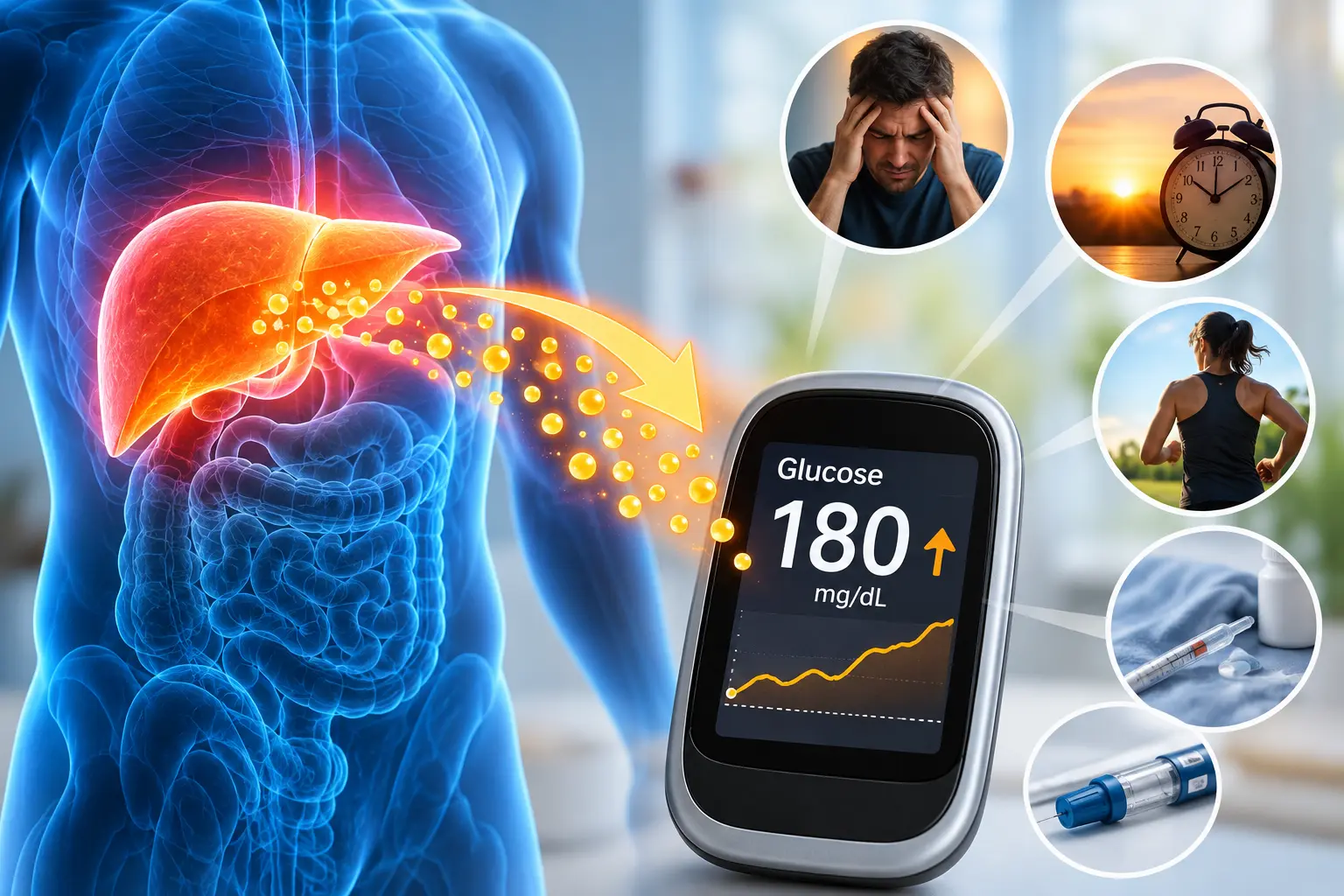
Why does blood sugar rise without eating? It may seem confusing, especially when you haven’t consumed any carbohydrates. However, glucose levels depend on more than food. Your liver, hormones, insulin activity, and even exercise can increase blood sugar between meals.
Quick Answer: Why Does Blood Sugar Rise Without Eating?
Blood sugar can rise without eating because the liver continuously supplies glucose to the bloodstream. Hormones such as glucagon, cortisol, and adrenaline influence this process. In people with diabetes, insufficient insulin or insulin resistance can allow glucose levels to climb even when no food has been consumed. 1
Key Takeaways
- The liver releases and produces glucose even when you’re not eating.
- Stress, illness, and hormonal changes can increase blood sugar.
- Insufficient insulin or insulin resistance may cause glucose to accumulate.
- Intense exercise can temporarily raise glucose without food.
- Repeated unexplained increases are worth investigating, particularly if you use insulin.
How Can Blood Sugar Increase Without Food?
Your body needs glucose throughout the day, including between meals and while sleeping.
To maintain that supply, the liver:
- Releases stored glucose by breaking down glycogen.
- Makes new glucose from substances such as lactate, glycerol, and certain amino acids.
Insulin normally helps limit liver glucose production, while glucagon encourages it when additional glucose is needed.
With diabetes, this balance may be disrupted, allowing the liver to release more glucose than the body can effectively use.2
7 Reasons Your Blood Sugar Rises Without Eating
1. Your Liver Releases Glucose
The liver is a major source of glucose between meals. This is a normal function, not a sign that something is necessarily wrong.
However, when insulin cannot adequately suppress glucose production, blood sugar may continue rising during fasting.
This can occur in both type 1 and type 2 diabetes.2
2. Stress Hormones Increase Blood Sugar
Physical or emotional stress triggers hormones, particularly cortisol and adrenaline, that help make more glucose available.
Anxiety, pain, work stress, and poor sleep may contribute to unexpected increases, even when your diet has not changed.3
3. Insufficient Insulin Allows Glucose to Build Up
In type 1 diabetes, too little circulating insulin can allow blood glucose to rise despite not eating.
Possible reasons include:
- Insufficient background (basal) insulin
- A missed or delayed insulin dose
- Insulin pump infusion-set or delivery problems
People with type 2 diabetes may also experience rising glucose if insulin production is inadequate for their body’s needs.1
4. Insulin Resistance Reduces Glucose Control
Insulin resistance means the body’s cells respond less effectively to insulin.
The liver may also become less responsive to insulin’s signal to reduce glucose production. Consequently, blood sugar can rise even during extended periods without food.2
This is particularly relevant to type 2 diabetes and prediabetes.
5. Illness and Certain Medications Raise Glucose
Infections, inflammation, and illness can increase hormones that oppose insulin’s action.
Some medications, particularly corticosteroids such as prednisone, can also raise blood sugar without any additional food intake.4
6. Intense Exercise Can Temporarily Increase Glucose
Exercise usually helps improve glucose control, but vigorous activity can have a different short-term effect.
Heavy lifting, sprinting, and high-intensity intervals stimulate adrenaline and other hormones that increase liver glucose output.
For some people with diabetes, especially type 1 diabetes, glucose may temporarily rise during or after intense exercise.5
The response depends on exercise intensity, circulating insulin, and individual physiology.
7. Early-Morning Hormones Can Raise Glucose
Hormonal changes before waking can stimulate liver glucose production, even after an overnight fast.
This is called the dawn phenomenon and is particularly noticeable in some people with diabetes.6
If your glucose rises mainly before breakfast, see our High Morning Blood Sugar guide for a more detailed explanation.
Why Does Blood Sugar Keep Rising During Fasting?
Fasting stops new food from entering your digestive system, but it does not stop glucose production.
When insulin activity is insufficient or hormones stimulate excessive glucose output, blood sugar can increase despite prolonged fasting.
Fasting longer is not necessarily the solution. People using insulin or medications that cause hypoglycemia should discuss significant fasting changes with their diabetes care team.
What Should You Do When Blood Sugar Rises Without Eating?
An occasional unexplained increase does not necessarily mean your treatment needs changing. Look for repeated patterns and possible triggers.
- Confirm the reading. If your CGM result does not match your symptoms or expectations, check with a blood glucose meter.
- Review recent activity. Consider stress, illness, exercise, medications, and sleep.
- Check insulin delivery. If you use an insulin pump, inspect the infusion set and delivery system when glucose rises unexpectedly.
- Track recurring patterns. Note when the increase starts and whether it happens repeatedly.
- Discuss persistent highs. Your diabetes care team can help evaluate insulin needs, medications, and other possible causes.
You can also compare your readings with our Blood Sugar Charts to understand how they relate to common glucose targets.
When Is Rising Blood Sugar Dangerous?
For people with type 1 diabetes, a rapid or persistent increase may indicate insufficient insulin and a risk of diabetic ketoacidosis (DKA).
The CDC advises checking ketones when blood sugar is 250 mg/dL or higher, or when you are sick, and following your diabetes sick-day instructions.7
Seek emergency care for high ketones, difficulty breathing, repeated vomiting, fruity-smelling breath, or other possible signs of DKA.
DKA can also occur at lower glucose levels, particularly in people taking SGLT2 inhibitors.
Frequently Asked Questions
The Bottom Line
Blood sugar can rise without eating because the body produces its own glucose. The liver, stress hormones, insulin activity, illness, and exercise all influence this process.
If glucose repeatedly increases between meals, identifying the timing and possible triggers is more useful than assuming food is responsible.

References
- American Diabetes Association. High Blood Sugar (Hyperglycemia). [↩] [↩]
- National Institute of Diabetes and Digestive and Kidney Diseases. New Mechanism Proposed for Glucose-Lowering Effect of Metformin. [↩] [↩] [↩]
- American Diabetes Association. Hyperglycemia (High Blood Glucose). [↩]
- Centers for Disease Control and Prevention. 10 Surprising Things That Can Spike Your Blood Sugar. [↩]
- American Diabetes Association. Physical Activity/Exercise and Type 2 Diabetes. [↩]
- American Diabetes Association. High Morning Blood Glucose. [↩]
- Centers for Disease Control and Prevention. Diabetic Ketoacidosis. [↩]







Leave a Reply